FIBRUS JOIN, SWITCH, CANCEL REVIEW

Fibrus – join, switch or cancel: How easy is it?

Fibrus makes it exceptionally easy to join and gives switchers unusually generous help with an old provider’s exit bill. Installation compensation and moving outside its network are less reassuring. We’ve followed the process from the first address check to cancellation and equipment return.
By Data checked  Checked weekly
Fibrus join switch or cancel

Fibrus join, switch, cancel scorecard

Six key areas. One overall score. All calculated using our transparent methodology.

Ease of joining

How simple it is to sign up, including online ordering, phone support, contact routes and whether the process feels straightforward.

9.5/10

Credit checks and eligibility

How eligibility works, including credit checks, social tariffs, affordability barriers and whether customers have clear alternatives.

5.8/10

Installation problems and compensation

What protection exists when installation goes wrong, including delays, missed appointments, compensation and how clearly problems are handled.

5.0/10

Switching from another provider

How easy it is to switch from another provider, including switching support, number porting, bill credits and avoidable disruption.

7.7/10

Moving home

How moving home is handled, including transfer options, availability checks, fees and what happens if service cannot continue.

6.3/10

Cancelling your service

How cleanly customers can leave, including cancellation routes, notice periods, early exit fees and equipment return requirements.

8.3/10

Ease of joining

Joining Fibrus is refreshingly easy. You can order online, call sales, use chat or WhatsApp, and some customers can request a callback. You still need to check the exact address because Fibrus serves particular parts of Northern Ireland and Cumbria, but you won’t normally be forced onto the phone.

Availability depends on the exact address

Fibrus’s limited regional footprint makes its address checker more important than it is with a national provider. Coverage is concentrated in parts of Northern Ireland and Cumbria, and service at a nearby property says little about whether Fibrus can connect yours.

The checker is useful because it goes beyond a simple yes or no and shows the packages Fibrus can actually sell at that property. Results can differ within the same town or postcode district, and the available package range can depend on which network serves the address. That makes the address result the sensible basis for comparing Fibrus, rather than a neighbour’s availability or a broad coverage claim.

Online ordering keeps the details visible

Fibrus supports a complete online order, which is the simplest route for customers who already know what they want. It keeps the available speeds, contract choices and included eero hardware visible without depending on notes from a sales conversation.

The checkout also presents the details that matter before commitment: monthly price, minimum term, installation or activation charges and the price after the contract ends. Fibrus discloses that a CreditSafe check can affect acceptance, and the written confirmation leaves a useful record of the package and dates agreed. That is clearer and easier to verify than a phone-only sales process.

Human help is easy to find before ordering

Fibrus offers an unusually broad choice of human sales support. Phone, live chat and WhatsApp are all available, and some customers can also request a callback.

Those routes give customers somewhere to clarify coverage, installation or contract-buyout questions without committing to a telephone order. That flexibility is one of the main reasons Fibrus scores so well for joining.

An accepted order can still fail later checks

Fibrus may survey the property or check whether connecting it is practical. If the work proves impossible or uneconomic, it can cancel before activation. Eligible upfront payments are refunded when the agreement ends, after any legitimate amount you still owe is deducted.

Property permission remains the customer’s responsibility. This matters most for renters and homes with shared access, because an accepted order doesn’t authorise an engineer to drill, cross shared land or enter a locked area. The installation can therefore stall even after the sales process is complete.

INTERACTIVE TOOL

Which Fibrus speed is right for me?

Tell us about your household and we will tell you the exact best-fit broadband package from Fibrus.

Start here. Adjust the numbers, then calculate your result.

Step 1: Tell us what is in your home

Use the buttons below to tell us how many people and connected devices your household has.

People
0
TVs
0
Consoles / gaming PCs
0
Non-gaming computers
0
Mobiles
0
Smart devices
0

Step 2: Calculate your best-fit package

Once you are happy with the numbers above, press calculate and we will match your household to the closest Fibrus package.

Your result

Recommended package — Estimated need: — Includes — headroom
Good fit

This speed is ideal for:

    Where would you like to go next?

    The practical burden is modest, but someone at the property may still need to agree the cable route and equipment position.

    Illustration of Fibo checking the steps for joining

    How to join Fibrus without making the process harder than it needs to be

    1. Check your exact address

      Use Fibrus's checker for the property you want connected, not a nearby postcode or somebody else's availability result.

    2. Choose for your household

      Pick a speed that suits the people and devices in your home rather than automatically buying the fastest package shown.

    3. Read before confirming

      Check the minimum term, monthly price, installation costs, included eero units and any extras before submitting the order.

    4. Ask before ordering

      Use sales chat, WhatsApp or the phone if coverage, permissions, your contract buyout or the installation route isn't clear.

    5. Prepare for the appointment

      Confirm access, arrange any landlord permission and watch for messages about surveys, installation and activation. Keep your old broadband until Fibrus is working.
    Fibrus makes joining exceptionally flexible. You can order online, call sales, use chat or WhatsApp, and some customers can request a callback. Its address checker narrows the choice to packages available at your home, while the possible credit check is disclosed before acceptance. A survey can still stop the installation, but eligible upfront payments are refunded when Fibrus can't connect you. Few providers make the sales side this easy.

    9.5 /10
    Overall score

    Ease of joining score

    This score looks at how easy a provider makes it for you to start an order, choose the route that suits you, and get help before you commit.

    Credit checks and eligibility

    Fibrus warns that CreditSafe may check your application and that the result can decide whether your order is accepted. It doesn't say whether this is a hard or soft search. Nor does it advertise a package that skips the check, or a deposit or upfront-payment option if you fail it. Full Fibre Essential costs less for eligible households, but Fibrus doesn't say that the social tariff avoids its usual credit checks.

    How Fibrus decides whether to accept your order

    Address availability comes before account approval

    Fibrus first checks whether it can supply your exact address and which packages are available there.

    A positive result lets you start an order, but it doesn't guarantee that the later credit, survey and installation checks will all pass.

    Choose a package and enter your details

    The application asks for your name, address and payment details so Fibrus can open the account and decide whether to accept the order.

    Check names, addresses and payment details carefully. A simple mismatch can hold up an otherwise routine application or make an identity check harder to complete.

    Fibrus doesn't say whether the check is hard or soft

    Fibrus says it may ask CreditSafe to check your credit history before it accepts the order.

    Because Fibrus doesn't explain whether the search is hard or soft, you can't tell in advance how the application might affect your credit record.

    Account acceptance moves the order forward

    Once Fibrus accepts the account checks, the order can move on to any survey, installation and activation work your home needs.

    The property must still be practical to connect, so passing the credit check and securing an installation aren't the same thing.

    Fibrus doesn't publish another option if the credit check fails

    Fibrus doesn't promise to accept an upfront payment or security deposit instead of passing its usual credit check.

    A spending limit can be applied to Fibrus Talk, but that doesn't provide another way to get Fibrus broadband.

    Fibrus can reject an application under its credit policy. It doesn't advertise a broadband package without a credit check or say that Full Fibre Essential avoids one. That leaves customers who expect difficulty without a documented alternative before installation or cancellation decisions are made.

    The credit check can decide whether you're accepted

    The address checker asks whether Fibrus can serve your home. The later CreditSafe check helps Fibrus decide whether it's willing to open the account, and its terms allow a failed result to stop the order.

    Many applicants may notice nothing more than a short wait. But because Fibrus doesn't say whether CreditSafe carries out a hard or soft search, you can't judge beforehand how the application might affect your credit record.

    Fibrus doesn't guarantee another option if your application is declined

    Fibrus can decline the application if the customer doesn't meet its credit policy. It doesn't guarantee that a deposit or upfront payment will secure acceptance instead. That uncertainty matters because the customer may otherwise choose an installation date or cancel existing broadband before Fibrus has confirmed the order.

    Full Fibre Essential helps eligible households with the price of broadband, but Fibrus doesn't say that its social tariff bypasses the ordinary credit checks.

    Full Fibre Essential is the social tariff

    Fibrus publishes Full Fibre Essential for eligible customers at supported addresses. It gives households that meet the rules a lower-cost route onto Full Fibre broadband.

    The tariff helps with affordability, but it isn't advertised as a no-credit-check option and still depends on both household eligibility and availability at the address.

    Full Fibre Essential is Fibrus's social tariff

    It provides a lower-cost Full Fibre broadband option for eligible households at addresses where Fibrus can supply the service.

    Eligibility and application checks

    Check current rules

    Fibrus sets the qualifying criteria for Full Fibre Essential, so check the latest list before applying.

    Check your address

    Meeting the personal criteria isn't enough by itself. Full Fibre Essential must also be available at the home you want connected.

    Have evidence ready

    Keep the requested details handy so Fibrus can confirm your eligibility.

    Who can apply

    Full Fibre Essential is restricted to eligible households and supported addresses rather than being open to every customer.

    Affordability is the point

    The social tariff provides a lower-cost broadband route for households that meet Fibrus's eligibility rules.

    Before you apply

    Apply through Fibrus

    Use Fibrus's social-tariff route so it can check the address, your eligibility and the package currently available.

    Fibrus confirms eligibility

    Expect Fibrus to verify that both your circumstances and your address meet the current Full Fibre Essential rules.

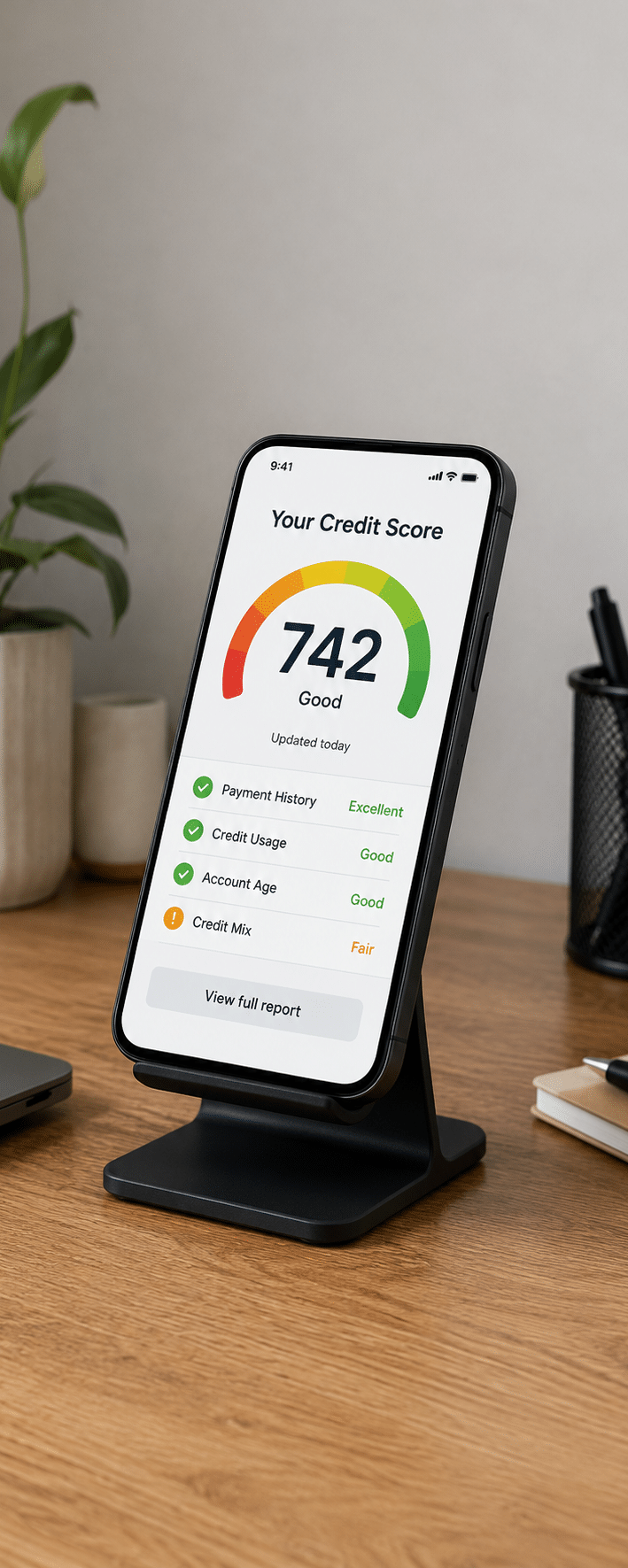
    Photograph of a smartphone displaying a credit score of 742

    Fibrus doesn't explain whether CreditSafe uses a hard or soft search

    Fibrus is upfront that CreditSafe may check the application. What it doesn't tell you is whether the search leaves a visible footprint on your credit record.

    The good bit

    Most applications should feel routine

    If your details and credit history meet Fibrus's policy, you may notice nothing beyond a short wait for the decision.

    For most successful applicants, the decision may be the only obvious sign that a credit check has taken place.

    The bad bit

    Fibrus can decline the order without offering another option

    Fibrus can reject an application if the credit check doesn't meet its policy, and it doesn't promise a security-deposit alternative.

    A spending limit on the optional phone service doesn't help if Fibrus declines the broadband order. Customers who are uncertain about approval therefore have no published alternative route to acceptance.

    Fibrus names CreditSafe and warns before you order that the result can affect whether your application is accepted. It doesn't explain whether CreditSafe carries out a hard or soft search, however, and it can decline the order. Fibrus also doesn't guarantee that unsuccessful applicants can pay a deposit, pay upfront or choose a package without a credit check. Full Fibre Essential costs less for eligible households, but Fibrus doesn't confirm that the social tariff avoids its usual check.

    5.8 /10
    Overall score

    Credit checks and eligibility score

    This score looks at how clear and forgiving a provider is if your credit history might affect whether you can sign up or not, as well as whether they offer a social tariff to those on benefits.

    Installation and compensation

    Fibrus can refund eligible upfront payments if it discovers that your home can't be connected, but its protection against disruption is otherwise limited. It doesn't promise automatic compensation for a delayed installation or missed appointment, and an accepted order can still be cancelled if the work proves impractical or uneconomic.

    Full Fibre installation requires decisions at home

    A Fibrus engineer visit can involve more than delivering or plugging in equipment. The engineer may need outside access, a route through a wall and agreement on the position of the connection and eero router. Someone at the property therefore needs to be able to make practical decisions, not merely open the door.

    Router position and cable route can make a noticeable difference to both the appearance of the installation and the resulting Wi-Fi coverage. Fibrus can't always use the neatest-looking corner if power sockets, walls or the incoming cable make it unsuitable. That is ordinary Full Fibre installation friction, but it does mean the customer may have to accept a workable position rather than their first choice.

    Property permission is the customer's responsibility

    Fibrus places responsibility for installation permission on the customer. Renters, shared driveways and communal areas can therefore complicate the appointment, because an online order doesn't authorise the engineer to drill, enter locked areas or alter shared cabling. Missing approval can easily delay an otherwise viable installation.

    Fibrus may also charge when a visit fails because permission or access wasn't ready. That is a reasonable protection against wasted appointments, although it leaves the customer carrying most of the preparation risk.

    The physical route can still stop the installation

    A home with a clear connection route should be simpler than one needing new cabling or permission through a shared area. The address result says service may be available, but the physical job still has to make sense.

    Fibrus can cancel before activation if a survey shows the property is impractical or uneconomic to connect. Eligible upfront payments are refunded when the agreement ends, after any legitimate amount still owed is deducted. The refund protects money paid in advance, but it doesn't replace the expected broadband service. This makes a difficult cable route or access arrangement a genuine risk even after Fibrus has accepted the order.

    Delayed installations aren't covered automatically

    Fibrus isn't a member of Ofcom's automatic compensation scheme and doesn't promise an automatic payment for a delayed activation or missed engineer appointment.

    Customers can still complain and ask Fibrus to put matters right, but there is no promise that a fixed payment will appear automatically. Appointment confirmations, messages and the promised activation date may therefore matter if a complaint is needed. Fibrus can also charge for a missed visit or customer-caused engineer callout, so the protection is weighted more heavily towards the provider than the customer.

    The Fibrus installation process

    Fibrus checks the address, confirms whether the property can be connected and arranges any work it needs. Your part is to provide accurate details, secure permission, give access and keep the appointment. If a survey later stops the order, eligible upfront payments should be refunded after any amount properly owed is deducted.

    1. Order

    Choose an available package, complete the order and book an installation appointment if Fibrus says your home needs one.

    2. Check

    Ask whether Fibrus needs a survey, new cabling or access through a shared area before it can connect you.

    3. Prepare

    Arrange landlord or owner permission, unlock access routes and clear the space where the connection may enter your home.

    4. Be home

    Make sure someone can let the engineer in and agree practical decisions about cabling, power and eero router placement.

    5. Connect

    The engineer completes the necessary work, fits the connection and explains what must happen before Fibrus activates the service.

    6. Rearrange

    If the appointment no longer works, contact Fibrus early rather than risking a missed-visit charge.

    7. Keep records

    Save the dates and messages in case you need to complain about a delayed activation or missed appointment.

    8. Avoid charges

    Provide access, permission and accurate information to avoid a charge when an engineer can't complete the visit for a customer-side reason.

    9. Test it

    Once activated, test the broadband by Ethernet as well as Wi-Fi and report any obvious problem promptly.

    10. Escalate

    If activation stalls, contact Fibrus, keep the case reference and use its complaints process if Fibrus stops giving clear updates.
    Illustration of Fibo preparing equipment for a broadband installation

    Before your Fibrus engineer arrives

    1. Plan the connection position

      Choose a practical area near power where the incoming connection and eero router can serve the home without trailing awkward cables.

    2. Clear the access route

      Move furniture, unlock gates and make shared paths, cupboards or corridors accessible if the engineer may need them.

    3. Get permission first

      If you don't own the property or control shared land, secure written approval before installation day.

    4. Keep your phone nearby

      Watch for appointment messages or calls, and make sure the engineer can reach whoever is providing access.

    5. Check the first bill

      Look for unexpected installation charges and question anything that doesn't match the order confirmation.

    Fibrus offers only middling protection around installation. It refunds eligible upfront payments when an agreement ends because the property can't be connected, which prevents a failed job from also swallowing money paid in advance. It doesn't promise automatic compensation for delayed activation or a missed appointment, though, and a survey can still end an accepted order. Customers must also arrange permission and access, with charges possible when a failed visit is their fault.

    5.0 /10
    Overall score

    Installation and compensation score

    This score looks at how well you're protected if installation is delayed, an engineer visit is missed, or your broadband can't be installed as planned.

    Switching from another provider

    Fibrus gives switchers a compelling reason to move. Qualifying customers can receive up to £400 towards an old provider's exit charge, with the approved amount paid into their bank account. Existing phone numbers can normally be retained too. The main restrictions are the evidence deadline and Fibrus's right to reclaim part of the payment if the customer leaves early. Even with those conditions, the buyout can remove a very large obstacle.

    Switching help and a sizeable contract buyout

    Fibrus handles the switch during the order

    The switch begins as part of the Fibrus order rather than through a separate cancellation process. That reduces the risk of closing the old broadband too early and creating a gap between services.

    Fibrus's confirmation covers installation and activation, while the old provider's final notice should set out the closing date and any early-exit charge. Services bundled with the old broadband, such as TV or mobile, may continue separately, so the switch is straightforward but doesn't necessarily close every part of the previous account.

    Up to £400 can cover a substantial exit bill

    Fibrus's contract-buyout scheme can contribute up to £400 towards a qualifying old provider's early-exit charge. That's unusually generous and can make a switch possible when the cost of leaving your old contract would otherwise keep you there.

    The offer requires a Fibrus term of at least 18 months. After Fibrus approves the evidence, it pays the contribution into the customer's bank account rather than reducing the new broadband bill. If the customer leaves Fibrus early, it can recover part of the buyout in proportion to the contract time still left.

    The final bill has a 40-day deadline

    Fibrus requires the old provider's final bill, showing the early-exit charge, within 40 days. Missing the deadline can remove the contribution even when the charge itself qualifies. Fibrus also supports home-phone number porting and estimates that this may take about two weeks after activation.


    COMPARISON CHART

    How much will Fibrus pay to buy you out?

    This chart shows which providers currently offer broadband contract buyout, and how much they may pay toward leaving your old contract.

    Provider N/A Maximum broadband contract buyout offered by this provider.
    National average N/A The national average buyout amount among providers that offer it in our database.
    Providers N/A providers currently offer broadband contract buyout in our database.

    Broadband contract buyout by provider

    Maximum buyout amount by provider

    Provider view

    Where would you like to go next?

    The national average benchmark only includes providers that currently offer broadband contract buyout in our database.

    Fibrus gives switchers an unusually valuable offer. Qualifying customers can receive up to £400 towards an old provider's early-exit charge, paid into their bank account after approval. Number porting is supported too. Eligibility requires an 18-month contract or longer and proof within 40 days. Fibrus can reclaim part of the contribution when a customer leaves early, but the buyout can still remove a major switching cost.

    7.7 /10
    Overall score

    Switching from another provider score

    This score looks at how much help you get when moving from another broadband provider, including contract buyout support, number porting and protection if installation is delayed.

    Moving home

    Fibrus can transfer service to a new address in its coverage area without restarting the minimum term. The process requires 30 days' notice and may involve installation or activation charges. A move beyond the Fibrus network is much harsher because it can leave the customer owing every remaining contract payment. Coverage at the new address is therefore the deciding factor.

    Coverage at the new address decides what happens

    Fibrus's regional footprint makes a house move more uncertain than it would be with a national provider. Coverage at a nearby property doesn't prove that the new home can be connected, even within Northern Ireland or Cumbria.

    Where service is available, the new property may still need fresh installation work and an extra charge. That can affect the start date, access requirements and moving costs, so Fibrus can't guarantee that broadband will simply be ready on moving day.

    Your existing contract continues

    With 30 days' notice, Fibrus can transfer the service when the new property is covered. The existing agreement then continues for the rest of its original minimum term rather than starting again.

    Installation or activation charges can still apply at the destination. Fibrus calls the move a cease-and-resupply process, which means the old connection and the new one are timed separately even though the existing agreement continues. This is less seamless than a simple transfer and leaves room for a gap between the old service ending and the new one starting.

    Illustration of broadband installation vehicles travelling towards a home

    Fibrus moving-home checklist

    1. Check the exact address

      Confirm that Fibrus serves the new property and find out whether it needs installation or activation work.

    2. Give 30 days' notice

      Contact Fibrus as soon as the move is certain and allow for its 30-day notice requirement.

    3. Confirm both dates

      Get the old service end date and new activation or installation date rather than assuming they'll meet.

    4. Check the moving costs

      Ask whether installation or activation charges apply and confirm that your existing minimum-term end date remains unchanged.

    5. Keep every confirmation

      Save the messages for both addresses so you can spot a wrong date, duplicate bill or missed appointment quickly.

    No coverage doesn't erase the old contract

    If Fibrus can't serve the new home, it doesn't promise to waive the early-exit fee. Its terms allow it to charge up to all the payments remaining in the minimum term, even though you can't take the service with you.

    This is the harshest part of Fibrus's moving policy. A customer can lose access to the network through no choice of their own and still face the full remaining contract charge.

    Fibrus handles a move within its network reasonably well. With 30 days' notice, the existing agreement continues for the rest of its original minimum term instead of restarting, although installation or activation charges can still apply. The biggest problem comes when the new address isn't covered. Fibrus doesn't promise to waive the early-exit fee and can charge all the payments left in the minimum term, which makes its regional footprint a serious moving-home risk.

    6.3 /10
    Overall score

    Moving home score

    This score looks at how easy it is to move your broadband to a new address, and how easy it is to get a brand new service from them pre-installed for your move-in day.

    Cancelling your services

    Fibrus gives you sensible ways to cancel, including cancelling online in writing, by phone or by post, so a retention call isn't compulsory. Its cooling-off window is clearly defined too. Leaving later in the minimum term can be punishing, though, because the charge may equal every contract payment still due and the eero equipment must be returned.

    You don't have to make a cancellation call

    Fibrus accepts cancellation by phone, post and written online routes, so customers can leave a written record instead of being forced into a retention conversation. Ordinary cancellation needs 30 days' notice. The only complication comes when the customer is switching provider, because cancelling Fibrus separately can close the old service before the replacement is ready.

    The 14-day clock starts from whichever event happens last

    Fibrus lets you cancel during the 14 days after the latest of your order confirmation, equipment delivery or service start. Measuring from the latest event is more useful than starting the clock only when you order.

    Cooling off isn't necessarily cost-free. Service already supplied, activation, installation and non-standard work requested by the customer can remain payable. The right to cancel is therefore useful, but it doesn't guarantee that the closing balance will be zero.

    Illustration of Fibo leaving to represent cancelling a broadband package

    Leaving during the minimum term can be extremely expensive

    Fibrus can charge up to all the payments remaining in the minimum term. In practical terms, an ordinary early cancellation may save nothing compared with keeping the service and paying each bill until the contract ends. A cancellation only a few months early can therefore still produce a large fee.

    A fee-free exit remains possible when an unresolved speed or service failure continues after Fibrus has had the required chance to fix it. That protection doesn't extend to a change of mind or a move outside its network, which leaves most early cancellations exposed to the full calculation.

    Fibrus requires the eero equipment back within 30 days

    The eero routers and other service equipment remain Fibrus's property and normally have to be returned within 30 days of cancellation or replacement. That is a reasonable deadline, although it creates another task immediately after the broadband stops.

    Collection and prepaid return packaging mean the process shouldn't cost the customer, provided every unit listed by Fibrus is included.

    AT A GLANCE

    Cancelling Fibrus at a glance

    A quick view of the routes, notice periods, fees and equipment-return rules you may need to deal with.

    Rule
    Status
    Customer impact
    Notice and routes
    Notice period
    30 days
    Neutral
    Online cancellation
    Yes
    Helpful
    Phone cancellation
    Yes
    Helpful
    Postal cancellation
    Yes
    Helpful
    Phone call required
    No
    Helpful
    Cooling-off period
    14 days
    Helpful
    Early exit fees
    Early exit fee during minimum term
    Yes
    Restrictive
    Early exit fee calculation
    100% of remaining charges
    Restrictive
    Fee capped at remaining contract value
    Yes
    Helpful
    Future price rises included in fee
    No
    Helpful
    Equipment returns
    Equipment return required
    Yes
    Restrictive
    Return packaging provided
    Yes
    Helpful
    Return label provided
    Yes
    Helpful
    Free equipment return
    Yes
    Helpful
    Equipment collection
    Yes
    Helpful
    Return deadline
    30 days
    Helpful
    Non-return fee
    Yes
    Restrictive
    Easier for customers
    Standard or depends on context
    Can add cost, effort or pressure

    Non-return, loss and damage charges are published and can apply to each item. Proof of collection, drop-off or tracking may therefore matter until the final account is settled. Older eero units replaced during the service can also remain outstanding. The free return support is helpful, but the number of possible items means equipment return can still create an avoidable closing charge.

    Fibrus pre-cancellation checklist

    1. Check the minimum-term end date

      Find the date in your contract or online account before giving notice, because it decides whether an early-exit fee applies.

    2. Get the exact exit quote

      Don't estimate from one monthly bill. Fibrus can charge up to every remaining payment in the minimum term.

    3. Choose your leaving route

      Cancel online in writing, by phone or by post. If you're switching, follow the new provider's process before closing Fibrus yourself.

    4. Arrange the equipment return

      Use Fibrus's collection or prepaid return option and send every requested eero unit back within 30 days.

    5. Keep the proof

      Save the cancellation, exit quote, equipment-return proof and final bill until the balance reaches zero.

    Fibrus makes cancellation easy to request and doesn't force customers to phone. Online written cancellation and postal cancellation are available too. The 14-day cooling-off period starts from whichever happens last: order confirmation, equipment delivery or service activation. Early termination may still cost every remaining contract payment, and moving outside the coverage area doesn't automatically waive the charge. Equipment returns are free but due within 30 days.

    8.3 /10
    Overall score

    Cancelling your services score

    This score looks at how easy a provider makes it for you to cancel, what it costs when you're still in contract, and how much work you need to do to return equipment afterwards.

    Some links on this page may earn us a small commission if you click through and buy. This never affects either what you pay, or our scores and recommendations. If, however, you’d rather bypass affiliate links, use this direct Fibrus link instead.

    Illustration of Fibo representing direct links to broadband providers