4TH UTILITY CUSTOMER SERVICE REVIEW
4th Utility customer service: How good is it?
When 4th Utility customers need help, they usually find a patient person at the other end. Its support for vulnerable customers is excellent too. Fault handling is less convincing, because reporting a broadband problem still means making a phone call. We’ve looked at how the provider handles everything from first contact to a formal complaint.

Jump to a specific section…
Where would you like to go?
Jump straight to the part you most want to read about.4th Utility customer service scorecard
Six key areas. One overall score. All calculated using our transparent methodology.
Customer experience
What customer data says about satisfaction, complaints, call waits, review sentiment and how the provider performs when judged from outside.
Contact options
How easy it is to get help, including phone, live chat, messaging, account tools, accessibility routes and fault-support channels.
When something goes wrong
How faults and outages are handled, including checking tools, reporting routes, updates, compensation and backup options.
Help for vulnerable customers
How well extra support is provided, including accessibility routes, alternative formats, priority help, financial difficulty and nominated contacts.
Complaints policy
How clear the complaints process is, including response times, escalation steps, ADR access and specialist complaints support.
Online help and account support
How useful the digital support setup is, including apps, account portals, help articles, diagnostics, fault reporting and tracking.
Customer experience
Customer feedback about 4th Utility is unusually enthusiastic for a broadband provider. Recent reviews repeatedly praise patient staff, quick answers and problems fixed without an engineer visit. Complaints about long outages and repeated calls are serious, but they make up a much smaller share. Trustpilot is voluntary feedback, so it isn’t the same as a representative customer survey.
Key takeaways
The praise has lasted
The praise isn’t a recent blip. 4th Utility’s Trustpilot score has stayed above four stars in every snapshot since 2022. The 4.3 scores from 2022 and 2023 were observed, but their review counts and star splits are reconstructed estimates. The profile has also been merged with another, so its growth isn’t a clean year-by-year comparison.
What recent customers actually say
Ofcom doesn’t publish a separate customer-service series for 4th Utility, so there’s no representative survey to put beside the reviews. Trustpilot gives us thousands of public reviews instead. People choose whether to post and the profile has been merged, so it isn’t a representative survey, but the recurring themes are still useful.
INTERACTIVE CHART
Compare customer experience by provider
Choose two broadband providers, then use the buttons below to compare Ofcom and Trustpilot customer experience data.
Overall service satisfaction
Ofcom satisfaction with service overall
Sources: Ofcom, Trustpilot.
Trustpilot score
4.6/5
Previous sample: 4.3/5
Trustpilot reviews
13,173
Up 5,621 since previous sample
Five-star reviews
83%
Previous sample: 79%
One-star reviews
11%
Previous sample: 14%
What people love about 4th Utility
At our latest check, 83% of reviews gave 4th Utility five stars. Across recent posts, customers repeatedly name the adviser who helped them and praise staff for being patient, polite and easy to understand.
Technical help earns plenty of praise. Recent reviewers describe connection and speed problems being fixed in minutes, sometimes remotely and without an engineer visit. Clear explanations seem to matter almost as much as the quick fix.
Joining and renewing also go down well. Customers often say an adviser explained the package, charges and installation clearly, then finished the order quickly. That human help is especially useful when the online order goes wrong.
Several recent reviewers arrived annoyed about a fault or account problem and still praised the person who handled it. We like that distinction: the broadband may have failed, but the adviser didn’t make the situation worse.
The positive pattern isn’t built only on short thank-you notes. Reviewers also describe reliable speeds, smooth installations and patient troubleshooting. With thousands of recent reviews, the praise is too broad and sustained to dismiss lightly.
What negative reviews complain about
One-star reviews make up 11% of the profile, far below the five-star share. The recurring complaint is unreliable broadband: customers describe dropouts, poor Wi-Fi or long outages that aren’t permanently fixed after the first call.
Some customers say repeated router resets bring the service back only briefly. Others describe engineers being delayed, cancelled or unable to find the fault. These cases are a minority, but they’re serious when broadband stays unusable.
Slow communication appears regularly in lower-star reviews. Customers mention long waits, promised callbacks that don’t arrive and emails that go unanswered. The frustration grows when they have to explain the same fault again to another adviser.
Cancellation and moving home cause another cluster of complaints. Reviewers describe switching errors, unexpected early-exit bills and accounts that remain open after a move. Those problems are less common than service faults, but can be expensive.
4th Utility replies to 99% of negative reviews, usually within a week, and often asks for account details to investigate. That’s reassuring, although a public reply doesn’t prove that the broadband or billing problem was fixed.
Public feedback about 4th Utility is outstanding. Five-star reviews dominate, and the same themes keep appearing: helpful people, clear explanations, quick sign-ups and technical problems fixed without fuss. The lower-star reviews deserve attention because some describe long outages, repeated calls and poor follow-up. They remain a small minority, though, and 4th Utility responds publicly to almost every negative review.
Where would you like to go next?
Customer experience score
This score uses the customer-experience evidence available for the provider, including long-term review trends and recurring themes in recent feedback.
How we calculate this score
This score uses the customer-experience evidence available for the provider, including long-term review trends and recurring themes in recent feedback.
We give extra weight to channels that are easy to access, available for longer hours, and useful when something has gone wrong.
Accessibility support, self-service tools and clear fault-status information also contribute to the final score. As does trajectory – whether a provider is in the process of improving or getting worse.
See all measurementsContact options
4th Utility doesn’t force you into one support channel. You can call, email, use Live Chat or send a WhatsApp message, and the phone line is open seven days a week. There’s no customer app, community forum or advertised support through social media, but most people will find a contact route that suits them.
Four useful ways to reach a person
Phone, email, Live Chat and WhatsApp cover the ways most people actually want to ask for help. 4th Utility publishes one main number, 0333 888 4050, rather than sending customers through a directory of departments. We like the simplicity, although it does mean the person who answers may need to pass a specialist problem on.
The phone line runs from 8am to 8pm on weekdays, 10am to 5pm on Saturday and 10am to 3pm on Sunday. That’s useful coverage for anyone who can’t call during ordinary office hours.
Live Chat isn’t just an automated menu. Current customer feedback describes named advisers helping with orders and broadband problems, which gives us confidence that a real person is available. WhatsApp gives you another written route, and email is there when the answer doesn’t need to be immediate. 4th Utility doesn’t advertise separate opening hours for each route, so urgent problems are still safest by phone.
The website helps before you call
The online account handles bills, payments and package changes, while the searchable Help Centre covers common broadband and account problems. That saves a call when you only need to check a charge, change a package or follow a troubleshooting guide. There’s no mobile app, so all of this happens in your browser.
4th Utility’s service-status page is better than a vague national outage notice. It shows problems affecting a building, an area or several locations, and the Help Centre walks you through common checks. You still have to call when you need to report a new fault, because there isn’t an online form or app route.
Extra help goes beyond a phone number
4th Utility offers priority repair, nominated contacts, accessible bills, Text Relay, bereavement help and support for people in financial difficulty. Its social tariff adds a practical answer when the monthly bill itself is the problem.
This isn’t just a policy written to satisfy a rule. 4th Utility’s wider vulnerable-customer programme received a Gold award in 2025, and the range of help covers communication, urgent repairs, money trouble and bereavement.
4th Utility has made this help harder to find than it should be. Public information about the individual routes is thin, and we couldn’t find a provider-specific British Sign Language service.
Support channels at a glance
4th Utility gives customers several ways to get help. This view shows which practical contact, account and fault-support routes are recorded in the fibredog dataset.
Checked from live provider data. Fibredog tracks contact routes, account tools and fault-help options separately, so this information updates soon after anything changes.
What stands out
Phone, chat or email
Phone, email, Live Chat and WhatsApp give customers four sensible ways to ask for help.
Excellent extra support
Priority repair, Text Relay, accessible bills and nominated contacts cover several different needs, not one narrow idea of vulnerability.
Check the outage before calling
The status page shows wider outages, while the guided checks help you rule out a problem with your own connection.
New customers
Monday to Friday 8am–8pm; Saturday 10am–5pm; Sunday 10am–3pm* Monday to Sunday
0333 888 4050Customer service
Monday to Friday 8am–8pm; Saturday 10am–5pm; Sunday 10am–3pm* Monday to Sunday
0333 888 4050Fault support
Monday to Friday 8am–8pm; Saturday 10am–5pm; Sunday 10am–3pm* Monday to Sunday
0333 888 4050*Hours may vary on public holidays
4th Utility covers the main contact routes well. Phone support runs seven days a week, while email, human Live Chat and WhatsApp give you a written alternative. The online account and service-status page are useful too. A customer app, community forum and social-media support are all missing, and new faults still have to be reported by phone, but most customers should find a sensible way to get help.
Where would you like to go next?
Contact options score
This score is based on the range, quantity and quality of provider contact routes, support tools, and the availability and ease of use of the various means available.
How we calculate this score
This score looks at the number, range and usefulness of 4th Utility’s contact routes.
We give extra weight to channels that are easy to access, available for longer hours, and useful when something has gone wrong.
Accessibility support, self-service tools and clear fault-status information also contribute to the final score.
See all measurementsWhen things go wrong
4th Utility helps you work out why the broadband has stopped, then makes the next step harder than it should be. The status page identifies local outages and the Help Centre covers common fixes, but a new fault must be reported by phone. There’s no published automatic compensation scheme, repair deadline or broadband backup.
Find the outage
4th Utility’s public status page tells you whether a problem is limited to your building or affects the wider area. That’s genuinely useful. It shows whether the provider already knows about the fault before you restart the router, unplug cables or wait in a phone queue for someone to tell you the same thing.
The Help Centre adds guided checks for common connection and router problems. It isn’t a full remote diagnostic service, but it helps rule out simple faults before you call.
Reporting it means calling
A new broadband fault can’t be logged through an online form or app. 4th Utility tells customers with technical problems or a total loss of service to call 0333 888 4050.
We don’t think that’s good enough when Live Chat, WhatsApp and email already exist for other support. A customer with no broadband should be able to send the fault details in writing, especially if the phone line is busy or talking on the phone is difficult.
Too little protection after you report it
4th Utility isn’t listed as a member of Ofcom’s automatic compensation scheme. We couldn’t find an equivalent published promise covering delayed activation, missed appointments or a total loss of service either. That leaves customers without the simple, automatic payments offered by scheme members.
There’s no published repair-time guarantee, so 4th Utility doesn’t commit itself to fixing a fault within a set number of hours. You can complain if the delay becomes unreasonable, but that isn’t the same as knowing when your broadband will return or what you’ll receive if it doesn’t.
4th Utility doesn’t offer broadband backup either, included or paid. If you work from home or rely on the connection for something important, an outage can leave you using your own mobile data until the repair is finished.
The status page and troubleshooting guides only handle the first part of a fault. Reporting still means calling, while repair times and compensation remain uncertain. We expect a broadband provider to make the whole process clear, not stop after the diagnosis. 4th Utility helps customers find the problem, then leaves too much of the repair to phone calls and chasing.
What happens when broadband fails
The online tools help you identify the problem. After that, you have to call to report the fault, get updates or challenge a slow repair.
1. Check
Look at 4th Utility’s service-status page to see whether your building or area already has a reported outage.
2. Try fixes
Use the Help Centre checks to rule out common router, cable and connection problems inside your home.
3. Call
If the broadband still doesn’t work, call 0333 888 4050. New faults can’t be reported online or through an app.
4. Chase updates
Keep the fault reference and ask 4th Utility for progress, because there’s no public online tracker for individual repairs.
5. Escalate
Use the complaints process if the repair stalls or 4th Utility stops giving you useful answers.

Detailed outage checks
Shows problems affecting one building, a wider area or several locations.
Guided router checks
The Help Centre walks you through common router and connection problems before you call.
Phone is the only reporting route
Live Chat, WhatsApp and email are available for help, but a new broadband fault still has to be reported by phone.
No automatic scheme
4th Utility doesn’t publish automatic payments for delayed activation, missed appointments or lengthy outages.
No broadband backup
There isn’t an included or paid backup connection to keep you online during a fault.
4th Utility’s fault handling falls well short. Its building-level status page is genuinely useful, and the Help Centre gets simple checks out of the way. But customers can’t report a new fault online, track an individual repair or rely on a published repair deadline. There’s no automatic compensation promise and no broadband backup either. Once the online checks run out, too much depends on phone calls and chasing.
Where would you like to go next?
When things go wrong score
This score reflects how well 4th Utility helps you spot the fault, report it, keep tabs on the repair and stay protected if the outage keeps going.
How we calculate this score
This score looks at how easy it is to check, diagnose, report and track broadband faults.
We give weight to service-status tools, area fault checkers, online and app-based diagnostics, and both online and phone fault-reporting routes.
We also score the safety nets that apply if a fault drags on, including automatic compensation, repair-time commitments and whether broadband backup is included, or available at all.
See all measurementsHelp for vulnerable customers
4th Utility has put serious thought into customers who need more than its standard support. Priority repairs, nominated contacts, accessible bills, Text Relay, bereavement help, financial support and a social tariff cover a wide range of situations. This is one of the most complete support programmes we’ve found.
4th Utility recognises different needs
4th Utility recognises that people need extra help for many reasons, including disability, illness, age, communication needs, money trouble or a difficult life event. That’s far better than a vague promise to be understanding. Staff can record what help a customer needs and change how they communicate or manage the account.
Priority repair is especially important when losing broadband would create more than an inconvenience. A nominated contact can also help manage the account when dealing with 4th Utility directly is difficult.
Help when ordinary contact doesn’t work
Text Relay helps customers who can’t use an ordinary voice call. 4th Utility provides bills and other information in accessible formats, including braille, large print and audio, while a nominated contact speaks on the customer’s behalf. Those are practical changes, not warm words.
We couldn’t find a provider-specific British Sign Language route. It’s the only clear gap in an otherwise excellent range of communication support.
Money trouble and bereavement get proper support too
Vulnerability isn’t always permanent or medical. 4th Utility documents help after a bereavement, support for customers in financial difficulty and a social tariff for people who qualify. That gives staff more useful answers than simply asking a struggling customer to pay the usual bill through the usual process.
This work has outside recognition as well. 4th Utility and Rise received a Gold award in 2025 for their vulnerable-customer programme, including tailored communication, priority support and affordable options. The award recognises practical help, not just a well-meaning policy.
What does 4th Utility do to help vulnerable customers?
Here’s a quick look at the extra-help routes available from this provider, covering everything from accessibility support, alternative formats, nominated contacts, money worries and social tariffs.
Checked from customer-support data. Fibredog tracks the extra-help features of all providers, so this boxout updates when anything changes on the provider end.

How extra support works with 4th Utility
-
1
Choose a suitable contact route
Call, email, use Live Chat or WhatsApp. Text Relay is available when an ordinary phone call isn’t suitable.
-
2
Ask for the right format
4th Utility provides information in braille, large print or audio, and Text Relay supports phone conversations.
-
3
Explain what would help
Tell 4th Utility whether you need accessible information, a nominated contact, priority repair or another change to normal support.
-
4
Get the account set up properly
Ask 4th Utility to record the support you need, so you don’t have to start the same explanation from scratch each time.
-
5
Keep the help in place
Accessible bills, account notes and a nominated contact remain useful long after the first conversation has ended.
4th Utility is excellent here. Its support covers urgent repairs, nominated contacts, Text Relay, accessible bills, bereavement, financial difficulty and a social tariff. The programme has earned outside recognition and deals with several different reasons a customer may need extra help. We couldn’t find a British Sign Language service, but that’s one small gap in an unusually thoughtful system.
Where would you like to go next?
Help for vulnerable customers score
This score reflects the support available for vulnerable customers, including accessibility help, priority repairs, alternative formats, financial difficulty support and social tariffs.
How we calculate this score
This score looks at the practical support available for vulnerable customers and customers with additional accessibility or financial needs.
We score vulnerable customer policies, accessibility support, priority repairs, nominated contacts, alternative-format billing, text relay, sign language support and bereavement support.
We also include financial difficulty support and whether the provider offers a social tariff for eligible customers.
See all measurementsComplaints policy
4th Utility’s complaints process is unusually clear and practical. The online form accepts a full written account and attachments, you can choose a phone or email response, and the code explains internal escalation, deadlock and CISAS. One important line is out of date: customers no longer have to wait eight weeks before using ADR.
Taking a complaint beyond 4th Utility
Write it down
4th Utility’s complaints form gives you room to explain what happened, say what outcome you want and attach supporting files. You can ask for the response by phone or email, which is a welcome bit of choice.
Expect a proper answer
4th Utility aims to resolve a complaint within 28 working days. That’s a substantial wait, but at least the published target is clear and the written form gives both sides a record of the issue.
Escalation stays inside 4th Utility first
If the first response doesn’t settle the complaint, the code explains how to escalate it to the Head of Customer Services. We like that the next internal step is named instead of hidden behind “contact us again”.
Deadlock or six weeks
You can take the complaint to CISAS after 4th Utility issues a deadlock letter, or once six weeks have passed without an agreement.
CISAS decides independently
CISAS is separate from 4th Utility and reviews the evidence when the provider’s own complaints process hasn’t produced an agreement.
The six-week rule applies to complaints raised from 8 April 2026. 4th Utility’s page still says eight weeks, so customers could wrongly believe they have to wait a fortnight longer.

The form asks the right questions
The online form is built for a real complaint, not a one-line contact request. It asks for the details, lets you explain the outcome you want and accepts attachments.
We like having the whole issue written down from the start. It reduces the chance of an important date, bill or previous promise disappearing between phone calls. The option to receive the reply by email also keeps the answer on record. A 28-working-day target is longer than we’d like, but 4th Utility states it plainly rather than leaving customers to guess.
You can see where the complaint goes next
4th Utility explains that unresolved complaints go to its Head of Customer Services. Naming the next level makes the process much more useful than a vague promise that someone will look again.
The code also explains deadlock, which is the point where 4th Utility and the customer agree that no internal answer is going to settle the dispute. You don’t have to keep repeating the same argument once that letter has been issued.
CISAS sits outside 4th Utility
CISAS is independent of 4th Utility and decides complaints from the evidence supplied by both sides. It gives customers a final route when 4th Utility hasn’t resolved the problem.
4th Utility deserves credit for naming CISAS and explaining deadlock. It loses some of that credit by still telling customers to wait eight weeks, when the current entitlement opens after six weeks for complaints raised from 8 April 2026.
Independent ADR provider
If 4th Utility can’t resolve your complaint, CISAS is the approved ADR scheme for its broadband services.
- 100 St Paul’s Churchyard, London EC4M 8BU
- 0207 520 3814
- cisas@cedr.com
- cedr.com/consumer/cisas
The written route helps
The online form creates a written complaint, accepts attachments and offers an email reply. Customers who need communication support can also use Text Relay or ask for information in an accessible format.
What happens after 4th Utility receives it
A useful complaints code
Explains the response target, internal escalation, deadlock and CISAS.
Written complaint
Online form with attachments and a phone or email reply.
A 28-day target
4th Utility aims to resolve complaints within 28 working days.
Internal escalation
Unresolved complaints can go to the Head of Customer Services.
CISAS after six weeks
A deadlock letter or six weeks opens the independent CISAS route.
Accessible replies
Text Relay, email replies and alternative formats make written complaints easier to manage.
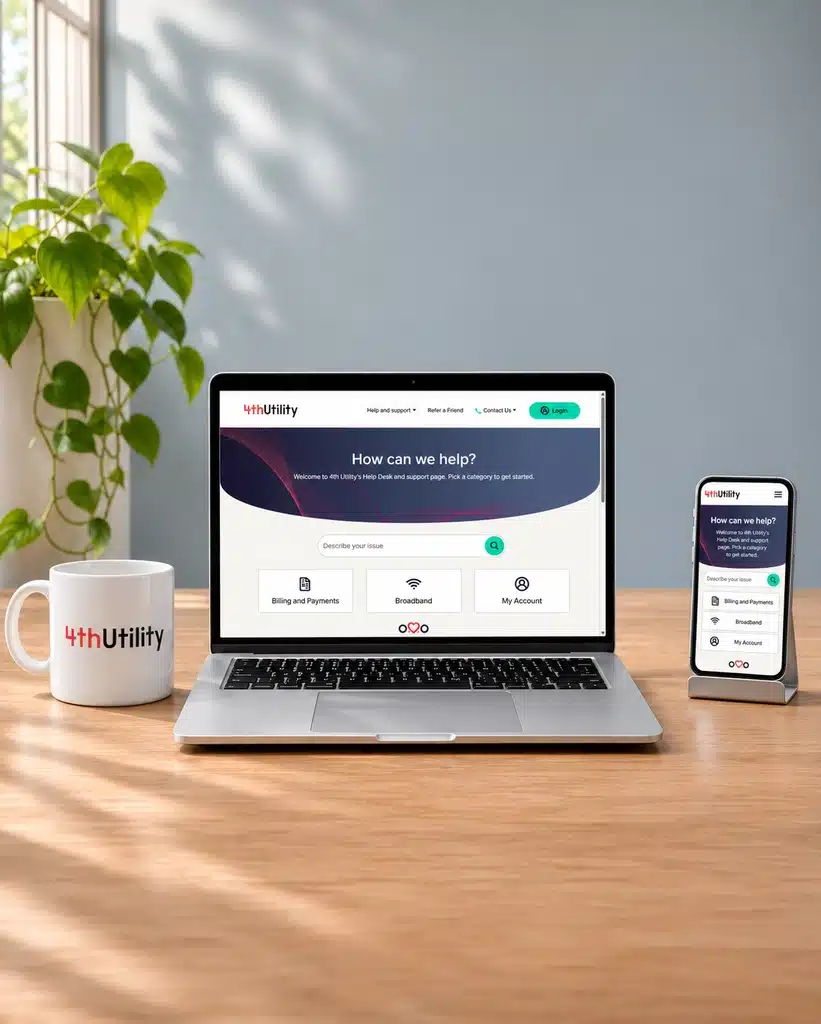
4th Utility has one of the better complaints processes we’ve seen. The form accepts detailed written evidence, customers choose how the provider replies, and the code clearly explains internal escalation, deadlock and CISAS. The 28-working-day target isn’t quick, and the published eight-week ADR wording needs updating to six weeks. Even so, customers see how to complain and where to go if 4th Utility doesn’t resolve it.
Where would you like to go next?
Complaints policy score
This score reflects how clear and useful 4th Utility’s complaints process is, including response times, escalation options, ADR access and support for vulnerable customers.
How we calculate this score
This score looks at how clear, accessible and useful the provider’s complaints policy is.
We give weight to whether the provider publishes a complaints code of practice, provides clear complaint routes, explains its response times and sets out how customers can escalate unresolved complaints.
We also score independent ADR access, including whether the ADR scheme is named, when customers can use it, and whether accessible complaints support is available.
See all measurementsOnline help and account support
4th Utility’s website handles most everyday account jobs well. You can view bills, make payments, change your package, search the Help Centre and check outages without calling. Guided fault checks are useful too. There isn’t a customer app, chatbot or community forum, so anyone who prefers mobile or peer-to-peer help gets a thinner service.
The browser account covers everyday admin
4th Utility’s online account lets customers view bills, make payments and manage their package. Those are the jobs that most often turn into an unnecessary support call, so putting them in one browser account is useful.
Package changes are available online too. You don’t need to call simply to see the account or deal with routine billing and service changes.
Help articles don’t trap you
The searchable Help Centre covers broadband, billing and account problems. If an article doesn’t answer the question, phone, email, Live Chat and WhatsApp are all available. We prefer that to a help site that keeps sending customers around the same pages.
Phone support runs seven days a week, including evenings on weekdays. 4th Utility doesn’t publish matching hours for every digital route, so urgent problems are still better handled by phone.
The outage page gets specific
The service-status page shows incidents affecting one building, a wider area or several locations. The Help Centre then walks through common connection checks. That combination is genuinely useful when you want to know whether the problem is 4th Utility’s network or something inside your home.
You still have to call
The website helps you diagnose a fault but doesn’t let you report a new one or track an individual repair. You have to call 4th Utility, then keep hold of the reference and ask for updates. That’s the largest gap in an otherwise useful set of online tools.

Email support is available
4th Utility does publish email support, which is useful when you want the question and answer in writing. Live Chat and WhatsApp give you quicker written options, while phone support is the only published route for logging a new broadband fault. The choice is good, even if the routes can’t all do the same jobs.
How 4th Utility’s online help fits together
-
1
Open your account
Use the browser account to check bills, make payments and manage your broadband package. There isn’t a customer app.
-
2
Search the Help Centre
Look for guidance on broadband, bills, payments, account changes and common connection problems.
-
3
Choose written help or phone
Use email, Live Chat or WhatsApp for written help. Call to report a new fault.
-
4
Check the connection
Use the service-status page and Help Centre checks to find an area outage or rule out simple home problems.
-
5
Keep the reference
4th Utility doesn’t publish an online tracker for individual repairs, so keep the fault reference and ask for updates.
There isn’t a 4th Utility customer app
Customers who like managing broadband from an app don’t get that option here. 4th Utility puts bills, payments and package management in a browser account instead. You can still do those things on the website, but you have to open the account in a browser each time and won’t get app notifications about faults.
There’s no app-based connection test, router control or fault tracker either. Connection checks stay in the Help Centre, while outage information stays on the status page.
This won’t bother everyone. A well-made mobile website handles simple account jobs perfectly well. An app would still make repeat visits, saved logins and repair notifications much more convenient.
We don’t mark 4th Utility down simply for refusing to put the same website inside an app icon. Without an app, though, you lose quicker sign-in, fault notifications, repair tracking and simple diagnostics. 4th Utility doesn’t offer any of those features, so the browser account feels capable rather than complete.
The website does most routine jobs
The online account covers bills, payments and package changes. That’s enough to deal with the account jobs most customers repeat, and it means a simple billing check doesn’t have to become a phone call.
The searchable Help Centre deals with broadband, billing and account questions, with guided checks for common router and connection problems.
The public status page earns its keep. It shows building and area incidents, so customers can see whether 4th Utility already knows about a wider outage. New faults still have to be reported by phone, which stops the website from handling the full job.
Use the account for bills and package changes, and the Help Centre for guidance. Neither replaces the phone when a new fault needs logging.

No customer forum
4th Utility doesn’t run a public customer forum, so there’s no searchable collection of answers from other users.
That removes a useful fallback for unusual router, building or account questions that don’t fit a standard Help Centre article.
A forum should never replace proper support, but it can help customers find fixes and see recurring problems that a provider’s own guides miss. 4th Utility leaves that gap open, so customers depend on official help or unrelated websites.
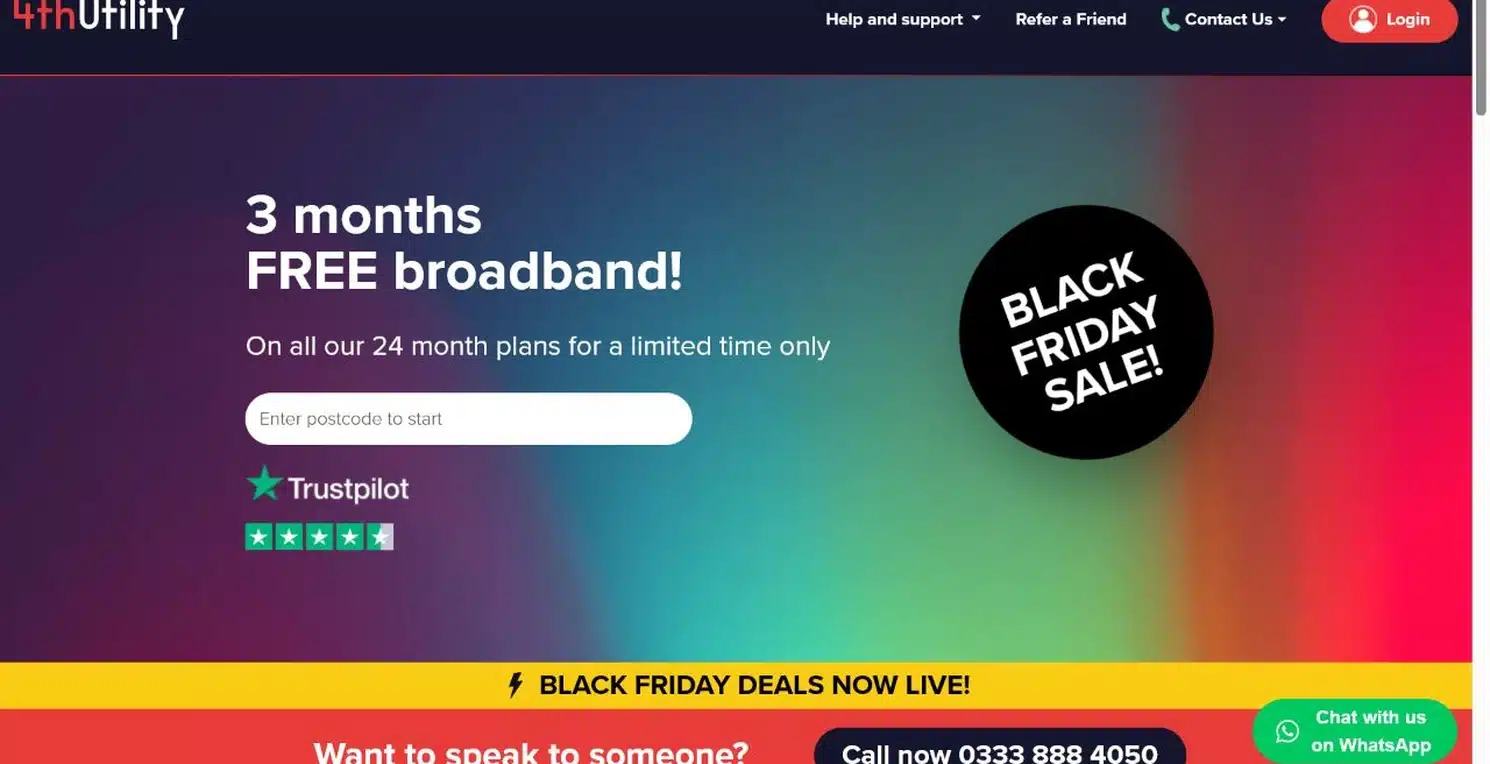
4th Utility’s online help is good, not exceptional. The browser account handles bills, payments and package changes, while the searchable Help Centre and detailed status page help with common broadband problems. Email, Live Chat and WhatsApp provide a route to a person. There isn’t a customer app, chatbot or community forum, and the website can’t report or track an individual fault. Routine jobs are covered well; fault handling is where the online service runs out.
Where would you like to go next?
Online help and account support score
This score reflects the quality and range of self-service tools, account management, help content, diagnostics, digital support routes and written support options.
How we calculate this score
This score looks at how well a provider lets customers manage their account, find help, diagnose faults and report problems online.
Email support carries extra weight because it creates a written record and helps with issue ownership. We also score live chat with human agents, fault diagnostics, online fault reporting and service-status tools highly.
Account tools, billing, package management, help articles, chatbot support and community forums also contribute to the score, but with lower weighting.
See all measurementsSome links on this page may earn us a small commission if you click through and buy. This never affects either what you pay, or our scores and recommendations. If, however, you’d rather bypass affiliate links, use this direct 4th Utility link instead.