
REBEL INTERNET ROUTERS AND EQUIPMENT REVIEW

Rebel Internet routers review: How good are they?

Rebel Internet offers one router across its three available packages, the Rebel R1, as well as any amount of Plume Pods, which will extend your Wi-Fi signal as needed, but at extra cost. So how good is it? Let’s find out.

By Data checked  Checked weekly
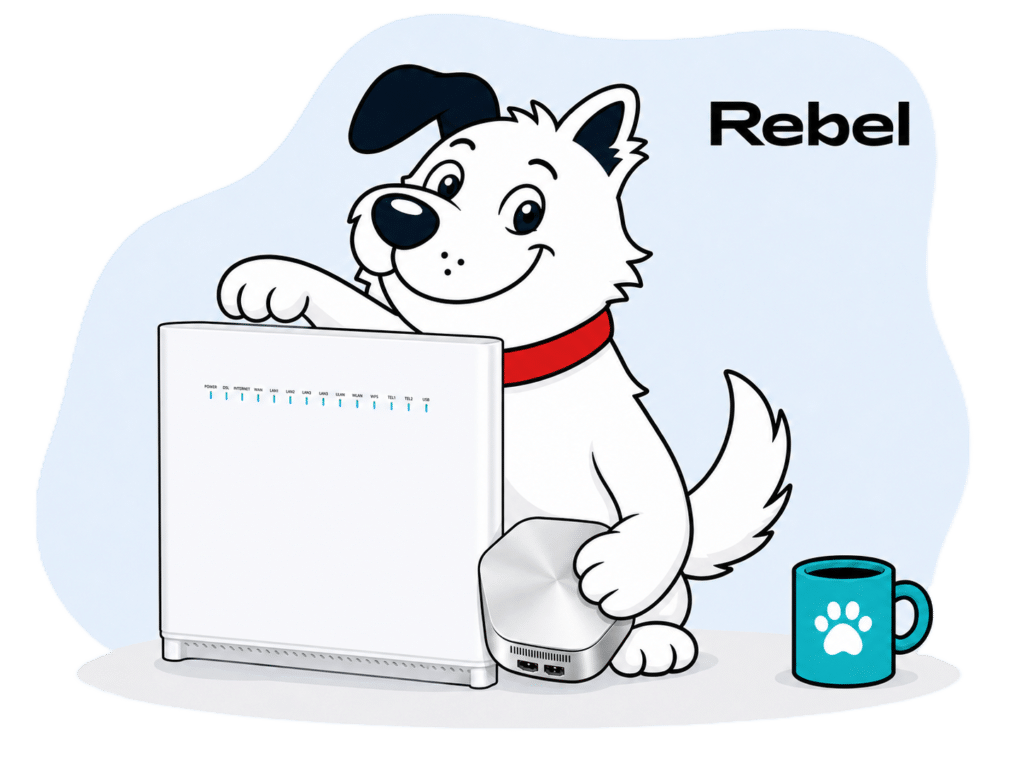
the fibredog mascot dog with the rebel r1 and plume pod routers
fibredog mascot wearing a headset

Having trouble choosing a broadband provider?

No single best provider or package exists – only the best pick for you personally. Fibredog’s YourMatch™ system uses thousands of provider metrics and a lot of maths to find you your perfect match.

Rebel Internet routers and equipment scorecard

Six key areas. One overall score. All calculated using our transparent methodology.

Wi-Fi quality

How good the standard routers’ Wi-Fi is in everyday use, looking at specifications, Wi-Fi bands/type, and how many devices they can support.

8.3/10

Wi-Fi range

How far the router’s Wi-Fi should reach around the home, with consideration given to local factors like large homes or thick walls.

7.5/10

Whole-home Wi-Fi

Whether the provider offers a mesh router system or extra help for larger homes, whether it’s good, and whether it’ll cost you extra.

7.2/10

Wired connectivity

How well the router supports Ethernet and wired devices, looking at number of ports, their speeds, and how accessible they are.

8.2/10

Router controls

How much control you get through the app, admin page and any controls you might have on the router itself.

9.3/10

Using your own router

How easily you can use your own third-party router or mesh hardware – whether you can use anything you like or if it’s limited in any way.

9.8/10

Wi-Fi quality

Rebel keeps things simple by supplying the same R1 Router with every broadband package. Fortunately, it’s an unusually capable Wi‑Fi 6 model with high wireless capacity, useful Plume controls and proper security features. There’s no Wi‑Fi 7 or 6GHz band, but you’re getting Rebel’s best equipment without paying for a premium package.

Key differences

Everyone gets Rebel’s best router

Rebel doesn’t reserve better hardware for its fastest or most expensive packages. Every household taking Rebel equipment gets the same R1 Router, whether buying Rebel 115, 550 or 1000. There’s no premium upgrade to chase and no danger of receiving an older router because you chose a cheaper speed.

The R1 has serious Wi‑Fi capacity

The R1 is an AX5400 Wi‑Fi 6 router, combining a 2×2 2.4GHz channel with a much more capable 4×4 5GHz setup. Beamforming, MU‑MIMO and OFDMA help it manage busy homes efficiently, while WPA3 gives you the current mainstream Wi‑Fi security standard.

Plume makes the controls genuinely useful

Rebel’s Plume system does more than show you a list of connected devices. It provides automatic optimisation, parental controls, guest Wi‑Fi, online protection and device prioritisation. You can even favour gaming traffic or a console while less urgent downloads wait, which is unusually useful on a standard provider router.

The SuperPods step back to Wi‑Fi 5

Rebel’s optional SuperPods form a properly integrated mesh with the R1, but the pods themselves use older tri-band Wi‑Fi 5 technology. The system can still extend coverage effectively, although you shouldn’t mistake it for Wi‑Fi 6 throughout. Each pod also costs extra each month and none are included as standard.

INTERACTIVE TOOL

Compare routers from any provider

This provider’s routers are pre-selected for comparison with one another. However, you can use this tool to compare any router from any major provider using the dropdown menus below.

Feature Choose router Choose router
Fibredog rating
Router included as standard
Router manufacturer
Router model
Wi-Fi standard
Wi-Fi bands
2.4GHz supported
5GHz supported
6GHz supported
Beamforming
Antenna count
Maximum connected devices
Stated coverage
Total Ethernet ports
MU-MIMO
OFDMA
WPA3 security
Guest network
Antenna type
Gigabit Ethernet ports
2.5Gb Ethernet ports
5Gb Ethernet ports
10Gb Ethernet ports
WAN port speed
USB ports
Telephone ports
ONT Ethernet input
Coaxial input
Power connection
Mesh support
Provider mesh product
Third-party router use
Modem mode
Compatible broadband technology
App management
Parental controls
QoS
Automated QoS
Device prioritisation
Anti-bufferbloat controls
Manual queue management (SQM/CAKE)
Smart channel selection
Security features
Gamer mode
Game traffic prioritisation
Gaming QoS profiles
Server ping routing tools
Latency dashboards
Per-device gaming presets
Gaming VPN routing features
Work from home mode
Automatic firmware updates
Firmware update notes
Router height
Router width
Router depth
Router weight
Power consumption
Router orientation
Wall mountable
Router colour
Self-installation
Browser admin interface
WPS
Status light control
Reset button
Wi-Fi on/off button
Where would you like to go next? See all tools See all tools

Which Rebel Internet router do you get?

Rebel R1 Router

Included with every Rebel broadband package.

The R1 is a dual-band Wi-Fi 6 AX5400 router with WPA3, four Gigabit LAN ports and automatic network optimisation.

Rebel SuperPods

Optional mesh units extend the R1's coverage around the home.

They work with the R1 through Rebel's Plume-managed system, but they improve coverage rather than replace the main router.

Bring your own router

You can decline the R1 and use compatible third-party equipment.

Rebel publishes the required setup details, although its SuperPods cannot be used with a customer-owned router.

Wi‑Fi quality from one very capable router

The Rebel R1 Router is comfortably better than the basic hardware supplied by almost any other national broadband provider, with perhaps only EE Broadband's 1.6Gbps package-only Hub 7 Pro giving it a run for its money. But even that router isn't as configurable or as ready to serve as many devices as Rebel's.

The R1's AX5400 Wi‑Fi 6 specification combines speeds of up to 600Mbps across 2.4GHz with up to 4.8Gbps across 5GHz. Those are theoretical figures, but they do reveal how much wireless capacity the router has available.

Its 5GHz channel uses a 4×4 design, giving it more capacity to communicate with several devices than an ordinary 2×2 router. Beamforming focuses the signal towards connected equipment, while MU‑MIMO and OFDMA divide airtime more efficiently when the house is busy.

The Plume platform adds much of what makes the R1 interesting. It automatically manages channels and traffic, provides parental controls and protects against malicious sites, phishing, malware and unsafe smart-home devices. Device and gaming prioritisation will also protect a console or video call from less urgent household traffic without turning the router into a complicated networking project.

The obvious omissions are Wi‑Fi 7 and the 6GHz band. The R1 is dual-band, so it can’t use the newer, quieter wireless spectrum available to compatible devices. Its optional SuperPods also use Wi‑Fi 5, creating an older wireless layer around a newer Wi‑Fi 6 router.
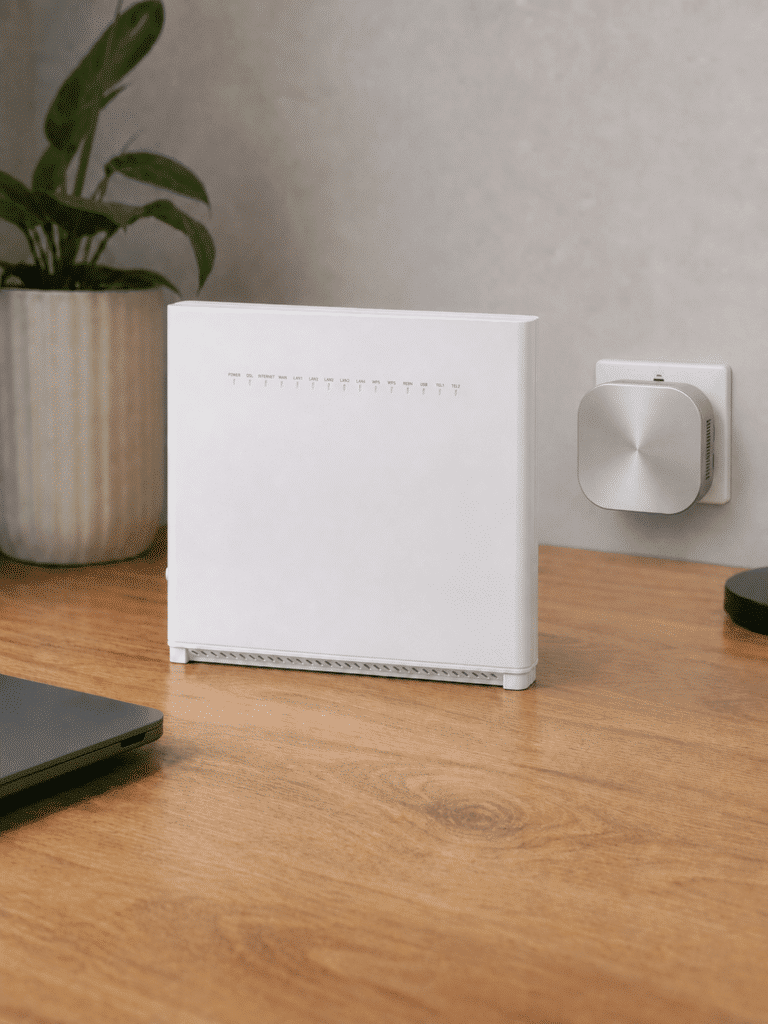
rebel r1 router with plume superpod

Rebel gives every package the same excellent R1 Router, with AX5400 Wi‑Fi 6, WPA3, high wireless capacity and genuinely useful Plume controls. Gaming prioritisation and included security add real value. The lack of Wi‑Fi 7 and 6GHz is understandable, although the older Wi‑Fi 5 SuperPods prevent the optional mesh from feeling fully modern.

8.3 /10
Overall score

Wi-Fi quality score

This score is based on the router’s Wi-Fi standard, frequency bands, device capacity and key wireless features such as beamforming, MU-MIMO and OFDMA.

Router range

Rebel gives every package the same R1 Router, so range doesn’t depend on how fast your package is. Its Wi‑Fi 6 hardware has good foundations for an average home, while paid SuperPods can extend coverage further. The catch is that Rebel publishes no standalone range figure and guarantees no particular result.

The R1 starts with the right range hardware

The R1’s 4×4 5GHz channel gives it more capacity than most basic provider routers, while beamforming helps direct its signal towards connected devices. Wi‑Fi 6 also manages busy households more efficiently, so range is less likely to collapse simply because several people are online. The unit itself is pretty large, though, so do keep that in mind. Powerful means power, power means heat, and heat needs space.

Rebel doesn’t publish a coverage distance or floor-area claim for the router on its own. That’s honest, because walls and layout matter enormously, but it also means there’s no firm promise about how much of your home one R1 should cover.

No 6GHz band is no disaster for range

The R1 uses 2.4GHz and 5GHz Wi‑Fi rather than adding a 6GHz band. That limits its cutting-edge speed nearby, but 6GHz is poor at passing through walls anyway. For reaching upstairs bedrooms and awkward corners, the longer-legged 2.4GHz band still does the unglamorous but essential work.

SuperPods turn it into a proper mesh

If the R1 can’t cover the whole building, Rebel’s SuperPods extend it as one coordinated Plume system. They aren’t ordinary repeaters broadcasting a second, awkward network. Router, pods and app work together to choose connections, manage traffic and move devices around the mesh.

The pods use older tri-band Wi‑Fi 5, but that third band can still help them communicate without consuming all the capacity used by your devices. Rebel suggests roughly one pod per two or three rooms, or at least one on each floor, although your walls may make that estimate laughably optimistic or unnecessarily generous.

Better coverage becomes a monthly expense

No SuperPods are included with any Rebel package. Each one costs £5 per month, so a difficult home needing four would add £20 to every monthly bill. You can start with the R1 and add pods later through the Customer Portal, which is far more sensible than ordering a small army of them before testing the router.

More importantly, Rebel provides no whole-home Wi‑Fi guarantee. There’s no promised speed in every room, defined fix process or refund if the paid mesh still disappoints. The SuperPods are useful remedial hardware, not a guaranteed outcome, so placement and a realistic estimate of what your building needs matter enormously. Freedom to, say, order three, then send one back if you don't need it would be a nice addition here.

INTERACTIVE TOOL

Router range estimator

See how wall materials and router choice affect the quality of Wi-Fi around a typical home.
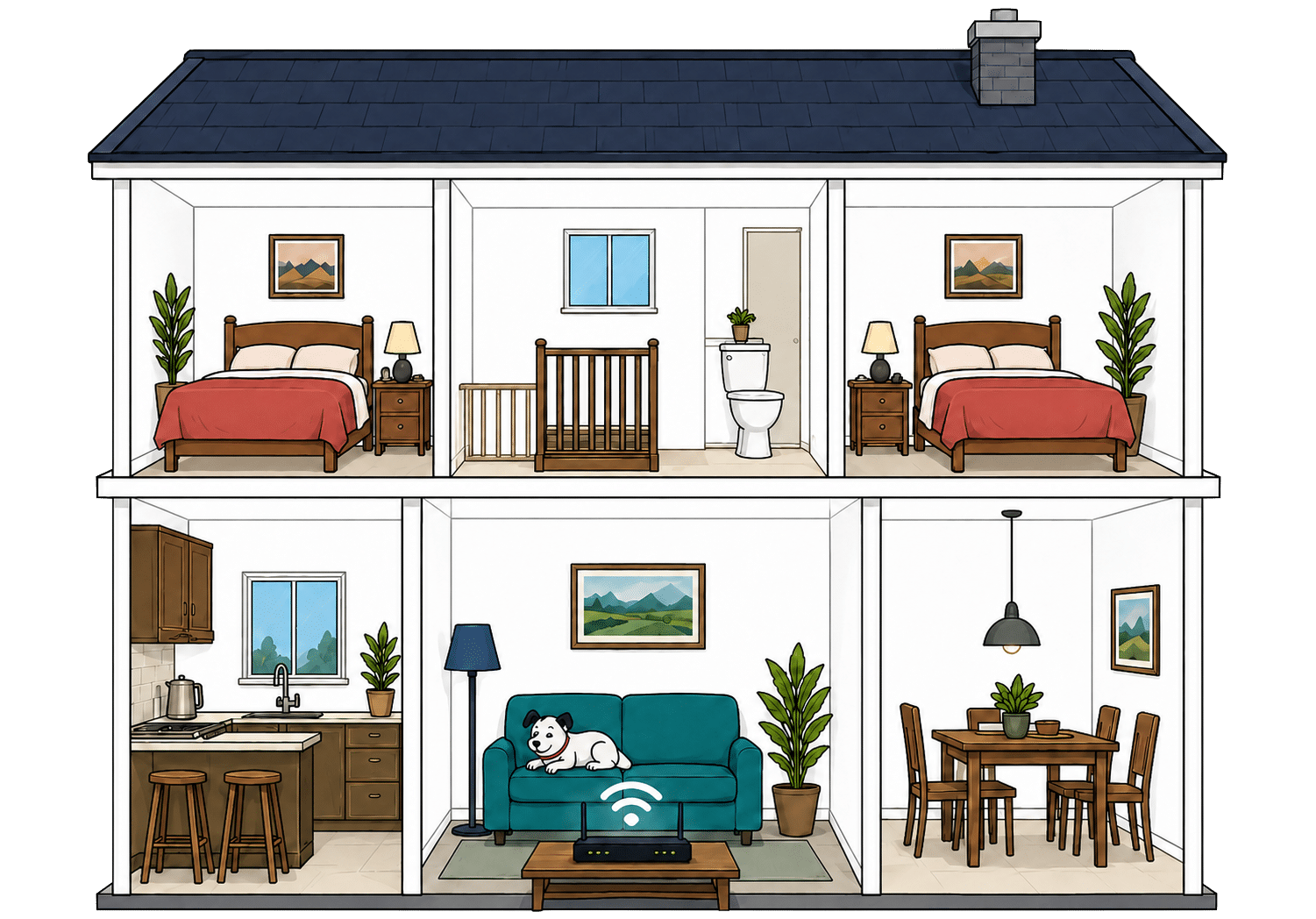
What are your internal walls mostly made from?
Which of these routers are you estimating?
Perfect reception – strong, reliable Wi-Fi. Average reception – slower speeds may happen. Poor reception – weak signal or drop-outs.

Where would you like to go next?

How to use the Router Range Estimator

It’s pretty straightforward. Select the router from this provider, and the main construction materials of your internal walls. It’s important to remember, though, that this is just an estimator.

It can give you a rough idea, but local factors like neighbouring network interference or mixed material wall set-ups can mean the results vary considerably from the estimate. It’s meant to give you a rule of thumb and only that.

How to maximise your Rebel router's range

  1. Start with placement

    Put the Rebel R1 near the middle of your home if you can, out in the open and away from thick walls or cupboards.

  2. Test every room

    Run a speed test where you actually use Wi-Fi. Our Whole Home Wi-Fi Calculator further down this page is built for exactly that.

  3. Use the Plume app

    Use Rebel's Plume or HomePass app to check connected devices, network performance and Wi-Fi conditions around the home.

  4. Move obvious blockers

    Keep the hub away from TVs, mirrors, metal objects, appliances and anything that boxes it in. Give the signal space to leave the router.

  5. Add SuperPods if needed

    If rooms still struggle, Rebel's optional SuperPods extend the R1 through the same managed mesh system; test first before ordering more than you need.

Faster Wi-Fi has shorter legs

Wi-Fi behaves exactly like sound. Ever notice how you hear the bass, meaning the low frequencies, a few rooms away, but can't hear the treble? It's the same here. The higher the frequency, the more detail there is in the signal, but lower frequencies make it through far more walls.

That's the difference between Wi-Fi bands. 2.4GHz is the slow old workhorse. It isn't glamorous or especially quick, but it's better at reaching the awkward room at the back. 5GHz is faster and better for streaming, gaming and newer devices, but it gives up sooner as you move away from the router.

Rebel's R1 uses dual-band Wi-Fi 6. Its 2.4GHz and 5GHz channels cover the usual range-versus-speed trade-off, with no 6GHz band. Optional tri-band SuperPods extend coverage through Rebel's managed Plume mesh system.

The R1 Router has good range foundations, with Wi‑Fi 6, beamforming and a capable 4×4 5GHz channel. Rebel’s integrated SuperPods can extend coverage effectively, but none is included and each costs £5 per month. With no published standalone range or whole-home guarantee, better coverage can become an open-ended monthly expense.

7.5 /10
Overall score

Router range score

This score estimates how well the provider’s standard routers are likely to deliver usable Wi-Fi speeds around a typical home, not just whether a faint signal reaches the back bedroom.

Whole-home Wi-Fi

Rebel’s whole-home Wi‑Fi system uses optional SuperPods to carry your signal into rooms the R1 Router can’t reach reliably. It’s a neat, properly integrated setup with useful app controls, but every pod costs extra each month. More importantly, Rebel promises no particular speed or level of coverage once you’ve added them.

SuperPods are more than ordinary Wi‑Fi extenders

Rebel’s SuperPods work with the R1 Router as one joined-up Wi‑Fi system. Rather than creating separate networks around your home, the pods cooperate with the router and automatically steer your devices towards whichever connection should work best.

Everything is managed through the Plume Home app. You can see what’s connected, pause access, set parental controls and prioritise important devices or activities. The system can even favour gaming traffic over less urgent jobs such as background downloads.

You’ll pay separately for every pod you need

No SuperPods are included with any Rebel broadband package. Each one costs extra every month, so fixing several weak rooms can add a noticeable amount to the price of your broadband. The equipment also remains Rebel’s property rather than becoming yours.

Rebel recommends roughly one pod for every two or three rooms, or at least one on each floor. That’s a very broad rule, though. Your walls, layout and router position matter far more than the number of rooms, so it makes sense to test the R1 properly before ordering a stack of pods.

Good coverage hardware, but no coverage promise

The SuperPods are simple to install and should make a real difference where the R1 signal falls short. They’re based on older Wi‑Fi technology than the router itself, but the joined-up mesh design matters more than that technical mismatch in most homes.

What’s missing is a measurable guarantee. Rebel doesn’t promise a minimum speed in every room, set out what it will do if coverage remains poor or offer compensation when the system fails to deliver. You’re renting equipment intended to improve your Wi‑Fi, not buying a guaranteed result.

There’s one other restriction worth knowing about. SuperPods only work with Rebel’s R1 Router. Rebel is unusually welcoming if you’d rather use your own router, but doing so means giving up its whole-home Wi‑Fi system.

Rebel’s SuperPods form a genuinely clever whole-home system, with simple setup, automatic optimisation and excellent app controls. The catch is that every pod costs extra each month and none comes with a measurable coverage guarantee. Test the included R1 Router first, because Rebel’s room-counting guidance could easily persuade you to rent more pods than your home actually needs.

INTERACTIVE TOOL

Whole Home Wi-Fi Calculator

Just follow these simple steps and we will calculate how many, if any, ‘Whole Home Wi-Fi’ pods you will need from your provider.

Start here. Work through the steps in order.

Upload Mbps
Latency ms

Step 1: Agree to M-Lab’s data policy

M-Lab stores test data, including your IP address. Tick to agree before testing.

Step 2: Connect to your home Wi-Fi

Make sure the phone, tablet or laptop you are using is connected to your home Wi-Fi network.

Step 3: Turn mobile data off

If your device has mobile data, turn it off before you start walking around the house.

Step 4: Test next to your router

Stand next to your main Wi-Fi router and press the button below. This gives us your baseline speed.

Recorded result Router baseline
Mbps

Step 5: Test your ground floor corners

Walk to each corner of your ground floor and run a test. If your home is not a perfect rectangle, do not overthink it. Just pick four sensible far-apart spots and keep the same numbering if you add another floor.

Corner 1 Mbps
Corner 2 Mbps
Corner 3 Mbps
Corner 4 Mbps

Last step: Add another floor or calculate

If you have another floor to test, add it below. If you have tested every floor you care about, press calculate.

Your Whole Home Wi-Fi result

Result waiting Run your tests, then press calculate.

    Where would you like to go next?


    Rebel SuperPods: The basics

    Find the weak room

    SuperPods are intended for rooms where the signal from the Rebel R1 becomes unreliable.

    Use our calculator above

    Check likely Wi-Fi blackspots before you pay for a faster package or extra kit.

    Not included as standard

    Every Rebel package includes the R1 router, but SuperPods are optional additions rather than standard equipment.

    Each SuperPod costs extra

    SuperPods are rented as paid extras, so test the R1 first and avoid ordering more units than the home actually needs.

    Coverage, not raw speed

    SuperPods help Wi-Fi reach distant rooms through Rebel's managed Plume system. They do not make the incoming broadband line faster.

    Rebel’s SuperPods provide effective mesh coverage, excellent app controls and useful traffic prioritisation. However, no pods are included, every unit costs extra each month and there’s no minimum room-speed guarantee. It’s a capable whole-home system, but one you should add carefully rather than automatically.

    7.2 /10
    Overall score

    Whole-home Wi-Fi score

    This score estimates how well the provider helps you fix Wi-Fi weak spots around the home, including mesh support, mesh devices, app control, Wi-Fi guarantees and router capability.

    fibredog mascot wearing a headset

    Having trouble choosing a broadband provider?

    No single best provider or package exists – only the best pick for you personally. Fibredog's YourMatch™ system uses thousands of provider metrics and a lot of maths to find you your perfect match.

    Wired connectivity

    The Rebel R1 Router is well equipped for anything you’d rather connect with a cable. It gives you four sockets for computers, consoles, TVs and other wired devices, with a separate connection for the broadband line itself. That’s generous, although every socket has the same speed limit, which creates one awkward weakness on Rebel’s fastest package.

    All four wired sockets are yours to use

    The R1 has four Gigabit Ethernet sockets for your devices. Its Full Fibre connection uses a separate internet socket, so you don’t lose one of those four when the router is connected to the box installed on your wall.

    That leaves enough room to wire in a TV, games console, computer and network switch at the same time. Most homes won’t need anything more, and you can always add an inexpensive switch if four sockets somehow aren’t enough.

    The fastest package exposes the router’s limit

    Each wired socket can handle speeds of up to 1Gbps. That’s comfortably enough for Rebel 115 and Rebel 550, and far beyond what ordinary streaming, gaming or working from home will use.

    Rebel 1000 is where the limitation becomes visible. The router has no faster 2.5Gbps socket, so one connected device may fall slightly short of the package’s headline speed because normal network overheads often see these sockets operating at around 900Mbps rather than the full 1000. That won’t trouble most people, but it could potentially annoy some.
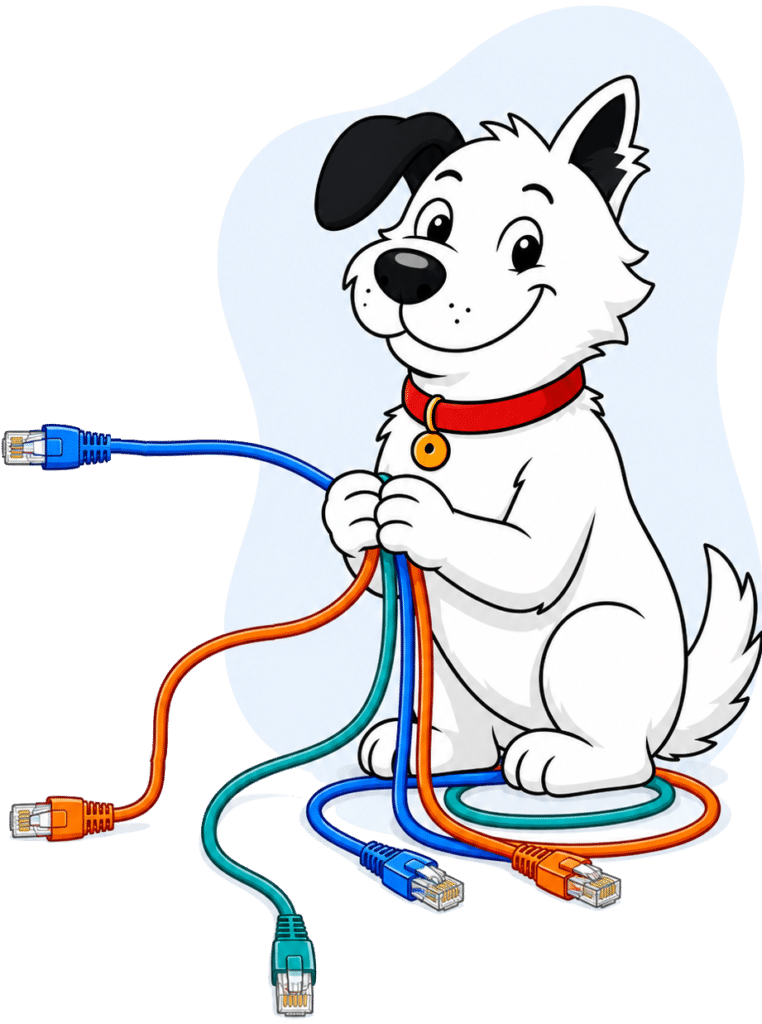
    network connections dog master 1

    How a simple wired Rebel Internet network works

    Plugging devices directly into your router gives them a steadier connection than Wi-Fi. These router diagrams show the physical Ethernet ports, including any ONT or internet port used by the broadband connection itself.

    Rebel R1
    1 ONT / internet port 1Gbps
    4 usable ports 1Gbps 1Gbps each

    Check which port is the internet input before counting how many wired device ports you have spare.

    Use the fastest spare LAN port for the device or switch that needs the most speed.

    A cable is still best for your most important devices

    Even excellent Wi‑Fi can slow down or become less reliable as it passes through walls. A wired connection avoids most of that uncertainty, making it the better choice for gaming, large downloads, video calls and any computer that needs consistently dependable performance.

    You don’t need to trail cables through every room. Plugging in the most important device near the router can free up Wi‑Fi capacity for phones, tablets and everything else that genuinely needs to be wireless.

    The R1 also has two telephone sockets and a USB connection. Home phone service isn’t included with your broadband, however, so those telephone sockets only become useful if you choose to add it separately.

    How to make best use of your Rebel R1's LAN ports

    1. Count the usable ports

      The Rebel R1 has four yellow Gigabit LAN sockets for devices, plus a separate red Gigabit WAN socket for the broadband connection.

    2. Gigabit covers most packages

      A Gigabit Ethernet connection comfortably covers Rebel 115 and 550 and can carry most of the speed available from Rebel 1000.

    3. Rebel 1000 meets a hard limit

      The R1 has no 2.5Gbps LAN port, so protocol overhead means one wired device may not see the full headline 1,000Mbps.

    4. Wire the devices that care

      Gaming PCs, consoles, work computers and network storage benefit most. TVs and printers can wait their turn for a wired port.

    5. Add a switch if needed

      If four LAN sockets aren't enough, add a Gigabit Ethernet switch. It gives you more ports, not more speed per port.
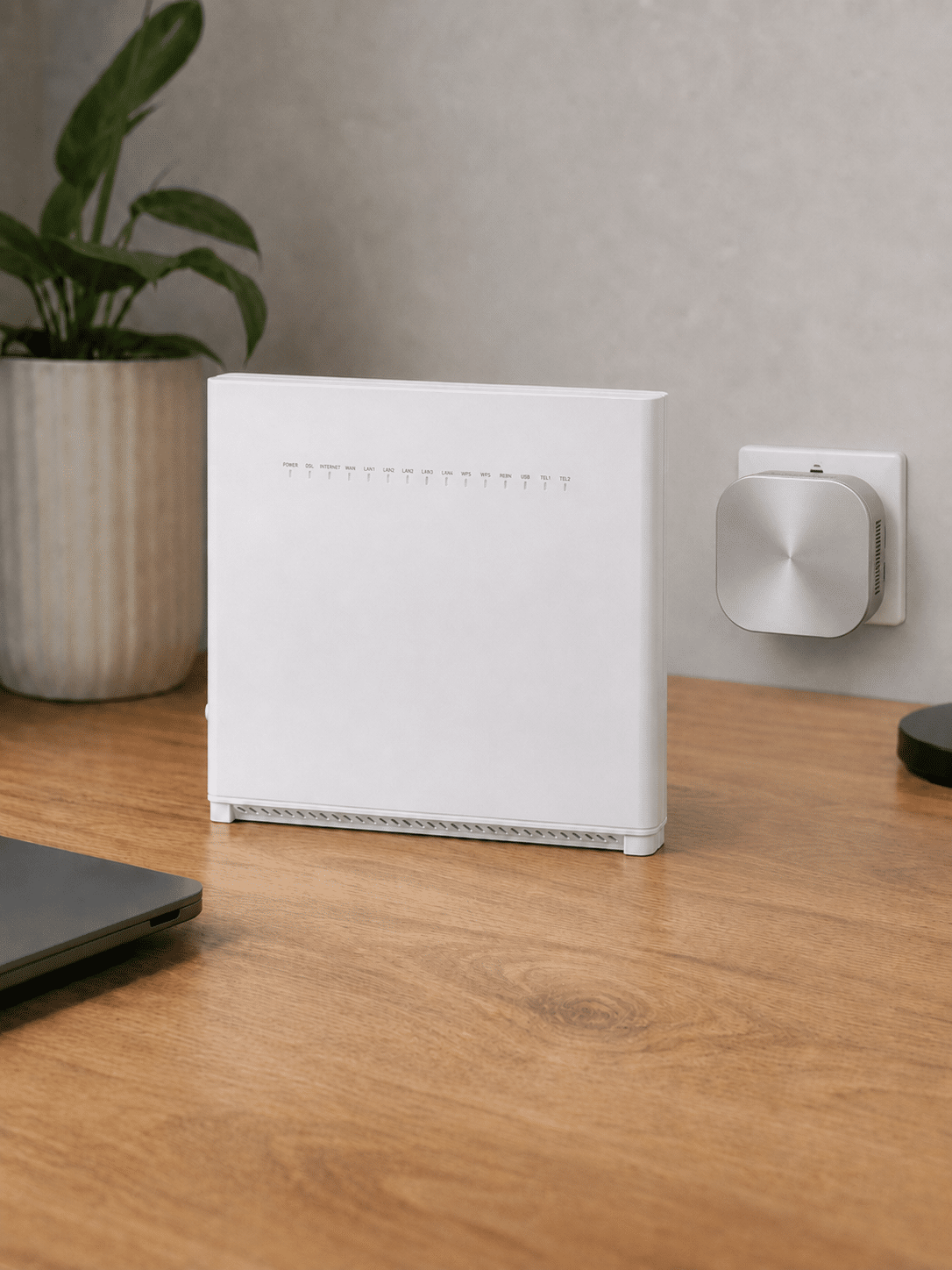
    Rebel gives you four usable Gigabit Ethernet sockets, a separate internet input and enough wired capacity for almost any home. The only real weakness is the lack of a faster socket for Rebel 1000, which means one device may not quite reach the package’s full headline speed.

    8.2 /10
    Overall score

    Wired connectivity score

    This score looks at how useful the router is if you want to plug devices in with cables, including the number of Ethernet ports, port speeds, phone ports and whether the router has the right connection for the network it uses.

    Router controls

    Rebel’s router controls are unusually complete for equipment included with every package. The Plume Home app handles everyday jobs, while a browser-based control panel covers more detailed settings. You also get automatic Wi‑Fi management, built-in security, parental controls and the ability to prioritise important devices without having to understand how the router works.

    The Plume app makes everyday control simple

    The Plume Home app gives you a clear view of the devices using your broadband. You can pause access, create profiles and apply parental controls without digging through the R1 Router’s browser settings.

    It also lets you prioritise a device when it needs the best available connection. That could mean favouring a work laptop during a video call or making sure a games console isn’t competing with a large background download.

    Much of the Wi‑Fi management happens automatically. The system monitors conditions around your home and adjusts itself, so you’re not expected to choose channels or constantly tinker with technical settings.

    Security and guest access are properly covered

    You can create a separate guest network rather than handing visitors the password for your main Wi‑Fi. It’s a small feature, but one that’s still inexplicably missing from some provider routers.

    Rebel also includes protection against malicious websites, phishing, malware and suspicious smart-home devices, alongside ad blocking and automatic router updates. More advanced settings remain available through a web browser, while physical Wi‑Fi, pairing and reset buttons cover the practical basics on the router itself.

    Gaming gets useful priority, not pointless gimmicks

    Rebel doesn’t pretend the R1 is a specialist gaming router. There’s no flashy ‘gamer mode’, performance dashboard or collection of complicated settings that most people would never touch.

    What it does offer is more useful. The Plume system can recognise important activities such as online gaming and give them priority over less urgent traffic. You can also prioritise a particular console or other device through the app.

    That won’t magically improve the route to a distant game server, but it can stop another person’s software update or large download from spoiling your game. It’s a sensible piece of control that tackles an actual household problem.

    Rebel gets router controls impressively right. The Plume app makes parental controls, guest access, security and device management easy, while the browser interface remains available when you need something more detailed. Best of all, its traffic prioritisation is genuinely useful for gaming and busy homes, rather than being a flashy feature with no practical purpose.

    Router controls

    Rebel Internet router controls at a glance

    Here’s a quick look at the router controls you can expect, including app management, browser admin tools, Wi-Fi settings, security features and the physical buttons on the router itself.

    App management App-based controls Available
    Browser admin page Browser-based controls Available
    Parental controls Household controls Available
    Guest network Separate guest Wi-Fi Available
    QoS Traffic priority controls Available
    Device prioritisation Per-device priority Available
    Smart channel selection Wi-Fi optimisation Available
    Security features Built-in security notes Available
    Automatic updates Firmware updates Available
    WPS Push-button pairing Available
    Reset button Physical reset control Available
    Wi-Fi on/off button Physical Wi-Fi control Available

    Checked from manufacturer specifications. Fibredog tracks dozens of router specification parameters across dozens of provider routers. When a provider changes its router or features, this table is swiftly updated.

    What stands out

    • The Home app is unusually capable

      Rebel's Plume-based Home app brings the R1, optional SuperPods, device management, parental controls and network security into one managed system.

    • Guest Wi-Fi is supported

      You can provide separate guest access without sharing the credentials for the main household network.

    • Prioritisation is genuinely useful

      The system can prioritise devices and latency-sensitive traffic such as gaming, although it does not provide specialist gamer modes or detailed manual traffic-shaping controls.

    Rebel combines an excellent app with browser controls, guest Wi‑Fi, parental settings, automatic optimisation and substantial built-in security. Its ability to prioritise gaming and other important traffic is particularly useful. There are no specialist gaming tools, but the controls most homes will actually use are exceptionally well covered.

    9.3 /10
    Overall score

    Router controls score

    This score looks at how easy the router is to manage, including app support, browser settings, parental controls, guest Wi-Fi, security features, updates and physical buttons.

    Using your own router

    Rebel is unusually relaxed about you using your own router. It feels almost like a challenge: Want to buy a better router than the R1? Be our guest. It publishes the connection details you’ll need, supports a direct replacement and will even leave the R1 Router out of your order if you ask.

    Using your own router with Rebel Internet explained step-by-step

    Check that your router is suitable

    Rebel Full Fibre uses an ONT on the wall, so your router needs an Ethernet WAN port and support for Rebel's published PPPoE and VLAN requirements.

    Disconnect the Rebel R1 from the ONT

    The ONT is the small box where the Full Fibre connection enters your home. The R1 normally connects to it through its red Ethernet WAN socket.

    Rebel lets you decline the R1 at ordering or replace it later, so your own router can connect directly to the ONT.

    Connect your router by Ethernet

    Run an Ethernet cable from the ONT to the correct WAN or internet port on your own router.

    Your router will then become the main router for the home rather than sitting behind the Rebel R1 as a second router.

    Enter the required connection settings

    Enter the PPPoE credentials and VLAN information Rebel provides for your connection.

    Rebel uses both Openreach and CityFibre, so follow the instructions supplied for your actual service rather than assuming every connection uses identical settings.

    Test everything before packing the R1 away

    Check wired speed, Wi-Fi coverage, stability and every service you expect to use.

    If you received an R1, keep it available for diagnosis. Remember that Rebel SuperPods cannot be used with a customer-owned router.

    Rebel explicitly supports customers using their own routers and publishes the required connection information. Replacing the R1 means losing its integrated Plume management and compatibility with Rebel's SuperPods.

    Rebel gives you the information needed to switch

    Many broadband providers technically allow another router but leave you hunting through forums for the settings. Rebel does the opposite. It openly publishes the connection information needed to get compatible equipment online.

    With Full Fibre, your router can connect directly to the small broadband box installed on your wall and take over the home network completely. The supplied R1 can also operate in bridge mode if your preferred setup needs it. Either way, Rebel doesn’t force you to run two competing Wi‑Fi networks.

    You can even decline the supplied R1 Router

    Rebel includes the R1 with every package, but you can ask for it to be removed from your order. That’s refreshingly sensible if you already own an expensive router or mesh system and know you have no intention of using Rebel’s equipment.

    Bringing your own router may give you faster wired connections, wider coverage or specialist controls that better suit your home. You’ll need to check compatibility and handle the setup yourself, though. Rebel supports the choice, but it can’t take responsibility for every third-party router on the market.

    Using your own router breaks the Rebel ecosystem

    The biggest compromise isn’t the installation. It’s what you leave behind. Rebel’s R1, Plume Home app and optional SuperPods were designed to work together, covering security, parental controls, automatic Wi‑Fi management and device prioritisation.

    SuperPods won’t work with your own router, so you can’t mix Rebel’s mesh equipment with another brand. You’ll also become responsible for replacing the app controls, security and coverage features previously provided by Rebel.

    That makes switching worthwhile when you already own equipment you prefer or need a feature the R1 lacks. If you’re buying another router merely because you assume provider equipment must be poor, save your money. The R1 is already one of Rebel’s better selling points.

    Why you might still want your own router

    You already own serious kit

    If you've spent proper money on a mesh system, you may prefer it to starting again with Rebel's R1 and optional SuperPods.

    You want a different mesh system

    Rebel's SuperPods integrate neatly with the R1, but they are older Wi-Fi 5 units and cannot be used with a customer-owned router.

    You need specialist controls

    Third-party routers can provide deeper tools for VPNs, DNS, VLANs, firewall rules and home-network tinkering.

    You want multi-gigabit wired speed

    The R1 supports guest Wi-Fi but has no 2.5Gbps Ethernet port, so a different router may expose more of a fast connection to one wired device.

    You want your existing setup unchanged

    Keeping the same Wi-Fi details can save you reconnecting every phone, television, camera and smart device in the house.

    You want more traffic control

    Rebel automates device and gaming prioritisation, but manual SQM, advanced QoS and specialist home-lab controls require different equipment.

    Rebel R1 router with Plume SuperPod

    What changes when you use your own router?

    Your compatible router connects to the ONT and replaces the Rebel R1. It then becomes responsible for the home network and the features Rebel's managed Plume system previously provided.

    The ONT

    Hands the connection to your router

    The ONT is the wall box where the Full Fibre connection arrives. It remains in place and provides the Ethernet hand-off.

    Your own router connects to it through a compatible WAN port instead of the Rebel R1.

    Your own router

    Takes over Wi-Fi and settings

    Your router handles Wi-Fi, wired devices, guest access and whichever VPN, DNS, firewall or traffic controls it provides.

    You also become responsible for compatibility, setup and router faults. Rebel's Home app integration, automated optimisation and SuperPods will no longer be available through the replacement router.

    Rebel makes using your own router exceptionally easy, publishes the required connection details and will remove the R1 from your order on request. You’ll handle compatibility and setup yourself, while Rebel’s SuperPods and managed Wi‑Fi features are lost. Even so, few providers give you this much freedom.

    9.8 /10
    Overall score

    Using your own router score

    This score reflects how well the provider supports third-party router use, including ONT or modem-mode setup, WAN port speed, connection type and how cleanly your own router can take over the home network.

    fibredog mascot wearing a headset

    Having trouble choosing a broadband provider?

    No single best provider or package exists – only the best pick for you personally. Fibredog's YourMatch™ system uses thousands of provider metrics and a lot of maths to find you your perfect match.

    Some links on this page may earn us a small commission if you click through and buy. This never affects either what you pay, or our scores and recommendations. If, however, you’d rather bypass affiliate links, use this direct Rebel Internet link instead.