
TALKTALK ROUTERS AND EQUIPMENT REVIEW

TalkTalk routers review: How good are they?

TalkTalk, like BT, Plusnet and one or two others, offers just the one router no matter which package you choose: the TalkTalk Hub 3. That means there’s a hell of a lot riding on its capabilities. Let’s take a look.


By Data checked  Checked weekly
the fibredog mascot dog with talktalk's Hub 3 router
fibredog mascot wearing a headset

Having trouble choosing a broadband provider?

No single best provider or package exists – only the best pick for you personally. Fibredog’s YourMatch™ system uses thousands of provider metrics and a lot of maths to find you your perfect match.

TalkTalk routers and equipment scorecard

Six key areas. One overall score. All calculated using our transparent methodology.

Wi-Fi quality

How good the standard routers’ Wi-Fi is in everyday use, looking at specifications, Wi-Fi bands/type, and how many devices they can support.

8.2/10

Wi-Fi range

How far the router’s Wi-Fi should reach around the home, with consideration given to local factors like large homes or thick walls.

7.5/10

Whole-home Wi-Fi

Whether the provider offers a mesh router system or extra help for larger homes, whether it’s good, and whether it’ll cost you extra.

6.5/10

Wired connectivity

How well the router supports Ethernet and wired devices, looking at number of ports, their speeds, and how accessible they are.

7.6/10

Router controls

How much control you get through the app, admin page and any controls you might have on the router itself.

7.3/10

Using your own router

How easily you can use your own third-party router or mesh hardware – whether you can use anything you like or if it’s limited in any way.

9.8/10

Wi-Fi quality

Every current TalkTalk Full Fibre package includes the same Wi-Fi Hub 3, and it’s a capable Wi-Fi 6 router rather than a weaker model designed to push you towards an upgrade. There’s no premium router above it, but most homes won’t need one.

Key differences

One router covers every package

Whether you choose Full Fibre 65 or Full Fibre 900, you get the Wi-Fi Hub 3. TalkTalk doesn’t reserve its best router for expensive packages or ask you to pay more to unlock the hardware your connection deserves.

The wireless hardware is properly modern

The Hub 3 combines Wi-Fi 6 with OFDMA, MU-MIMO and beamforming, helping it divide capacity efficiently and direct the signal towards connected devices. Its 4x4 5GHz radio is particularly respectable for a standard provider router.

There’s no 6GHz band

This is dual-band Wi-Fi 6, not tri-band Wi-Fi 6E. You get 2.4GHz and 5GHz, but no cleaner 6GHz band for compatible devices. That prevents the Hub 3 from being cutting edge, although it’s hardly a serious failing at this level.

The ceiling is beginning to show

All four LAN ports and the WAN input are limited to 1Gbps. That’s fine for TalkTalk’s current packages, but its 900Mbps service already pushes close to the hardware limit. There’s no faster premium router available if you want more headroom.

INTERACTIVE TOOL

Compare routers from any provider

This provider’s routers are pre-selected for comparison with one another. However, you can use this tool to compare any router from any major provider using the dropdown menus below.

Feature Choose router Choose router
Fibredog rating
Router included as standard
Router manufacturer
Router model
Wi-Fi standard
Wi-Fi bands
2.4GHz supported
5GHz supported
6GHz supported
Beamforming
Antenna count
Maximum connected devices
Stated coverage
Total Ethernet ports
MU-MIMO
OFDMA
WPA3 security
Guest network
Antenna type
Gigabit Ethernet ports
2.5Gb Ethernet ports
5Gb Ethernet ports
10Gb Ethernet ports
WAN port speed
USB ports
Telephone ports
ONT Ethernet input
Coaxial input
Power connection
Mesh support
Provider mesh product
Third-party router use
Modem mode
Compatible broadband technology
App management
Parental controls
QoS
Automated QoS
Device prioritisation
Anti-bufferbloat controls
Manual queue management (SQM/CAKE)
Smart channel selection
Security features
Gamer mode
Game traffic prioritisation
Gaming QoS profiles
Server ping routing tools
Latency dashboards
Per-device gaming presets
Gaming VPN routing features
Work from home mode
Automatic firmware updates
Firmware update notes
Router height
Router width
Router depth
Router weight
Power consumption
Router orientation
Wall mountable
Router colour
Self-installation
Browser admin interface
WPS
Status light control
Reset button
Wi-Fi on/off button
Where would you like to go next? See all tools See all tools

Which TalkTalk router do you get?

TalkTalk Wi-Fi Hub 3

Included with every current TalkTalk Full Fibre package.

It is a dual-band Wi-Fi 6 router with WPA3, Gigabit Ethernet and support for TalkTalk's mesh boosters.

Total Home Wi-Fi

Adds mesh boosters to the Wi-Fi Hub 3 on eligible packages.

This is a paid coverage add-on rather than a better main router, so the Wi-Fi Hub 3 remains at the centre of the network.

No premium router tier

Package speed does not change the supplied main router.

TalkTalk does allow a compatible third-party router, but it does not offer another premium router at checkout.

Wi-Fi quality from the TalkTalk Hub 3

The Wi-Fi Hub 3 is manufactured by Sagemcom and based on its F@ST 5359 platform. It uses a 2x2 radio on 2.4GHz and a more capable 4x4 arrangement on 5GHz, giving it a sensible balance between longer-range coverage and faster connections closer to the router.

Its supporting technology is better than TalkTalk’s fairly basic product pages might lead you to believe. OFDMA helps divide the network efficiently between devices, MU-MIMO lets the router communicate with several compatible devices at once, and beamforming concentrates the signal where it’s needed. WPA3 provides the latest mainstream Wi-Fi security too.

TalkTalk says the Hub 3 can connect up to 128 devices. That’s a technical ceiling rather than an invitation to hammer all 128 simultaneously, but it does show this isn’t an underpowered box intended only for small households. For normal broadband use, it should cope comfortably with a busy collection of phones, laptops, TVs and smart-home devices.

The obvious limitation is that it stops at dual-band Wi-Fi 6. There’s no 6GHz band, no Wi-Fi 7 and no premium-router tier for anyone wanting more. Even so, TalkTalk has made the right compromise. Everyone receives the same well-equipped router as standard, and you aren’t asked to pay extra simply to get respectable Wi-Fi hardware.
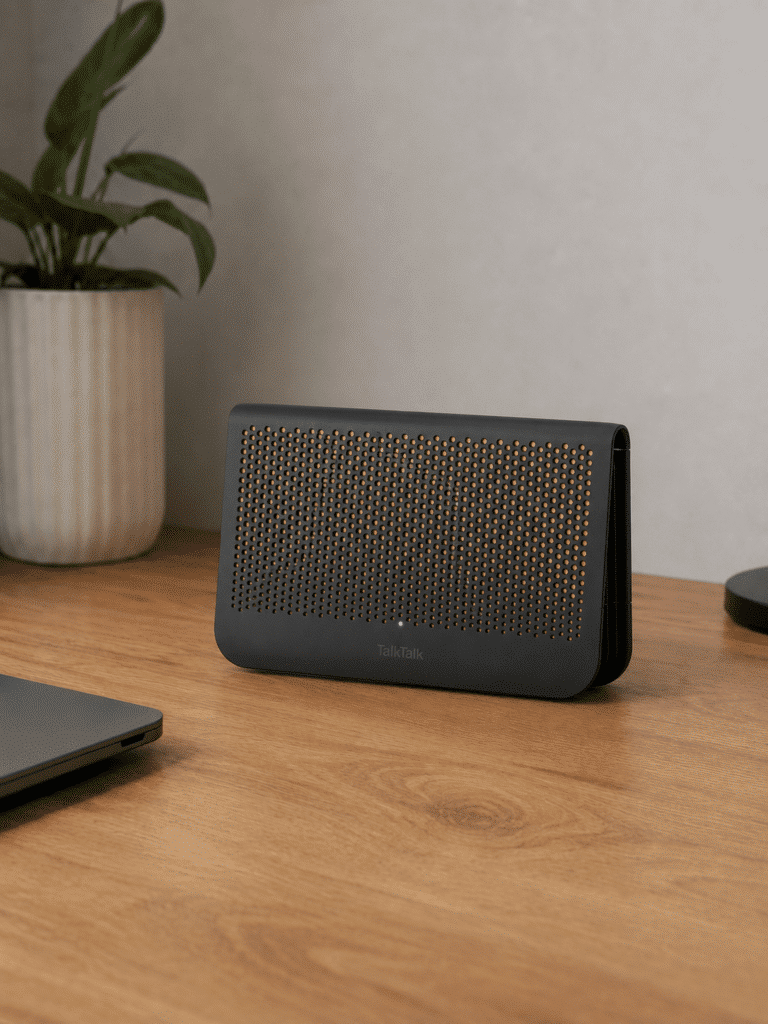
TalkTalk Hub 3 router

TalkTalk’s Wi-Fi Hub 3 is a capable standard router with Wi-Fi 6, a 4x4 5GHz radio, beamforming, MU-MIMO, OFDMA and WPA3. Every Full Fibre package gets the same hardware, with no premium upsell. It lacks 6GHz and faster-than-Gigabit ports, but its mainstream Wi-Fi specification is very good.

8.2 /10
Overall score

Wi-Fi quality score

This score is based on the router’s Wi-Fi standard, frequency bands, device capacity and key wireless features such as beamforming, MU-MIMO and OFDMA.

Router range

Router range is less about headline speed and more about how well the signal survives walls, floors and distance. TalkTalk’s Wi-Fi Hub 3 has a sensible dual-band Wi-Fi 6 setup for an average home, while larger or more difficult properties can add mesh boosters through Total Home Wi-Fi.

One capable router for everyone

Every current Full Fibre package includes the same Wi-Fi Hub 3, so range doesn’t depend on how much you pay for your broadband. Its six internal wireless streams combine a 2x2 2.4GHz radio with a more capable 4x4 5GHz radio.

TalkTalk doesn’t publish a credible square-metre coverage figure, which is sensible. Router range changes enormously between properties, and any universal claim would tell you very little about how the Hub 3 will behave inside your particular home.

Your walls decide which band wins

The 5GHz band provides the better speeds when you’re reasonably close to the Hub 3, while 2.4GHz travels further and copes better with solid walls and floors. Smart channel selection helps the router make sensible use of both.

No router can completely overcome a difficult building. Thick brick, stone, foil-backed insulation and several intervening floors can weaken the signal considerably, regardless of the number written on the broadband package.

No 6GHz isn’t a range problem

The Hub 3 has no 6GHz radio, so it’s Wi-Fi 6 rather than Wi-Fi 6E. That removes a fast, relatively uncluttered band for compatible nearby devices, but 6GHz has shorter reach and struggles through obstacles more than 5GHz.

In other words, its absence limits close-range speed options rather than whole-home coverage. The Hub 3’s 2.4GHz and 5GHz combination remains the more important part of the range story.

The mesh option comes with a laughably naff promise

Total Home Wi-Fi costs quite a bit extra each month and adds a mesh booster to the Hub 3. TalkTalk can provide one further booster at no extra cost if proven to be needed, creating a maximum three-node setup across the home.

Unfortunately, its contractual promise is to deliver only 3Mbps in each eligible room. That’s less than 1% of a 500Mbps package and exactly one third of 1% of Full Fibre 900. TalkTalk talks about ‘wall-to-wall coverage’, but the enforceable standard underneath that marketing is astonishingly poor.

INTERACTIVE TOOL

Router range estimator

See how wall materials and router choice affect the quality of Wi-Fi around a typical home.
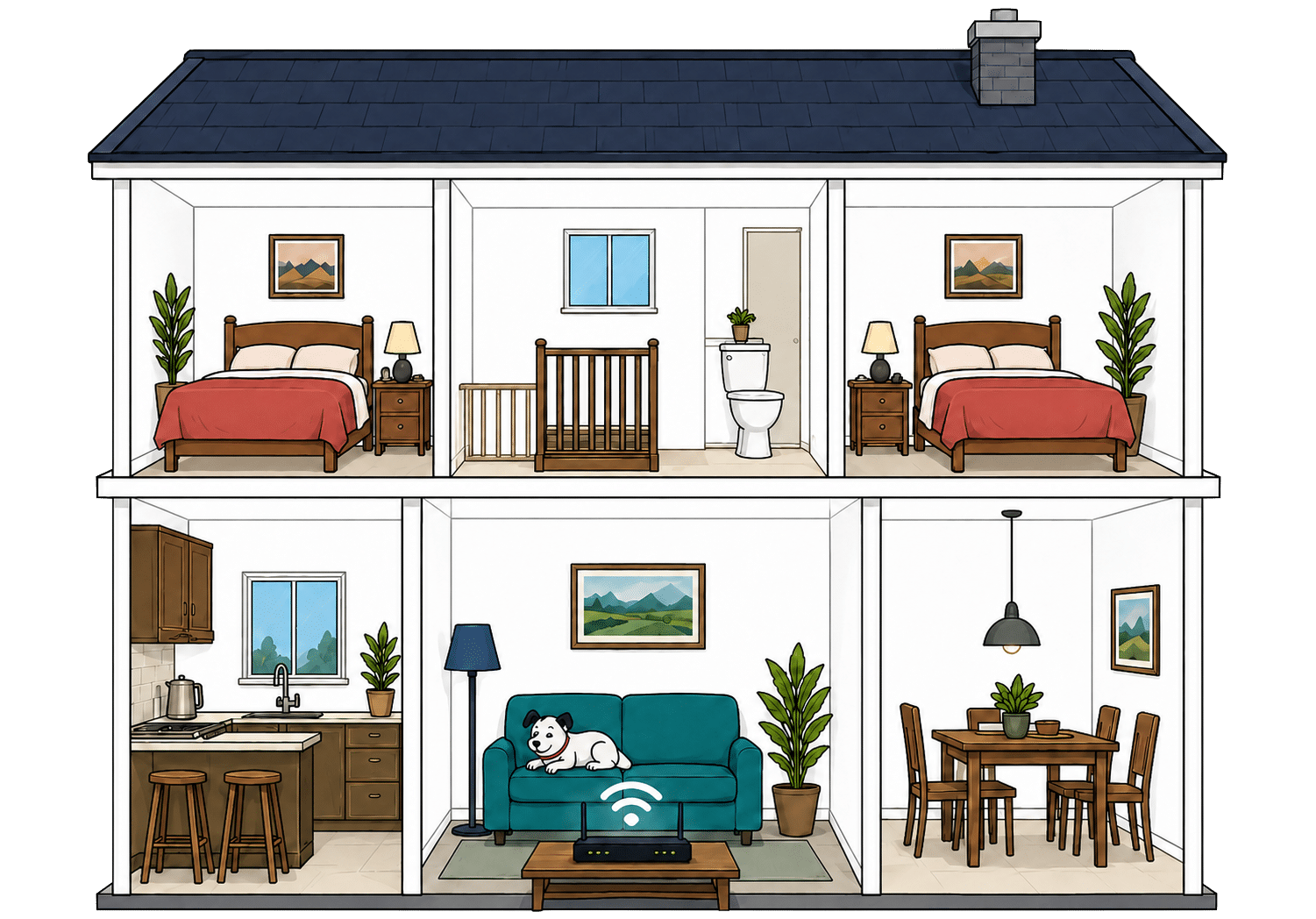
What are your internal walls mostly made from?
Which of these routers are you estimating?
Perfect reception – strong, reliable Wi-Fi. Average reception – slower speeds may happen. Poor reception – weak signal or drop-outs.

Where would you like to go next?

How to use the Router Range Estimator

It’s pretty straightforward. Select the router from this provider, and the main construction materials of your internal walls. It’s important to remember, though, that this is just an estimator.

It can give you a rough idea, but local factors like neighbouring network interference or mixed material wall set-ups can mean the results vary considerably from the estimate. It’s meant to give you a rule of thumb and only that.

How to maximise your TalkTalk router's range

  1. Start with placement

    Put the TalkTalk Wi-Fi Hub 3 near the middle of your home if you can, out in the open and away from thick walls or cupboards.

  2. Test every room

    Run a speed test where you actually use Wi-Fi. Our Whole Home Wi-Fi Calculator further down this page is built for exactly that.

  3. Use My Connection

    Use My Connection and the TalkTalk app to check the line, broadband speed and connected equipment before changing the setup.

  4. Move obvious blockers

    Keep the hub away from TVs, mirrors, metal objects, appliances and anything that boxes it in. Give the signal space to leave the router.

  5. Add Total Home Wi-Fi

    If rooms still struggle, the paid Total Home Wi-Fi service adds mesh boosters around the Wi-Fi Hub 3, with up to two boosters supported.

Faster Wi-Fi has shorter legs

Wi-Fi behaves exactly like sound. Ever notice how you hear the bass, meaning the low frequencies, a few rooms away, but can't hear the treble? It's the same here. The higher the frequency, the more detail there is in the signal, but lower frequencies make it through far more walls.

That's the difference between Wi-Fi bands. 2.4GHz is the slow old workhorse. It isn't glamorous or especially quick, but it's better at reaching the awkward room at the back. 5GHz is faster and better for streaming, gaming and newer devices, but it gives up sooner as you move away from the router.

TalkTalk's Wi-Fi Hub 3 uses dual-band Wi-Fi 6. Its 2.4GHz and 5GHz radios balance range and speed, but there is no short-range 6GHz band. The optional Total Home Wi-Fi boosters are what extend coverage into difficult rooms.

The Wi-Fi Hub 3 offers respectable range through its dual-band Wi-Fi 6 setup, with 2.4GHz handling distance and 5GHz providing better nearby speeds. Larger homes can add up to two mesh boosters, but Total Home Wi-Fi costs quite a bit extra monthly and its 3Mbps minimum room guarantee is absolutely worthless.

7.5 /10
Overall score

Router range score

This score estimates how well the provider’s standard routers are likely to deliver usable Wi-Fi speeds around a typical home, not just whether a faint signal reaches the back bedroom.

Whole-home Wi-Fi

TalkTalk’s answer to weak Wi-Fi is Total Home Wi-Fi, a paid service that adds boosters around your home. The equipment should help where the Hub 3 can’t reach, but the promise supporting it is staggeringly bad. Just 3Mbps in each eligible room.

What Total Home Wi-Fi actually adds

Total Home Wi-Fi keeps the Wi-Fi Hub 3 as your main router and adds a booster elsewhere in the home. The two work together, giving your devices another nearby point to connect to where the original signal has become weak.

If one booster isn’t enough, TalkTalk can supply one more without an additional equipment charge. That gives you a maximum of two boosters alongside the Hub 3, which should be enough to improve coverage in many larger or more awkward homes.

Most packages include no booster

Ordinary fixed-speed Full Fibre packages include the Hub 3 but no separate booster. Total Home Wi-Fi costs extra each month, so getting TalkTalk’s best whole-home coverage means adding another charge to your broadband package.

TalkTalk U works slightly differently. TalkTalk considers the size and construction of your property and may recommend a package configuration containing a booster. That doesn’t mean every TalkTalk U home automatically receives one, and extra equipment can still increase the monthly cost.

The 3Mbps guarantee is utterly meaningless

TalkTalk promotes Total Home Wi-Fi with claims such as ‘stream everywhere’, ‘work anywhere’ and ‘wall-to-wall coverage’. The actual promise underneath that language is only 3Mbps in every eligible room. That’s less than 1% of a 500Mbps package and one third of 1% of Full Fibre 900.

Three megabits may cover basic browsing and email, but it’s nowhere near what most people buying fast Full Fibre would understand by reliable whole-home Wi-Fi. TalkTalk can meet its guarantee while delivering barely any of the speed entering your property.

The promise also excludes any below-street-level rooms, outbuildings and garden rooms, and your property must meet TalkTalk’s other conditions. If TalkTalk fails, the cancellation right applies to the Total Home Wi-Fi add-on, not your underlying broadband package.

TalkTalk’s booster system is perfectly sensible and should improve coverage in homes where the Hub 3 can’t reach every room. Unfortunately, its 3Mbps guarantee sets the bar absurdly low. For a paid service promising ‘wall-to-wall coverage’, that’s not meaningful protection. It’s a promise designed not to help you, but to be very difficult to fail.

INTERACTIVE TOOL

Whole Home Wi-Fi Calculator

Just follow these simple steps and we will calculate how many, if any, ‘Whole Home Wi-Fi’ pods you will need from your provider.

Start here. Work through the steps in order.

Upload Mbps
Latency ms

Step 1: Agree to M-Lab’s data policy

M-Lab stores test data, including your IP address. Tick to agree before testing.

Step 2: Connect to your home Wi-Fi

Make sure the phone, tablet or laptop you are using is connected to your home Wi-Fi network.

Step 3: Turn mobile data off

If your device has mobile data, turn it off before you start walking around the house.

Step 4: Test next to your router

Stand next to your main Wi-Fi router and press the button below. This gives us your baseline speed.

Recorded result Router baseline
Mbps

Step 5: Test your ground floor corners

Walk to each corner of your ground floor and run a test. If your home is not a perfect rectangle, do not overthink it. Just pick four sensible far-apart spots and keep the same numbering if you add another floor.

Corner 1 Mbps
Corner 2 Mbps
Corner 3 Mbps
Corner 4 Mbps

Last step: Add another floor or calculate

If you have another floor to test, add it below. If you have tested every floor you care about, press calculate.

Your Whole Home Wi-Fi result

Result waiting Run your tests, then press calculate.

    Where would you like to go next?


    TalkTalk Total Home Wi-Fi: The basics

    Find the weak room

    Total Home Wi-Fi is intended for rooms where the signal from the Wi-Fi Hub 3 becomes unreliable.

    Use our calculator above

    Check likely Wi-Fi blackspots before you pay for a faster package or extra kit.

    Not standard on every package

    Ordinary TalkTalk Full Fibre packages include the Wi-Fi Hub 3 but not a separate mesh booster.

    A paid monthly add-on

    Total Home Wi-Fi costs extra each month, even when better coverage is something your home genuinely needs.

    Coverage, not raw speed

    TalkTalk's mesh boosters help Wi-Fi reach distant rooms. They do not make the broadband entering your home any faster.

    Total Home Wi-Fi can add up to two boosters and should improve coverage in larger homes. However, it costs extra, isn’t included with ordinary Full Fibre packages and guarantees just 3Mbps in eligible rooms. The equipment is useful, but the promise supporting it is astonishingly weak.

    6.5 /10
    Overall score

    Whole-home Wi-Fi score

    This score estimates how well the provider helps you fix Wi-Fi weak spots around the home, including mesh support, mesh devices, app control, Wi-Fi guarantees and router capability.

    fibredog mascot wearing a headset

    Having trouble choosing a broadband provider?

    No single best provider or package exists – only the best pick for you personally. Fibredog's YourMatch™ system uses thousands of provider metrics and a lot of maths to find you your perfect match.

    Wired connectivity

    The Wi-Fi Hub 3 gives you four wired connections for devices that need a steadier link than Wi-Fi can provide. They’re all fast enough for TalkTalk’s current Full Fibre packages, although there’s no extra-fast socket for equipment designed to run beyond gigabit speeds, which TalkTalk doesn't offer anyway.

    Four ports give you plenty of breathing room

    TalkTalk keeps things pleasantly simple. The Wi-Fi Hub 3 has four Ethernet ports, so you can plug in a television, games console, computer and another device without immediately needing extra equipment.

    Each port supports speeds of up to 1Gbps. That’s enough to handle any of TalkTalk’s current Full Fibre packages, including Full Fibre 900, without the router connection becoming the weak point.

    There’s no faster port for specialist equipment

    The Hub 3 doesn’t have one of the faster Ethernet sockets now appearing on some premium routers. That limits any single wired device to 1Gbps, even if the device itself can go faster.

    In practice, that’s unlikely to bother many people. TalkTalk’s home broadband currently tops out below 1Gbps, so the missing faster connection only matters if you’re building an unusually demanding home network or want plenty of room for future upgrades.

    network connections dog master 1

    How a simple wired TalkTalk network works

    Plugging devices directly into your router gives them a steadier connection than Wi-Fi. These router diagrams show the physical Ethernet ports, including any ONT or internet port used by the broadband connection itself.

    Wi-Fi Hub 3
    1 ONT / internet port 1Gbps
    3 usable ports 1Gbps 1Gbps each

    Check which port is the internet input before counting how many wired device ports you have spare.

    Use the fastest spare LAN port for the device or switch that needs the most speed.

    A cable is still the best choice for demanding devices

    Wi-Fi is more convenient, but a wired connection remains the better option for devices that need consistent performance. Games consoles, work computers, smart televisions and network storage can all benefit from being plugged directly into the router.

    That doesn’t mean you need Ethernet cables running around the house like a heist-movie laser maze. It means the most important device near your Hub should probably be wired if you care about getting the most stable performance.

    You obviously won’t want cables trailing through every room. The sensible approach is to reserve the ports for nearby devices where speed and reliability matter most, then leave phones, tablets and everyday gadgets on Wi-Fi.

    There’s also a telephone socket for TalkTalk’s internet-based home phone service. A home phone isn’t included with current Full Fibre packages as standard, however, so you’ll need to check that it forms part of your order.

    How to make best use of your TalkTalk router's LAN ports

    1. Count the usable ports

      The TalkTalk Wi-Fi Hub 3 has four Gigabit Ethernet ports. On Full Fibre, check which socket is used for the ONT before deciding how many remain for devices.

    2. Gigabit ports cover the range

      A Gigabit Ethernet connection is fast enough for TalkTalk's current Full Fibre packages once normal networking overheads are allowed for.

    3. No multi-gigabit LAN port

      The Wi-Fi Hub 3 has no 2.5Gbps or 10Gbps Ethernet socket, so each wired device is limited to a Gigabit connection.

    4. Wire the devices that care

      Gaming PCs, consoles, work computers and network storage benefit most. TVs and printers can wait their turn for a wired port.

    5. Add a switch if needed

      If the available sockets aren't enough, add a Gigabit Ethernet switch. It gives you more ports, not more speed per port.
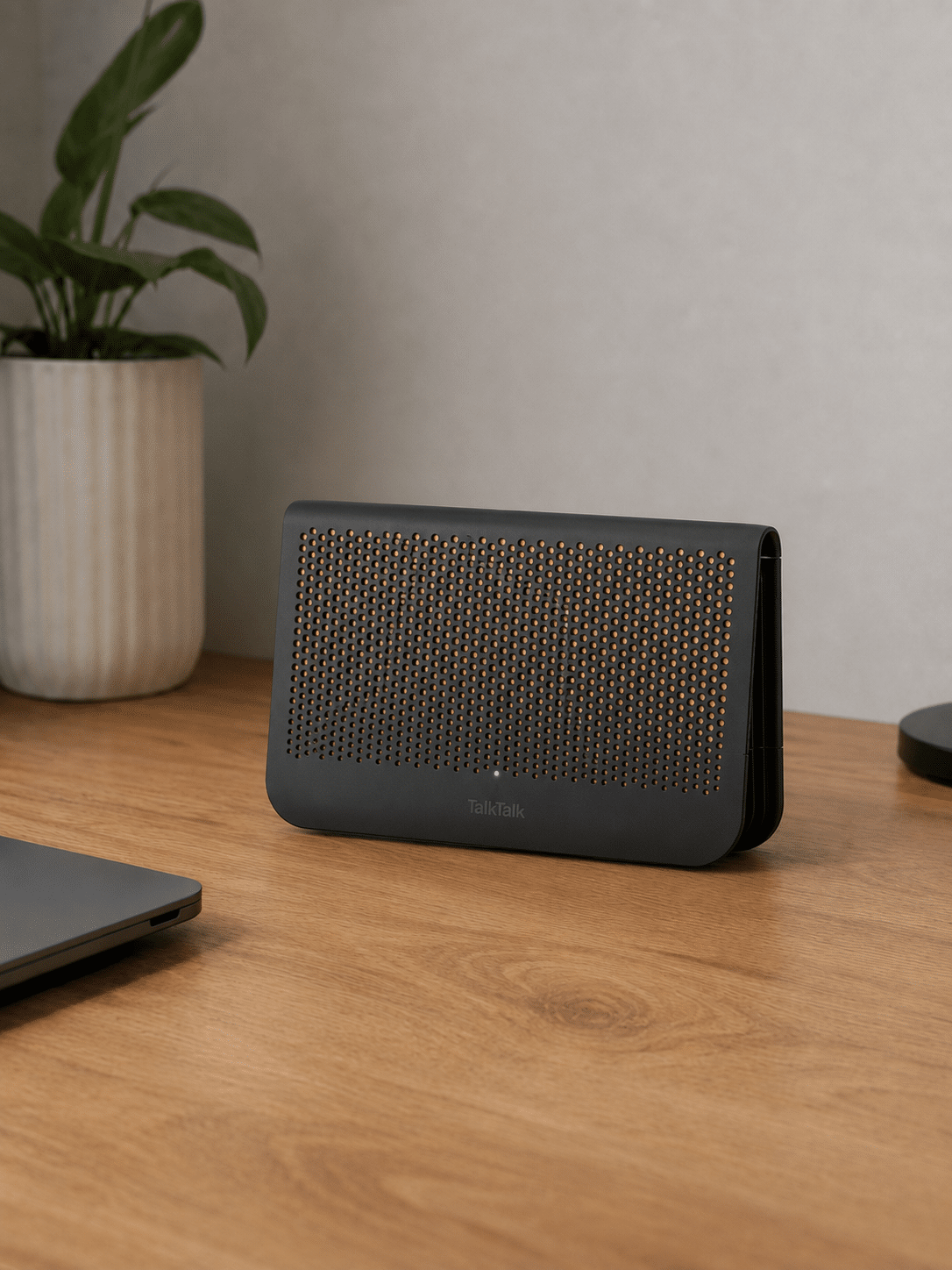
    TalkTalk has judged this well. Four fast Ethernet ports are more useful than one flashy ultra-fast socket for most homes, giving you enough room to wire in several important devices without buying a separate network switch.

    Where would you like to go next?

    7.6 /10
    Overall score

    Wired connectivity score

    This score looks at how useful the router is if you want to plug devices in with cables, including the number of Ethernet ports, port speeds, phone ports and whether the router has the right connection for the network it uses.

    Router controls

    TalkTalk’s router controls cover the everyday essentials, but they’re split between browser settings and wider account tools rather than gathered into a dedicated app. You can create a guest network, manage parental controls and adjust basic Wi-Fi settings, although there’s little here for anyone wanting detailed control over individual devices.

    There’s no proper router-control app

    The TalkTalk app helps with your account and broadband service, but it doesn’t provide full control over the Wi-Fi Hub 3. To change the router itself, you’ll need to open its settings through a web browser.

    That route gives you access to the useful basics, including Wi-Fi names and passwords, security settings and information about your connection. It works perfectly well, but it feels less convenient than opening an app, particularly when you’re using your phone.

    TalkTalk handles software and security updates automatically, so you don’t need to download files or keep checking whether the router is up to date. That’s one less job to think about.

    The everyday controls are sensibly covered

    The Wi-Fi Hub 3 supports a separate guest network, allowing visitors to get online without giving them the password for your main Wi-Fi. It’s a simple feature, but one you’ll appreciate if friends, family or tradespeople regularly ask to connect.

    Parental controls are included too. TalkTalk’s HomeSafe service can block unsuitable categories of website, set periods when certain content is unavailable and warn against dangerous or fraudulent pages. Some features need activating through My Account, but there’s enough here to give families useful control without paying extra.

    Advanced control is where the Hub 3 falls short

    You can’t tell the Hub 3 to prioritise one particular device, create a special gaming mode or give work calls preference over everything else happening on the network. The router chooses suitable Wi-Fi settings automatically, but it doesn’t give you much say in those decisions.

    If you simply want the Wi-Fi to look after itself, the automatic channel selection, firewall and modern security features do most of the important work quietly in the background.

    Physical controls are basic as well. You get buttons for easy device pairing and resetting the router, but no dedicated button for switching Wi-Fi off. You can still disable it through the browser settings, although that turns a one-second job into something more involved.

    TalkTalk gives you the controls most homes genuinely need, including guest Wi-Fi, parental controls and automatic updates. The lack of a proper router app is disappointing, however, and anyone who likes fine control over individual devices will find the Hub 3 rather restrictive.

    Router controls

    TalkTalk router controls at a glance

    Here’s a quick look at the router controls you can expect, including app management, browser admin tools, Wi-Fi settings, security features and the physical buttons on the router itself.

    App management App-based controls Unavailable
    Browser admin page Browser-based controls Available
    Parental controls Household controls Available
    Guest network Separate guest Wi-Fi Available
    QoS Traffic priority controls Unavailable
    Device prioritisation Per-device priority Unavailable
    Smart channel selection Wi-Fi optimisation Available
    Security features Built-in security notes Available
    Automatic updates Firmware updates Available
    WPS Push-button pairing Available
    Reset button Physical reset control Available
    Wi-Fi on/off button Physical Wi-Fi control Unavailable

    Checked from manufacturer specifications. Fibredog tracks dozens of router specification parameters across dozens of provider routers. When a provider changes its router or features, this table is swiftly updated.

    What stands out

    • Browser controls, but no proper router app

      The Wi-Fi Hub 3 has a browser-based administration interface, but no TalkTalk app has been established as providing full local router management.

    • Guest Wi-Fi is supported

      You can create a separate guest network instead of giving visitors the password for your main home Wi-Fi.

    • Useful mainstream controls

      The Hub 3 supports parental controls, a firewall, WPA3, smart channel selection and automatic firmware and security updates.

    TalkTalk covers the basics well, with guest Wi-Fi, parental controls, automatic updates and browser-based settings. There’s no dedicated router app, device prioritisation or specialist gaming control, however. It’s an easy router to live with if you want everything handled automatically, but a limited one if you enjoy taking charge yourself.

    Where would you like to go next?

    7.3 /10
    Overall score

    Router controls score

    This score looks at how easy the router is to manage, including app support, browser settings, parental controls, guest Wi-Fi, security features, updates and physical buttons.

    Using your own router

    TalkTalk properly supports using your own router. It publishes the connection settings you’ll need, and your replacement can connect directly to the Full Fibre wall box rather than sitting behind the Wi-Fi Hub 3. The trade-off is that TalkTalk won’t provide help if your own equipment causes any problems.

    Using your own router with TalkTalk explained step-by-step

    Check that your router is suitable

    TalkTalk Full Fibre uses an ONT on the wall, so your router needs an Ethernet WAN port and support for TalkTalk's published connection settings.

    Disconnect the TalkTalk hub from the ONT

    The ONT is the small box where the Full Fibre connection enters your home. The Wi-Fi Hub 3 normally connects to it using Ethernet.

    Connect your own router directly rather than placing it behind the TalkTalk hub as a second router.

    Connect your router by Ethernet

    Run an Ethernet cable from the ONT to the correct WAN or internet port on your own router.

    Your router will then become the main router for the home rather than sitting behind TalkTalk's hub as a second router.

    Enter the required connection settings

    Set the connection to DHCP/IPoE, use VLAN ID 101 and an MTU of 1500. TalkTalk says no broadband username or password is required.

    Menu names vary between router brands, so follow TalkTalk's current non-TalkTalk-router guide alongside the instructions for your equipment.

    Test everything before packing TalkTalk's hub away

    Check wired speed, Wi-Fi coverage, stability and every service you expect to use.

    Keep the supplied TalkTalk hub available. Reconnecting it may make diagnosis much easier if you later need TalkTalk's help with a broadband fault.

    TalkTalk supports third-party routers and publishes the core settings. Compatibility and configuration remain your responsibility, and TalkTalk may ask you to reconnect its hub during fault diagnosis.

    TalkTalk gives you a proper route to replacing its hub

    Some providers merely tolerate third-party routers. TalkTalk goes further by publishing an official setup guide and the connection details needed to get compatible equipment online. You don’t even need a broadband username or password.

    On Full Fibre, your router connects directly to the small wall box where the broadband enters your home. It then takes over the Wi-Fi and wired network completely, so there’s no need to keep the Hub 3 running as a second router.

    Compatibility and setup become your responsibility

    Your chosen router needs the correct internet socket and must support TalkTalk’s published connection settings. The exact menus vary between manufacturers, so you’ll need to follow TalkTalk’s guide alongside the instructions supplied with your router.

    TalkTalk doesn’t recommend replacing the Hub 3 and won’t provide the same troubleshooting help for equipment it didn’t supply. It may also ask you to reconnect its router while investigating a broadband fault, so don’t dispose of it or bury it at the back of the loft.

    You should be particularly careful if you use TalkTalk’s Digital Voice service. Broadband can work perfectly through your own router while the phone service still requires TalkTalk equipment or extra configuration.

    Change it for a reason, not simply because you can

    The Wi-Fi Hub 3 is already a capable router, so replacing it won’t automatically make your broadband faster. If its coverage and controls suit your home, changing it simply gives you another device to configure and troubleshoot.

    Your own router makes more sense if you already have a good mesh system, want better app controls or need features the Hub 3 lacks. Those might include prioritising important devices, more detailed parental controls or greater control over how your home network behaves.

    TalkTalk’s approach gives you genuine freedom without making the process needlessly awkward. You just need to accept that once its hub is out of the picture, responsibility for your home network largely shifts to you.

    Why you might still want your own router

    You already own serious kit

    If you've spent proper money on a mesh system, you may prefer it to starting again with TalkTalk's Wi-Fi Hub 3.

    You want a different mesh system

    TalkTalk's paid Total Home Wi-Fi service adds its own boosters, but you may prefer Eero, Deco, Orbi or equipment you already own.

    You need specialist controls

    Third-party routers can provide deeper tools for VPNs, DNS, VLANs, firewall rules and home-network tinkering.

    You want proper app management

    The Hub 3 supports browser administration and guest Wi-Fi, but TalkTalk has not established a full router-management app for it.

    You want your existing setup unchanged

    Keeping the same Wi-Fi details can save you reconnecting every phone, television, camera and smart device in the house.

    You want more traffic control

    The Hub 3 lacks specialist gaming and detailed traffic-management tools, so conventional QoS and home-lab features require different equipment.

    TalkTalk Wi-Fi Hub 3 router

    What changes when you use your own router?

    Your compatible router connects to the ONT and replaces the supplied TalkTalk Wi-Fi Hub 3. It then becomes responsible for the home network and the features TalkTalk's equipment previously provided.

    The ONT

    Hands the connection to your router

    The ONT is the wall box where the Full Fibre connection arrives. It remains in place and provides the Ethernet hand-off.

    Your own router connects to it through a compatible WAN port instead of the supplied TalkTalk hub.

    Your own router

    Takes over Wi-Fi and settings

    Your router handles Wi-Fi, wired devices, guest access and whichever VPN, DNS, firewall or traffic controls it provides.

    You also become responsible for compatibility, setup and router faults. TalkTalk may ask you to reconnect the Hub 3 when diagnosing the broadband service.

    TalkTalk makes using your own router very straightforward, with published settings and a direct connection to the Full Fibre wall box. You’ll become responsible for compatibility, setup and router faults, while Digital Voice may complicate matters. Even so, this is a far more accommodating approach than some providers offer.

    Where would you like to go next?

    9.8 /10
    Overall score

    Using your own router score

    This score reflects how well the provider supports third-party router use, including ONT or modem-mode setup, WAN port speed, connection type and how cleanly your own router can take over the home network.

    fibredog mascot wearing a headset

    Having trouble choosing a broadband provider?

    No single best provider or package exists – only the best pick for you personally. Fibredog's YourMatch™ system uses thousands of provider metrics and a lot of maths to find you your perfect match.

    Some links on this page may earn us a small commission if you click through and buy. This never affects either what you pay, or our scores and recommendations. If, however, you’d rather bypass affiliate links, use this direct TalkTalk link instead.