YOUFIBRE ROUTERS AND EQUIPMENT REVIEW

YouFibre routers review: How good are they?

YouFibre gives most customers a remarkably modern Wi-Fi 7 router, while its fastest package gets an even more capable Hub Pro. The hardware is excellent, although whole-home Wi-Fi costs extra and the premium router isn’t freely available.
By Data checked  Checked weekly
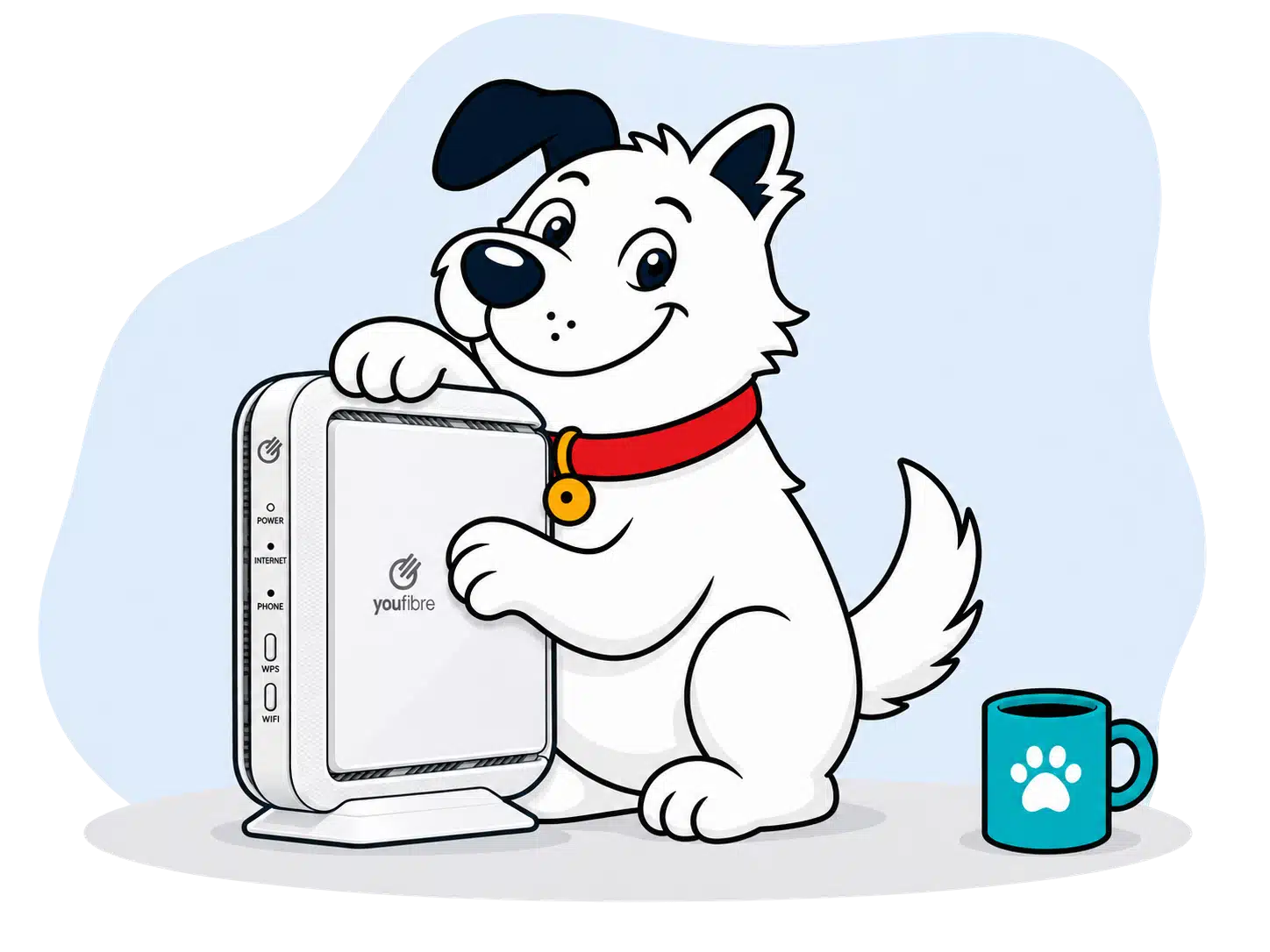
YouFibre routers and equipment hero with Fibredog holding the white YouFibre Hub

YouFibre routers and equipment scorecard

Six key areas. One overall score. All calculated using our transparent methodology.

Wi-Fi quality

How good the standard routers’ Wi-Fi is in everyday use, looking at specifications, Wi-Fi bands/type, and how many devices they can support.

9.2/10

Wi-Fi range

How far the router’s Wi-Fi should reach around the home, with consideration given to local factors like large homes or thick walls.

8.7/10

Whole-home Wi-Fi

Whether the provider offers a mesh router system or extra help for larger homes, whether it’s good, and whether it’ll cost you extra.

7.4/10

Wired connectivity

How well the router supports Ethernet and wired devices, looking at number of ports, their speeds, and how accessible they are.

9.4/10

Router controls

How much control you get through the app, admin page and any controls you might have on the router itself.

8.6/10

Using your own router

How easily you can use your own third-party router or mesh hardware – whether you can use anything you like or if it’s limited in any way.

10.0/10

Wi-Fi quality

YouFibre starts unusually well. Almost every package gets a dual-band Wi-Fi 7 Hub with six antennas and a 2.5Gbps socket. You 8000 gets the tri-band Hub Pro, adding 6GHz Wi-Fi, eleven antennas and much faster wired connections.

Key differences

The standard YouFibre Hub is anything but an ordinary router

The Sagemcom F@ST 5598 includes Wi-Fi 7, beamforming, MU-MIMO, OFDMA, WPA3 security and guest Wi-Fi. Those features help several devices share the connection efficiently, while automatic channel selection and updates take care of routine work in the background.

Wi-Fi 7 comes as standard on almost every package

Wi-Fi 7 remains rare among included broadband routers, particularly outside the fastest packages. Compatible phones and laptops can use its efficiency improvements, although the standard Hub only broadcasts on 2.4GHz and 5GHz. It doesn’t include the cleaner 6GHz band often associated with premium Wi-Fi 7 equipment, but the newer wireless standard is still welcome.

The Hub Pro is a proper upgrade, with one condition

You 8000 customers receive the Sagemcom F@ST 5599 Hub Pro. It adds a 6GHz band, raises the antenna count from six to eleven and supports up to 128 connected devices rather than 64. Its 10Gbps internet and device sockets are also built for the package’s roughly 7Gbps advertised speed. This isn’t an optional paid router upgrade, though. You have to take You 8000 to get it, and customers on every other package receive the standard Hub.

YouMesh is the route to wider coverage

YouMesh and YouMesh Pro add up to two matching mesh units when one router can’t cover the home. They cost extra each month, and YouFibre gives no minimum room speed or money-back Wi-Fi promise.

INTERACTIVE TOOL

Compare routers from any provider

This provider’s routers are pre-selected for comparison with one another. However, you can use this tool to compare any router from any major provider using the dropdown menus below.

Feature YouFibre Hub YouFibre Hub Pro
Fibredog rating 7.6/10 8.6/10
Router included as standard Yes; included on You 150, You 200, You 500, You 1000 and You 2000. Yes; included on You 8000.
Router manufacturer Sagemcom Sagemcom
Router model F@ST 5598 F@ST 5599
Wi-Fi standard Wi-Fi 7 Wi-Fi 7
Wi-Fi bands Dual-band Tri-band
2.4GHz supported ✓Yes ✓Yes
5GHz supported ✓Yes ✓Yes
6GHz supported ×No ✓Yes
Beamforming ✓Yes ✓Yes
Antenna count 6 11
Maximum connected devices Up to 64 Up to 128
Stated coverage No quantified provider coverage claim published No quantified provider coverage claim published
Total Ethernet ports 5 6
MU-MIMO ✓Yes ✓Yes
OFDMA ✓Yes ✓Yes
WPA3 security ✓Yes ✓Yes
Guest network ✓Yes ✓Yes
Antenna type Internal Internal
Gigabit Ethernet ports 3 4
2.5Gb Ethernet ports 2 0
5Gb Ethernet ports 0 0
10Gb Ethernet ports 0 2
WAN port speed 2.5Gbps 10Gbps
USB ports 1 1
Telephone ports 1 1
ONT Ethernet input ✓Yes ✓Yes
Coaxial input ×No ×No
Power connection 12V DC barrel connector / 2.5A external power adapter 12V DC barrel connector / 3.5A external power adapter
Mesh support Provider mesh add-ons Provider mesh add-ons
Provider mesh product YouMesh YouMesh Pro
Third-party router use You can use your own router You can use your own router
Modem mode ×No ×No
Compatible broadband technology fttp fttp
App management ✓Yes ✓Yes
Parental controls ✓Yes ✓Yes
QoS ✓Yes ✓Yes
Automated QoS ×No ×No
Device prioritisation ×No ×No
Anti-bufferbloat controls ×No ×No
Manual queue management (SQM/CAKE) ×No ×No
Smart channel selection ✓Yes ✓Yes
Security features WPA3; firewall; guest network; MAC filtering; parental controls; device access controls; automatic firmware updates WPA3; firewall; guest network; MAC filtering; parental controls; device access controls; automatic firmware updates
Gamer mode ×No ×No
Game traffic prioritisation ×No ×No
Gaming QoS profiles ×No ×No
Server ping routing tools ×No ×No
Latency dashboards ×No ×No
Per-device gaming presets ×No ×No
Gaming VPN routing features ×No ×No
Work from home mode ×No ×No
Automatic firmware updates ✓Yes ✓Yes
Firmware update notes YouFibre supplies firmware updates remotely. YouFibre supplies firmware updates remotely.
Router height 215mm 240mm
Router width 75mm 120mm
Router depth 170mm 170mm
Router weight 640g 950g
Power consumption 30W 42W
Router orientation Vertical Vertical
Wall mountable ×No ×No
Router colour White White
Self-installation ✓Yes ✓Yes
Browser admin interface ✓Yes ✓Yes
WPS ✓Yes ✓Yes
Status light control ×No ×No
Reset button ✓Yes ✓Yes
Wi-Fi on/off button ✓Yes ✓Yes
Where would you like to go next? See all tools See all tools
Compare all broadband deals

Two excellent routers, assigned by package

YouFibre Hub

Included with You 150 to You 2000

Dual-band Wi-Fi 7, six internal antennas and one 2.5Gbps Ethernet socket for your equipment

YouFibre Hub Pro

Included with You 8000 only

Tri-band Wi-Fi 7 adds 6GHz Wi-Fi, eleven antennas and one 10Gbps Ethernet socket for your equipment.

No

freely selectable premium router upgrade

The Hub Pro is excellent, but choosing it means choosing YouFibre's fastest and most expensive home package too.

What YouFibre's routers should feel like at home

The standard Hub is far from a token bundled router. Wi-Fi 7 and the usual efficiency features give streaming, browsing, calls and gaming a modern wireless foundation, while six antennas help it serve devices around the home.

The Hub Pro is aimed at a much more demanding connection. Its 6GHz band gives compatible devices cleaner wireless space close to the router, and eleven antennas help it handle more simultaneous connections. The benefit will be most obvious with recent phones and laptops.

Neither router can defeat thick walls or poor placement. YouMesh is available when coverage needs help, but no booster is included as standard and YouFibre doesn't promise a particular speed in every room.

The main everyday omission is smarter traffic control. You get parental controls, guest Wi-Fi, automatic channel selection and conventional manual settings, but no simple device-priority button, gaming mode or automatic protection for calls and games during large downloads. That won't trouble most homes, but it leaves enthusiasts with a reason to use their own router.
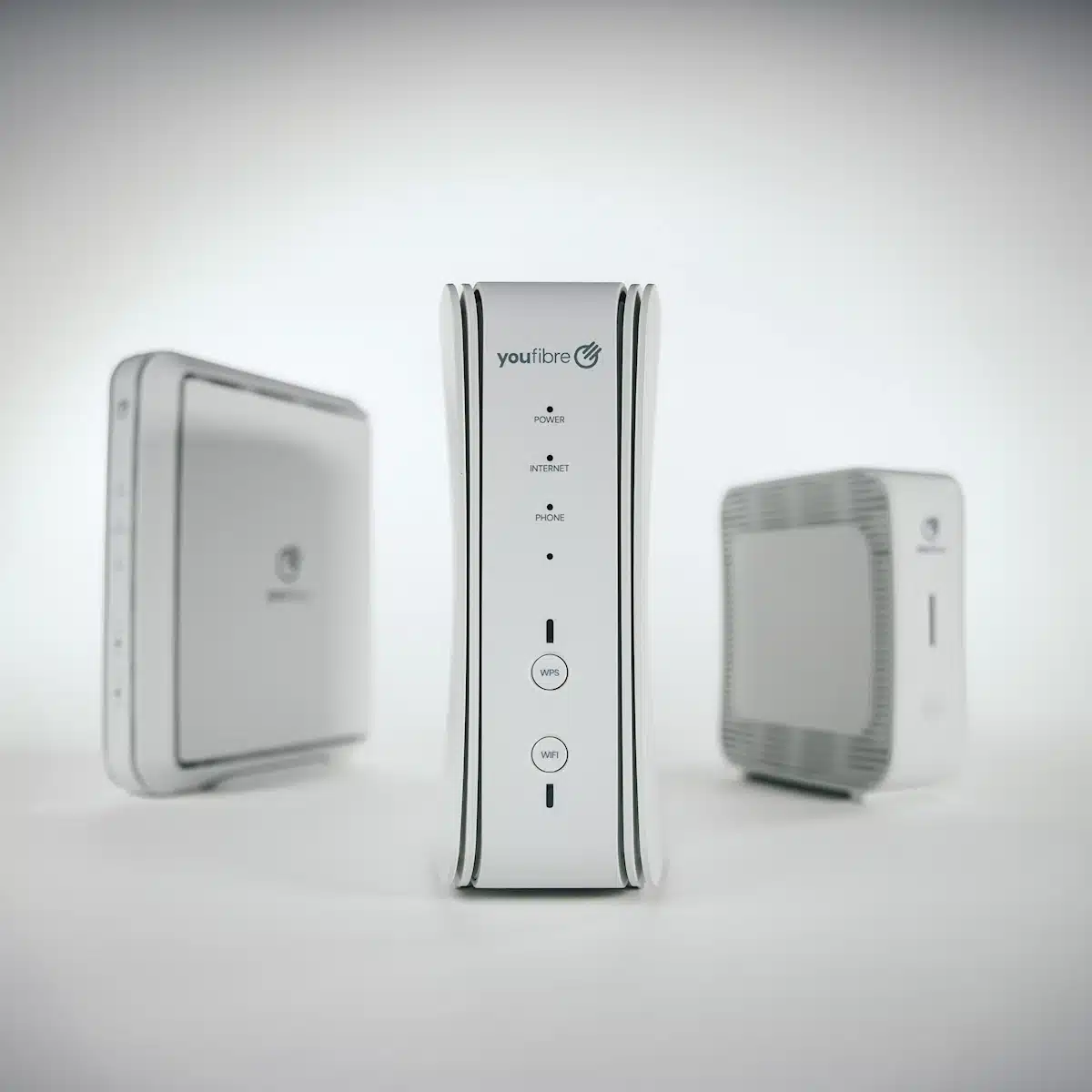
YouFibre's routers

YouFibre supplies excellent wireless hardware. The standard Hub brings dual-band Wi-Fi 7, six antennas and modern security to almost the entire package range, while You 8000 receives a genuine premium upgrade with 6GHz Wi-Fi and eleven antennas. The Hub Pro can't be chosen separately, and neither model has especially clever traffic controls. Even so, few providers start customers with equipment this current or give their fastest package a router so well matched to it.

9.2 /10
Overall score

Wi-Fi quality score

This score is based on the router’s Wi-Fi standard, frequency bands, device capacity and key wireless features such as beamforming, MU-MIMO and OFDMA.

Router range

The YouFibre Hub has six internal antennas, while the Hub Pro has eleven. Both use beamforming to direct Wi-Fi towards connected devices, but YouFibre makes no fixed distance or coverage claim. Your walls, floors, router position and chosen Wi-Fi band will still decide whether one box reaches everywhere.

Six or eleven antennas help, but walls still decide

The standard Hub's six antennas are a healthy starting point, and the Hub Pro's eleven give its three wireless bands more capacity. Beamforming helps both routers focus the signal towards connected devices. None of that turns antenna count into a reliable range measurement. An open flat and a long brick house can produce completely different results from the very same router.

Router position can make a bigger difference than specifications

Both routers stand vertically and need open space around them. Put yours above floor level, away from cupboards, televisions and large metal objects. A central shelf usually gives Wi-Fi a much easier journey than the corner where the fibre first enters.

6GHz Wi-Fi is fast nearby, but has a shorter reach

Only the Hub Pro broadcasts on 6GHz. That cleaner band can be excellent for a compatible phone or laptop near the router, particularly where neighbouring 5GHz networks are busy.

It isn't the band to rely on through several thick walls. Higher-frequency Wi-Fi generally fades faster through obstacles, so distant devices may settle on 5GHz or 2.4GHz instead. The standard Hub's lack of 6GHz limits nearby capacity, not necessarily its longest usable reach.

YouMesh is YouFibre's answer to dead zones

When better placement isn't enough, YouFibre sells YouMesh for the standard Hub and YouMesh Pro for the Hub Pro. You can add up to two units to spread one network through more rooms. It is a convenient supported option, but it costs extra each month. YouFibre also publishes no minimum room speed, coverage percentage or contractual remedy if an awkward area still remains weak after installation.

INTERACTIVE TOOL

Router range estimator

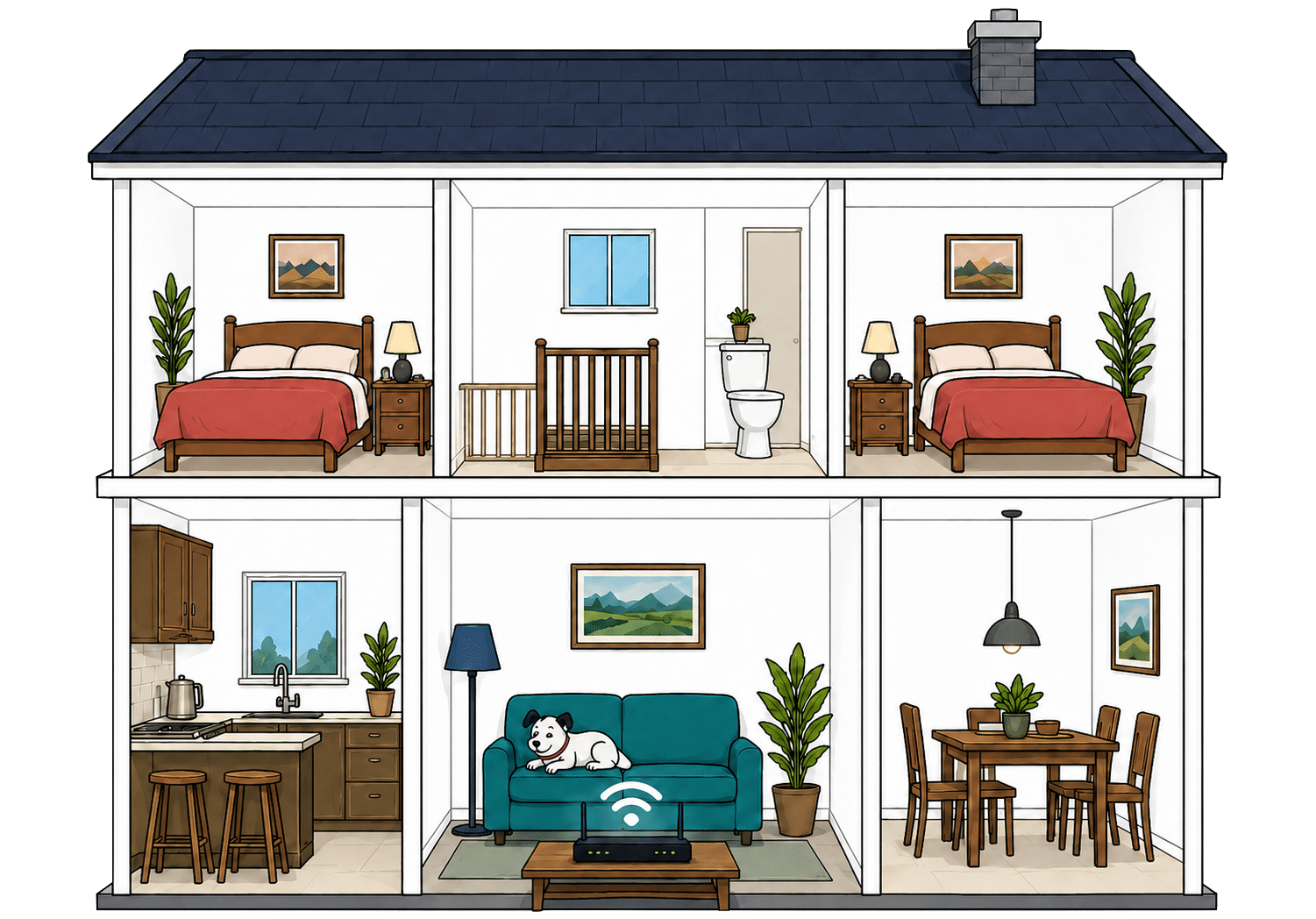
See how wall materials and router choice affect the quality of Wi-Fi around a typical home.
What are your internal walls mostly made from?
Which of these routers are you estimating?
Cutaway illustration showing connected devices throughout a family home
Perfect reception – strong, reliable Wi-Fi. Average reception – slower speeds may happen. Poor reception – weak signal or drop-outs.

Where would you like to go next?

Use the range estimator before adding more equipment

Tell the Router Range Estimator about your home's floors, walls and router position. It can show whether one well-placed Hub has a realistic chance of reaching the important rooms.

Treat the result as a planning guide, then test the actual rooms after installation. One weak corner may improve when you move the router. Several weak rooms are a clearer case for YouMesh, your own mesh system or Ethernet.

How to get more range from your YouFibre Hub

  1. Place it openly

    Stand the Hub above floor level with clear space around it. Avoid cupboards, large metal objects and hiding it behind the television.

  2. Test every room

    Run the same test beside the router and in each weak room. The difference shows how much speed the Wi-Fi journey is losing.

  3. Check the YouFibre app

    Use the app to view connected devices and ordinary Wi-Fi settings before deciding that new equipment is necessary.

  4. Move obvious blockers

    A mirror, television, cupboard or thick wall beside the router may cause more trouble than a slightly longer open route.

  5. Add YouMesh when needed

    Try placement first. If several rooms remain weak, compare the monthly YouMesh cost with buying your own mesh system.

The three Wi-Fi bands have different jobs

2.4GHz usually travels furthest and gets through obstacles most easily. It suits distant rooms and light-use devices such as smart plugs, although neighbouring networks and household equipment can make it crowded. A faraway device using this band isn't automatically a problem.

5GHz provides more capacity and will often give phones, laptops, televisions and consoles their best speeds around the home. Its signal falls more quickly through floors and solid walls than 2.4GHz, so position still matters on both YouFibre routers.

6GHz is exclusive to the Hub Pro and works best at shorter distances. Let the router steer devices automatically unless you're solving a specific problem. If speed improves dramatically beside the Hub, coverage is the issue. Moving it, adding mesh Wi-Fi or running Ethernet will help more than buying a faster package.

Both YouFibre routers have very good ingredients for useful range. Six antennas in the standard Hub, eleven in the Hub Pro and beamforming give them a better starting point than many bundled routers. The Hub Pro's 6GHz band adds nearby capacity rather than magical extra distance. YouMesh offers a supported fix for difficult rooms, but costs extra and carries no quantified room-speed or coverage promise. Expect capable equipment, then judge your own walls and layout rather than the specification sheet alone.

8.7 /10
Overall score

Router range score

This score estimates how well the provider’s standard routers are likely to deliver usable Wi-Fi speeds around a typical home, not just whether a faint signal reaches the back bedroom.

Whole-home Wi-Fi

YouFibre has proper matching mesh systems for both routers. YouMesh works with the standard Hub and YouMesh Pro with the Hub Pro, with up to two units available. The service is convenient, but no booster comes with an ordinary package and there's no guaranteed room speed or coverage remedy.

YouMesh extends one Wi-Fi network

YouMesh pairs the main router with matching units around the home. They broadcast the same network, allowing phones and laptops to move between Wi-Fi points without you manually choosing another network name. That is much tidier than an old-fashioned extender.

The standard Hub uses YouMesh, while the Hub Pro uses YouMesh Pro. YouFibre supports up to two add-on units as part of either service.

Whole-home Wi-Fi isn't bundled with any package

No YouFibre package includes a mesh unit automatically. YouMesh and YouMesh Pro are monthly extras, even when you take one of the faster broadband tiers and receive the more capable Hub Pro.

That keeps the headline package cleaner for homes that don't need help, but larger properties must budget for an ongoing charge. You can't simply choose the Hub Pro instead, because that router is tied to You 8000 and doesn't guarantee whole-home coverage either.

You get mesh equipment, not a Wi-Fi guarantee

YouFibre doesn't promise a minimum Wi-Fi speed in every room, a particular percentage of the home covered or a refund if YouMesh leaves a dead zone. You're paying for matching equipment and provider support rather than a measurable result. That's an important gap for the large, unusual or thick-walled homes most likely to need mesh Wi-Fi, because those are also the hardest properties to predict before installation.

The limit of two add-on units will be enough for plenty of homes, especially where only one floor or distant room struggles. A very large property, an outbuilding or several awkward levels may need a separately bought system that lets you choose more Wi-Fi points and place each one yourself. That alternative also avoids an ongoing monthly charge.

Test the supplied Hub before ordering anything. If one or two areas struggle and you want YouFibre to support the equipment, YouMesh is the easy route. If you need more than two units, deeper controls or prefer buying hardware once instead of paying monthly, compare an independent mesh system as well.

INTERACTIVE TOOL

Whole Home Wi-Fi Calculator

Just follow these simple steps and we will calculate how many, if any, ‘Whole Home Wi-Fi’ pods you will need from your provider.

Start here. Work through the steps in order.

Upload — Mbps
Latency — ms

Step 1: Agree to M-Lab’s data policy

M-Lab stores test data, including your IP address. Tick to agree before testing.

Step 2: Connect to your home Wi-Fi

Make sure the phone, tablet or laptop you are using is connected to your home Wi-Fi network.

Step 3: Turn mobile data off

If your device has mobile data, turn it off before you start walking around the house.

Step 4: Test next to your router

Stand next to your main Wi-Fi router and press the button below. This gives us your baseline speed.

Recorded result Router baseline
— Mbps

Step 5: Test your ground floor corners

Walk to each corner of your ground floor and run a test. If your home is not a perfect rectangle, do not overthink it. Just pick four sensible far-apart spots and keep the same numbering if you add another floor.

Corner 1 — Mbps
Corner 2 — Mbps
Corner 3 — Mbps
Corner 4 — Mbps

Last step: Add another floor or calculate

If you have another floor to test, add it below. If you have tested every floor you care about, press calculate.

Your Whole Home Wi-Fi result

Result waiting Run your tests, then press calculate.

    Where would you like to go next?


    YouMesh at a glance

    Find the real weak spots

    Test every important room first. One slow device doesn't prove that the whole home needs mesh Wi-Fi.

    Use our calculator first

    Estimate the likely number and position of Wi-Fi points before ordering the add-on.

    Nothing included as standard

    Every package includes one Hub. Mesh units always cost extra each month.

    Up to two add-ons

    YouFibre supports no more than two YouMesh or YouMesh Pro units through the service.

    Coverage without a guarantee

    YouMesh extends the network, but YouFibre promises no minimum room speed or money-back remedy.

    YouMesh keeps the router and extra Wi-Fi points under YouFibre's support. The standard Hub and Hub Pro each have their matching system, with up to two add-on units available. None is included with a broadband package, so coverage help means an extra monthly charge. There is no published room-speed target, coverage percentage or money-back remedy. It suits homes with one or two difficult areas, while very large properties should compare systems allowing more units and a one-off purchase.

    7.4 /10
    Overall score

    Whole-home Wi-Fi score

    This score estimates how well the provider helps customers fix Wi-Fi weak spots around the home, including mesh support, mesh devices, app control, Wi-Fi guarantees and router capability.

    Wired connectivity

    YouFibre's wired connections are exceptional for supplied routers. The standard Hub has one 2.5Gbps socket for a device and three Gigabit sockets. The Hub Pro raises the fastest device socket to 10Gbps and adds four Gigabit sockets. Each also has a separate fast socket for the incoming Full Fibre connection. Only one device gets the very fastest link, but a network switch can share it.

    The standard Hub is ready for packages above Gigabit speed

    The Hub has one 2.5Gbps Ethernet socket for your equipment, plus three Gigabit sockets. A separate 2.5Gbps socket takes the incoming connection. That layout fits YouFibre's broadband packages up to You 2000 very neatly.

    A compatible computer can use the faster device socket on You 2000, while a console, television and work computer can occupy the three Gigabit sockets. Many provider routers still give every device a 1Gbps ceiling, so this is a meaningful advantage.

    The Hub Pro matches YouFibre's fastest package properly

    You 8000's Hub Pro has one 10Gbps socket for the incoming connection and another for your equipment, alongside four Gigabit sockets. A suitable computer can therefore receive more than Gigabit broadband speed without replacing the router.

    Only one device can connect at 10Gbps directly. If several computers or a fast storage system need multi-gigabit links, connect an appropriate network switch to that socket. The four remaining sockets are still limited to Gigabit speed.
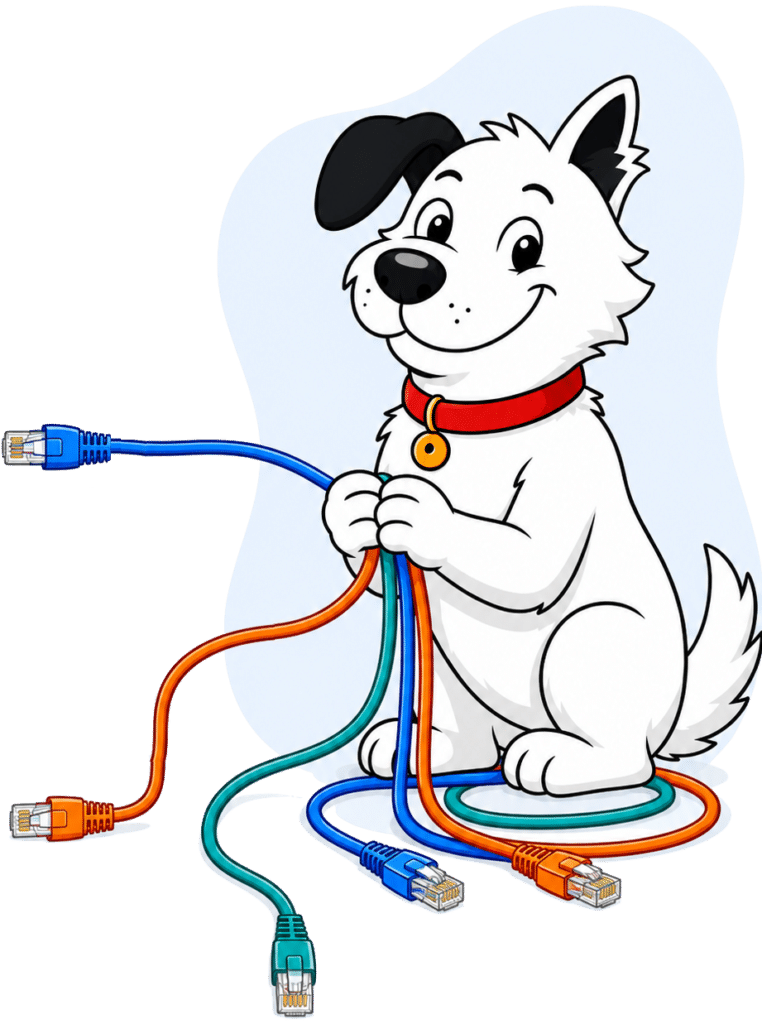
    Illustration of Fibo comparing different wired network connections

    How a simple wired YouFibre network works

    Plugging devices directly into your router gives them a steadier connection than Wi-Fi. These router diagrams show the physical Ethernet ports, including any ONT or internet port used by the broadband connection itself.

    YouFibre Hub
    1 ONT / internet port 2.5Gbps
    1 usable port 2.5Gbps 2.5Gbps
    3 usable ports 1Gbps 1Gbps each
    YouFibre Hub Pro
    1 ONT / internet port 10Gbps
    1 usable port 10Gbps 10Gbps
    4 usable ports 1Gbps 1Gbps each
    ★

    Use a wired connection for TVs, consoles and computers that stay in one place.

    ✓

    Use the fastest spare LAN port for the device or switch that needs the most speed.

    A cable gives fixed devices the cleanest connection

    Ethernet avoids the walls, distance and neighbouring networks that make Wi-Fi speeds vary. Use it where consistency matters more than hiding a cable.

    A gaming computer or console is an obvious first choice. Ethernet can't improve YouFibre's wider network, but it removes your own wireless signal from the route and makes problems easier to diagnose.

    A work computer benefits for the same reason. Video calls and remote sessions need a steady connection more than a spectacular speed test, particularly when the desk is several rooms from the Hub.

    Wire televisions, storage and mesh units where practical. That leaves more wireless capacity for phones and tablets while giving fixed equipment a predictable connection.

    How to use your YouFibre Hub's Ethernet sockets properly

    1. Count the device sockets

      The standard Hub offers four for equipment. The Hub Pro offers five. Their separate internet sockets aren't spare.

    2. One device socket is much faster

      Use the standard Hub's 2.5Gbps socket or the Hub Pro's 10Gbps socket for the device that can benefit most.

    3. More fast devices will need a suitable network switch

      Connect a multi-gigabit switch to the fastest socket if several capable devices need links above 1Gbps.

    4. Wire the devices that care

      Give Ethernet to your main console, work computer, television or storage first. Leave phones and tablets on Wi-Fi.

    5. Use a switch for extras

      A network switch can add more sockets without replacing the Hub. Match its speed to the connection you want.

    Both YouFibre routers are exceptionally well equipped for wired devices. The standard Hub gives one device a 2.5Gbps link and three more Gigabit connections, making it a good match for packages through You 2000. The Hub Pro pairs You 8000 with a 10Gbps device socket and four Gigabit ones. Only one device gets the fastest direct connection on either router, but an appropriate network switch solves that for homes needing several multi-gigabit links.

    9.4 /10
    Overall score

    Wired connectivity score

    This score looks at how useful the router is if you want to plug devices in with cables, including the number of Ethernet ports, port speeds, phone ports and whether the router has the right connection for the network it uses.

    Router controls

    YouFibre gives you useful app and browser controls, including guest Wi-Fi, parental controls, automatic channel selection and security settings. The basics are very good. Easy device priority, gaming modes and automatic traffic management are the notable absences.

    The app covers useful everyday jobs

    You can view connected devices, manage ordinary Wi-Fi settings and use parental controls without treating the router like a technical project. Guest Wi-Fi keeps visitors separate from your main network, while WPA3 provides current wireless security.

    Smart channel selection helps the Hub avoid crowded wireless space, and automatic updates mean routine router software isn't another household job.

    The same broad set of controls applies to the Hub and Hub Pro. Buying You 8000 improves the wireless hardware and wired speed, but it doesn't unlock a separate premium control system.

    Browser controls fill in more detail

    The router page includes firewall settings, MAC filtering, device access controls and conventional manual traffic settings. That gives confident users more to work with than the app alone. Most households can ignore those menus and leave the automatic settings to do their job, while parental controls and guest Wi-Fi remain easy to reach.

    Several useful traffic and gaming controls are still missing here

    There's no simple button for putting one console, computer or call ahead of everything else. YouFibre also provides no dedicated gaming mode, work mode or gaming dashboard.

    The routers don't automatically manage a completely busy connection to protect games and video calls from large downloads. Manual traffic settings can help if you know how to configure them, but they're less approachable than choosing a device in an app. Fast packages make this less noticeable, although speed alone can't prevent every household traffic jam.

    Keep the YouFibre Hub if parental controls, guest Wi-Fi and automatic maintenance cover what you need. Use your own router if effortless device priority, detailed gaming tools or automatic management of a busy connection are important to your household.

    Router controls

    YouFibre router controls at a glance

    Here’s a quick look at the router controls you can expect, including app management, browser admin tools, Wi-Fi settings, security features and the physical buttons on the router itself.

    App management App-based controls Available
    Browser admin page Browser-based controls Available
    Parental controls Household controls Available
    Guest network Separate guest Wi-Fi Available
    QoS Traffic priority controls Available
    Device prioritisation Per-device priority Unavailable
    Smart channel selection Wi-Fi optimisation Available
    Security features Built-in security notes Available
    Automatic updates Firmware updates Available
    WPS Push-button pairing Available
    Reset button Physical reset control Available
    Wi-Fi on/off button Physical Wi-Fi control Available

    Checked from manufacturer specifications. Fibredog tracks dozens of router specification parameters across dozens of provider routers. When a provider changes its router or features, this table is swiftly updated.

    What stands out

    • Useful app control

      Connected devices, Wi-Fi settings, parental controls and guest access cover the household jobs most people actually change.

    • Deeper browser settings

      Firewall, access and manual traffic settings give confident users more room to make changes.

    • Good basics, limited advanced control

      There's no easy device priority, gaming preset, work mode or automatic protection for calls and games during heavy downloads.

    YouFibre gets the important router controls right. The app and browser interface cover connected devices, parental controls, guest Wi-Fi, wireless settings, firewall options and automatic maintenance. Most customers won't need much more. People who want one-tap device priority, a gaming dashboard or automatic protection against busy-network slowdowns will find clear gaps. Those features are specialist rather than essential, and YouFibre's excellent support for replacing the router gives demanding users a clean escape route.

    8.6 /10
    Overall score

    Router controls score

    This score looks at how easy the router is to manage, including app support, browser settings, parental controls, guest Wi-Fi, security features, updates and physical buttons.

    Using your own router

    YouFibre is exceptionally accommodating if you want your own router. A compatible model can replace the supplied Hub at the Ethernet hand-off, so you don't have to run two routers together. You'll take responsibility for setup and support, and should keep YouFibre's Hub safely stored.

    Using your own router with YouFibre, step by step

    Check that your router is suitable

    Choose a router with an internet socket fast enough for your package. It may be labelled WAN. Above 1Gbps, both that socket and the sockets used by your devices must support the speed you expect.

    Disconnect the YouFibre Hub from the fibre hand-off

    Turn off the Hub and remove the incoming Ethernet cable from its internet socket. Leave the fibre equipment on the wall connected and powered.

    The wall equipment may be called an ONT. Don't reset or unplug it. You're replacing the router, not the equipment bringing Full Fibre into the home.

    Connect your own router using Ethernet

    Put the incoming Ethernet cable into your router's internet socket. It may be labelled WAN.

    Power on the replacement and give it time to start. Keep the YouFibre Hub nearby until the new connection is working.

    Use YouFibre's current connection details

    Follow YouFibre's current own-router guidance or ask support for the exact settings needed on your installed service.

    Don't guess at settings copied from another provider or an old forum post. They may stop the router connecting even when the broadband line is working properly.

    Test the connection properly

    Start with a computer connected by Ethernet and confirm that ordinary websites and services load.

    Then test Wi-Fi in the rooms that matter. Check calls, streaming, gaming and any service used to reach equipment at home while you're away.

    If anything fails, reconnect the YouFibre Hub. That separates a replacement-router problem from a fault with the broadband service and gives support a familiar setup to test.

    YouFibre lets you replace its supplied router completely

    Neither YouFibre router has a documented bridge or modem mode. Fortunately, you don't need one simply to use a compatible replacement router.

    Your own router can connect at the Ethernet hand-off and take over Wi-Fi, wired devices, parental controls and security. Keep the supplied Hub, because YouFibre may ask you to reconnect it while investigating a fault or return it later.

    Get the current settings before disconnecting anything

    Router connection details can change, and the correct setup may depend on the service installed at your address. Use YouFibre's current instructions or support rather than assuming a setting found elsewhere online will apply to your particular connection.

    Once you make the swap, setup and router faults become your responsibility. That's reasonable if you want extra controls, but less appealing if you only hoped to improve one weak room without managing unfamiliar equipment.

    Replace it for specific features, not because the Hub is poor

    The standard YouFibre Hub is already an excellent Wi-Fi 7 router with a 2.5Gbps device socket, app controls, parental controls, guest Wi-Fi and automatic updates. The Hub Pro goes further again. Most customers don't need to replace either on day one.

    Your own router makes sense when you already have a good mesh system, need more than two mesh units, want easy device priority or use specialist network controls. You gain freedom, but also take responsibility for setup, software updates and diagnosing router problems.

    Why you might still prefer your own router

    You already own premium equipment

    Reuse a router or mesh system if it already gives your home the coverage, controls or wired connections you prefer.

    You want a different mesh system

    YouMesh costs extra monthly and supports two add-ons. Your own system may offer more units or a one-off purchase.

    You need specialist controls

    Some routers provide detailed VPN, DNS, firewall and home-network controls that YouFibre's supplied models don't offer.

    You prefer different parental controls

    Another router may give you family profiles, schedules and limits that you already know how to manage.

    You want to keep your existing setup

    Reusing the same Wi-Fi names, passwords, device rules and mesh positions can save a lot of household faffing.

    You want features YouFibre doesn't provide

    Easy device priority, gaming tools and automatic traffic management may still require your own router.

    YouFibre's routers

    What changes when you use your own router?

    Your replacement connects directly at YouFibre's Ethernet hand-off. The supplied Hub is removed from the active setup rather than left running in front of it.

    The ONT

    The connection passes to your router

    The fibre equipment on the wall stays in place. It continues to deliver the broadband connection through Ethernet.

    Your router takes that Ethernet connection using the current settings supplied or confirmed by YouFibre.

    Your own router

    It takes over Wi-Fi and settings

    Your router handles Wi-Fi names, passwords, wired devices, guest access, parental controls, security and any specialist features it offers.

    You'll also set it up, update its software and solve router faults. Keep the YouFibre Hub for support checks and any later return.

    YouFibre makes using your own router unusually simple. A compatible replacement can connect directly at the Ethernet hand-off, allowing you to remove the supplied Hub instead of running two routers together. Your equipment then controls Wi-Fi, wired devices, parental settings and security. Get the current connection details from YouFibre, keep its Hub for support checks and remember that setup, updates and router faults become your responsibility. The supplied routers are already excellent, so replacing them makes most sense when you own a preferred mesh system or need specialist features YouFibre doesn't provide.

    10.0 /10
    Overall score

    Using your own router score

    This score reflects how well the provider supports third-party router use, including ONT or modem-mode setup, WAN port speed, connection type and how cleanly your own router can take over the home network.

    Some links on this page may earn us a small commission if you click through and buy. This never affects either what you pay, or our scores and recommendations. If, however, you’d rather bypass affiliate links, use this direct YouFibre link instead.

    Illustration of Fibo representing direct links to broadband providers