EE BROADBAND JOIN, SWITCH, CANCEL REVIEW
EE Broadband – join, switch or cancel: How easy is it?
Joining, switching to or from, or cancelling your services with a provider are all well-known friction points. So it’s important to measure providers like EE Broadband not only on how easy it is to jump on board, but also how easy they make it for you to disembark.

Jump to a specific section…
Where would you like to go?
Jump straight to the part you most want to read about.
Having trouble choosing a broadband provider?
No single best provider or package exists – only the best pick for you personally. Fibredog’s YourMatch™ system uses thousands of provider metrics and a lot of maths to find you your perfect match.
EE Broadband join, switch, cancel scorecard
Six key areas. One overall score. All calculated using our transparent methodology.
Ease of joining
How simple it is to sign up, including online ordering, phone support, contact routes and whether the process feels straightforward.
Credit checks and eligibility
How eligibility works, including credit checks, social tariffs, affordability barriers and whether customers have clear alternatives.
Installation problems and compensation
What protection exists when installation goes wrong, including delays, missed appointments, compensation and how clearly problems are handled.
Switching from another provider
How easy it is to switch from another provider, including switching support, number porting, bill credits and avoidable disruption.
Moving home
How moving home is handled, including transfer options, availability checks, fees and what happens if service cannot continue.
Cancelling your service
How cleanly customers can leave, including cancellation routes, notice periods, early exit fees and equipment return requirements.
Fibredog Package Speed Calculator
Enter the number of people, TVs, consoles and so on and we'll match you with the right package speed.
Fibredog Broadband Buyout Comparison
Compare broadband contract buyout support and see how much a provider may pay toward leaving your old provider.
Ease of joining
Like most providers, EE makes the sign-up bit fairly painless. You check what’s available at your address, choose a speed, then choose one of EE’s package tiers. The main thing to watch is that EE’s Full Fibre range isn’t just one simple list of speeds: after picking the speed, you also choose between Core, Standard, Premium and Ultimate, and those tiers change what’s included.
Jumping on board with EE Broadband is easy
EE broadband is widely available, so this isn’t like checking Virgin Media or an altnet, where there’s a very realistic chance your address won’t be covered at all. The real question with EE is whether you can get Full Fibre yet, and if so, which speeds are available.
If Full Fibre is available, you’ll usually be choosing between EE’s Full Fibre speeds and package tiers. If it isn’t, EE may still offer Standard Fibre, which uses a part-fibre, part-copper line. That’s less exciting, but still means EE can usually offer some form of broadband while you wait for Full Fibre to reach your street.
You can sign up online
Online sign-up is the cleanest route for most people. EE shows the available speeds, lets you choose a speed, then asks which package tier you want. That’s where you need to slow down slightly, because the speed is not the whole package.
Core, Standard, Premium and Ultimate can change what extras you get, including security, Wi-Fi support and other useful bits. So don’t just click the cheapest version of the speed you want and assume the rest is identical. With EE, the tier matters too.
You can also get help through EE chat or by phone
EE has phone support for broadband and landline, and its Aimee chatbot can connect you to EE live chat if you need more help. That’s useful if you’re unsure which package tier makes sense, or if you want to ask about installation, router options or moving from BT to EE.
That said, the website is still the best place to see the package options laid out. If you do use chat or phone, keep your own notes and check the final order confirmation carefully afterwards.
Installation dates are chosen during the order
If you’re ordering Full Fibre, EE says you choose your installation day during the order. EE will send a Smart Hub if you need one, and if you’re already with EE or BT, it’ll tell you whether your current hub can still be used.
Before the engineer visit, EE also asks you to think about where the external junction box should go and to clear space where the engineer will be working. So the joining process is easy enough, but it still needs a little bit of practical prep if a new fibre installation is involved.
INTERACTIVE TOOL
Which EE Broadband speed is right for me?
Tell us about your household and we will tell you the exact best-fit broadband package from EE Broadband.
Start here. Adjust the numbers, then calculate your result.
Step 1: Tell us what is in your home
Use the buttons below to tell us how many people and connected devices your household has.
Step 2: Calculate your best-fit package
Once you are happy with the numbers above, press calculate and we will match your household to the closest EE Broadband package.
Your result
This speed is ideal for:
Where would you like to go next?

If you're seriously considering jumping on board with EE Broadband, our package recommendation tool (above) offers an extremely accurate answer to the question of which package you should go for.

How to join EE Broadband without making it harder than it needs to be
-
1
Check what your address can get
EE is widely available, so this is mainly about checking whether you can get Full Fibre and which speeds are shown for your home.
-
2
Compare speeds and tiers
Pick the speed first, then check the Core, Standard, Premium and Ultimate tiers because the extras can change.
-
3
Order online if you’re happy
Online ordering is usually the easiest route if you already know the speed, package tier and extras you want.
-
4
Use chat or phone if unsure
Ask EE if you’re not sure about tiers, installation, router options, Digital Home Phone or moving from BT.
-
5
Choose the install date
If you need a Full Fibre install, choose your date, check the confirmation and make sure the engineer can get to the right places.
EE makes joining totally painless. Check availability, choose a speed, then pick the package tier that fits what you’re after. Online ordering is the most straightforward route, with phone support and the Aimee/live chat there if you need extra help. The main thing to watch out for is that the speed is only part of the package, because Core, Standard, Premium and Ultimate will change the extras included.
Where would you like to go next?
Ease of joining score
This score looks at how easy a provider makes it for you to start an order, choose the route that suits you, and get help before you commit.
How we calculate this score
This score mainly looks at the routes you can use to sign up. We give most credit when you can order online without being pushed into a phone call, because that usually gives you the clearest view of packages, prices and add-ons before you commit.
We also look at whether you can sign up or get sales help through other routes, including phone, live chat and callback options. More choice is better, especially if you want to ask questions before you place an order.
As a secondary layer, we look at the help available before you join. A useful help centre, searchable articles, human live chat and chatbot support can all make it easier for you to check what you need before you start.
See all measurementsCredit checks and eligibility
Almost all UK broadband providers credit check you to see whether you’re eligible before they let you sign up, and EE is no exception. This is mostly about confirming your details, checking your address, and deciding whether EE is happy to give you a contract. It’s not as harsh as applying for a mortgage, but it can still affect whether your order goes through. EE says contract credit searches can appear on your credit file for 12 months.
How EE decides if you're eligible to sign up
First, EE checks what your address can get
EE is widely available, so this is less of a coverage hurdle than it is with some providers.
The useful bit is finding out whether you can get Full Fibre, which speeds are available, and whether EE still needs to offer Standard Fibre at your address.
You choose your package and enter your details
The credit decision happens as part of the order, after you've started choosing the broadband package, contact details and payment information.
This is where it's worth checking the speed, package tier, extras and monthly price before you let the order move any further.
EE runs a proper credit check
EE says that when you apply for a contract, the credit search will show on your credit file for 12 months before it is removed.
For most people this will be a quiet background step. If your credit history is patchy, though, this is the point where the order can become less straightforward.
If you're accepted, the order carries on
Once EE is happy with the credit check, the order can move on to confirmation, installation and activation.
At that point, the main eligibility decision is done. The rest is mostly practical: getting the line ready, setting up the router and waiting for the first bill.
If there's a problem, EE can ask for more
EE says it can ask for a security deposit based on your credit check. This can happen when you join EE and your account is activated.
If affordability is the issue, EE's broadband help route points towards BT Home Essentials rather than an EE-branded broadband social tariff.
Remember: EE's check is a real, hard credit search. If your credit file is fine, it probably won't be a drama. If you're worried, be ready for the possibility of a deposit or a failed order.
EE will credit-check you properly when you apply
EE says that when you apply for a contract, the credit search will show on your credit file for 12 months before it’s automatically removed. So unlike a simple availability check, this is not just EE asking whether your address can get broadband. It’s part of deciding whether it’ll accept you for the service.
That doesn’t mean you should panic. Most people will pass without anything interesting happening. But if your credit history is thin, messy or recovering from past problems, it’s worth knowing that EE can say no, ask for money up front, or offer a different route rather than just waving your order through.
EE may ask for a security deposit
EE says that in some cases it asks for a security deposit based on your credit check. That can happen when you join EE and it activates your account, or when you activate certain services. EE describes this as a deposit for service on your bill.
That’s not quite the same as being rejected. It means EE may still be willing to connect you, but wants money held on the account first. The awkward part is obvious: even if the broadband package itself looks affordable, an unexpected deposit can make joining harder than the monthly price suggests.
The broadband social tariff is BT Home Essentials
EE talks about low-cost tariffs, but for broadband it points to BT Home Essentials, not an EE-branded broadband social tariff.
It means we can't really credit EE with having a social tariff itself. If you’re eligible because you receive certain benefits, EE says existing BT, EE or Plusnet (all part of the BT Group) broadband customers can switch to BT Home Essentials for no extra charge. So the help exists within the BT/EE group, but the broadband social tariff is BT’s, not EE’s.
EE doesn't offer its own broadband social tariff
EE's low-cost social tariff is for mobile. For broadband, EE points eligible people towards BT Home Essentials instead. If you're already with EE Broadband and you qualify, you can switch over to BT Home Essentials for no extra charge.
Universal Credit
If you receive Universal Credit, you can apply for BT Home Essentials rather than an EE-branded broadband social tariff.
Pension Credit
Pension Credit can qualify you for BT Home Essentials, although BT lists Guarantee Credit specifically.
Income Support
Income Support is on BT's eligibility list for Home Essentials broadband.
Jobseeker's Allowance
Jobseeker's Allowance is also listed for BT Home Essentials, so check the BT application route if this applies to you.
Employment and Support Allowance
Employment and Support Allowance is another qualifying benefit listed for BT Home Essentials.
You apply through BT, not EE
New BT customers can apply, and existing BT, EE and Plusnet broadband customers who qualify can switch over for no extra charge.
BT checks your eligibility
You'll need to provide personal details, including your National Insurance number, so BT can check whether you qualify.
EE's credit check isn't scary, but it does leave a mark
EE says that when you apply for a contract, the credit search will show on your credit file for 12 months. For most people, that won't be dramatic. But it isn't the same as a harmless availability check either.
Most people won't notice anything
If your credit history is in decent shape, the check should usually just happen in the background while EE decides whether to accept the order.
You choose your package, EE checks the account risk, and if everything's fine, you carry on with the order.
You may be declined or asked for a deposit
EE says it can ask for a security deposit based on your credit check, including when you join and the account is activated.
So if your credit file is patchy, the order may not be as simple as the headline monthly price suggests. You could be accepted, asked for money up front, or declined.
EE runs a proper credit check when you apply, and that search can show on your credit file for 12 months. For most people, that should just be a quiet background step, but it's not the same as a harmless availability check. If your credit history is thin, messy, or recovering from past problems, EE can say no, ask for more information, or ask for a security deposit before letting the order go ahead. EE doesn't offer its own social tariff, instead pointing you towards BT Home Essentials.
Where would you like to go next?
Credit checks and eligibility score
This score looks at how clear and forgiving a provider is if your credit history might affect whether you can sign up or not, as well as whether they offer a social tariff to those on benefits.
How we calculate this score
This score starts with the type of credit check a provider uses. No credit check is best, but a normal soft check can still score well because it's common across most providers, and usually won't cause you any trouble.
We also look at whether the check is made clear before you order. If you're going to be checked, you should know that before you're deep into the checkout.
The biggest part is what can happen if your credit history isn't ideal. We look at whether you may be asked for money upfront, a security deposit, or a credit limit, all of which can both positively or negatively influence the score depending on the context in which they're offered.
Finally, we look for safety nets, including no-credit-check broadband options and whether the provider's social tariff lets you avoid the credit-check problem.
See all measurementsInstallation and compensation
EE’s installation process is the standard Openreach version of events, because EE uses the Openreach network, and it's Openreach, not EE, who installs your new service. If there’s already a suitable line, it may be 'plug router in and you're done', but if Full Fibre needs installing, an engineer will need to do work inside and outside your home. Nothing is especially weird, but there are still a few details worth knowing before you pick a date.
Full Fibre installation needs someone at home
If a new EE Full Fibre connection needs installing, an engineer visit can take up to three hours. EE says the engineer will call on the day to let you know when to expect them, and someone will need to be there to explain where the connection should go. Openreach will also spam you with reminders leading up to the day.
The work will involve both the outside and inside of your home, and the final router position may depend on where the fibre equipment can sensibly be fitted more than it does your personal preference.
You need permission before the engineer arrives
EE’s installation terms say you must either own the property or have the landlord’s permission for the work. Full Fibre installation will always mean drilling through your wall, fitting equipment and running cable into your home. You may want to consider how best to hide it, but bear in mind it's barely noticeable compared to something like an old Sky satellite dish.
If you rent, don’t leave this until the engineer is standing at the door holding a drill. Get permission first. If the engineer can’t carry out the work because permission, access or location is a problem, your installation can be delayed and you may need a new appointment.
Some installations are simpler than others
If your home already has the right Full Fibre line, EE setup can be little more than plugging in the router, waiting for activation and checking everything is working properly.
If the fibre line still needs bringing into your home, though, it’s a proper commitment. The engineer will need to fit the ONT, route the cable and make sure the service is active. That’s not difficult from your side, but it does mean clearing space in your diary and being ready to answer practical questions about your home.
Missed dates can trigger compensation
EE is signed up to automatic compensation. If your broadband or landline service isn’t activated by 11.59pm on the date EE confirmed in writing, EE says it’ll pay compensation for each day the activation is late.
Missed appointments can also be covered, but the door swings both ways. EE’s installation terms say if you need to change or cancel an appointment, you must tell EE at least one working day before the scheduled visit, or you may be charged the equivalent of the installation charge.
The EE Broadband install process
EE’s Full Fibre installation is handled through the Openreach network, so the process is mostly about booking the visit, giving the engineer access, choosing a sensible place for the equipment and knowing when compensation or charges can apply.
1. Book
When you order EE Full Fibre, you choose an installation day if your home needs an engineer visit.
2. Check
Some homes already have the right fibre equipment, while others need Openreach to fit or finish the connection.
3. Prepare
Think about where the fibre box and router should go, and clear space where the engineer will need to work.
4. Attend
Someone needs to be at home for the visit, because the engineer will need access and installation decisions.
5. Install
EE says the install can take up to three hours and may involve work both inside and outside your home.
6. Rearrange
If the appointment changes with less than 24 hours’ notice, EE’s automatic compensation rules may apply.
7. Claim
If EE misses the engineer appointment or activates your service late, automatic compensation should be credited to your account.
8. Avoid fees
If you need to change or cancel the visit, tell EE in time. Leaving it too late can mean a charge.
9. Go live
Your activation date is the date EE has confirmed for the service to be available to use.
10. Escalate
If delays drag on or something goes wrong after activation, use EE support and the complaints process rather than waiting silently.
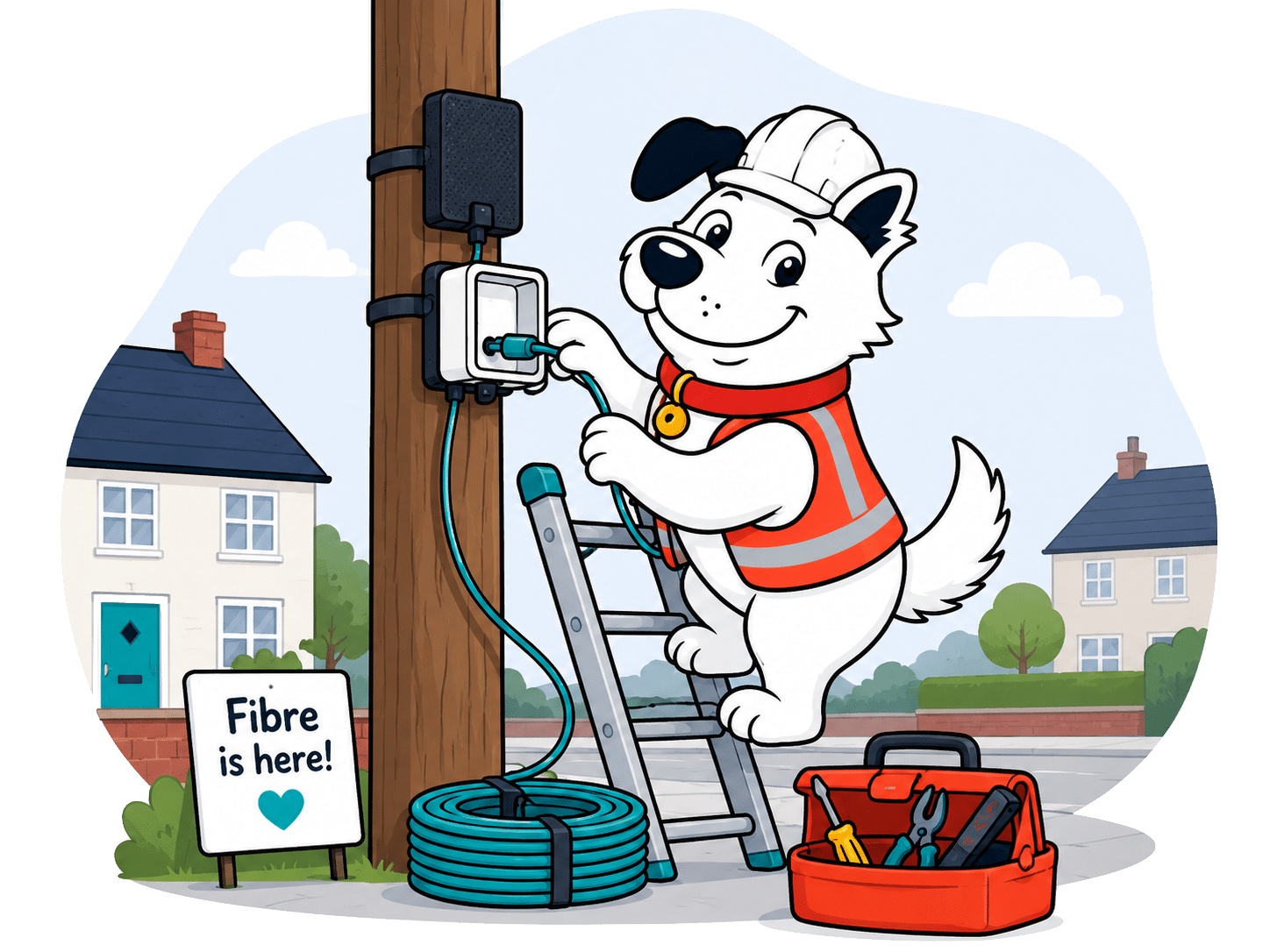
Before your EE engineer arrives
-
1
Think about the ONT position
The engineer will fit the Openreach modem inside your home, so think about where the fibre box and router should sensibly go.
-
2
Clear inside and outside
EE says the work may happen inside and outside, so clear the wall area, unlock gates and make access easy.
-
3
Sort permission first
If you rent, live in a flat or share walls and access routes, get permission before the engineer turns up.
-
4
Be ready for the call
EE says the engineer will call on the day, so keep your phone nearby and make sure someone can give access.
-
5
Check the bill afterwards
After activation, check for any appointment charges, installation charges or automatic compensation credits.

EE Broadband installation: A case study
“The whole signing up process was a breeze, and EE was able to agree a date only a few days after I signed up. I was expecting an Openreach van to show up, but instead I got one of their subcontractors. The chap was very polite and worked with us to get the line put in in our preferred spot.
One funny thing was the spot where he needed to get the line in through the wall was overgrown with a thick weed (buddleia). We fetched him our shears and he sorted it out. All in all the process was simple, and the whole thing went smoothly.
EE’s Openreach subcontractor stuck with it: Despite encountering difficulties with plant growth and access to the back of the house, he stuck with it till the job was done. He left us impressed.”

EE Broadband's installation process is mostly the familiar Openreach version of events, and especially simple if you already have a Full Fibre line. If Full Fibre needs installing, an engineer will need access inside and outside your home, so permissions, clear routes and someone being in on the day all matter. EE is signed up to automatic compensation too, so delayed activation or a missed engineer appointment can trigger payments when the rules apply.
Where would you like to go next?
Installation and compensation score
This score looks at how well you're protected if installation is delayed, an engineer visit is missed, or your broadband can't be installed as planned.
How we calculate this score
This score looks first at compensation protection. Providers score better when they're part of the automatic compensation scheme and when delayed installations or missed engineer visits can trigger automatic payments.
We also look at appointment fairness. It isn't automatically unfair for you to be charged if you miss an appointment, but it matters whether the provider also compensates you when it misses one.
Survey clauses, permission requirements and failed-install cancellation rights are treated as normal parts of fixed-line broadband, not automatic black marks. What matters is whether you're protected if the installation can't go ahead, including whether a refund route exists.
Finally, we look at the whole pattern together: how many protections you get, how many responsibilities sit with you, and whether the provider has a fair process when the install turns out to be more complicated than expected.
See all measurements
Having trouble choosing a broadband provider?
No single best provider or package exists – only the best pick for you personally. Fibredog's YourMatch™ system uses thousands of provider metrics and a lot of maths to find you your perfect match.
Switching from another provider
In normal terms, One Touch Switch means you sign up with EE and they handle the switch with your old provider, rather than you having to cancel everything manually and hope the dates line up. The extra bit with EE is its switching credit: if you leave your old provider early, EE may credit up to £300 towards your leaving fees.
'One Touch Switch' and broadband buyouts
Switching should now be fairly painless
EE subscribes to the 'One Touch Switch' switching process, so you won't need to have a painful breakup call with your old provider just to move across. You order with EE, the switch is arranged, and your old service will be lined up to stop when the new one starts.
That doesn’t mean you can switch and forget, though. When your old provider sends confirmation, read it. If it mentions early termination charges, weigh those costs. And if you’ve got TV, mobile or other services bundled in, don’t assume the switch automatically sorts those too. It usually doesn't.
EE offers up to £300 switching credit
EE’s switching credit is very good. If you leave your old provider early and get charged exit fees, EE says it will credit your account with up to £300, based on the value of your early termination charges or £300, whichever is lower.
The catch is that this isn’t a pile of cash landing in your bank account. You pay your old provider’s final bill first, then claim from EE after your EE Broadband is active. If the claim is accepted, the money is credited to your EE account gradually across your entire contract.
You’ll need to prove the charge
EE needs to see your paid final bill showing the early termination charges in order for you to qualify. So if you’re planning to claim, don’t delete anything from your old provider until it's all confirmed.
Sources: EE Broadband, All compared providers
COMPARISON CHART
How much will EE Broadband pay to buy you out?
This chart shows which providers currently offer broadband contract buyout, and how much they may pay toward leaving your old contract.
Broadband contract buyout by provider
Maximum buyout amount by provider
Where would you like to go next?
The national average benchmark only includes providers that currently offer broadband contract buyout in our database.
Switching to EE Broadband should be fairly straightforward, especially now One Touch Switch means EE can handle the move from your old provider in most cases. EE also offers better switching support than many providers, with up to £300 account credit towards eligible early termination charges. The catch is you’ll pay your old provider's final bill first, then claim from EE after your EE Broadband is active.
Where would you like to go next?
Switching from another provider score
This score looks at how much help you get when moving from another broadband provider, including contract buyout support, number porting and protection if installation is delayed.
How we calculate this score
This score starts with broadband contract buyout support. Providers score better when they help cover the cost of leaving your old contract, and when the amount, claim window and claim process are useful in real life.
We also look at service continuity. Number porting matters if you still use your landline, and delayed-installation compensation matters because a switch can be painful if your new service isn't ready when expected.
The switching journey itself is judged more lightly, because signing up has its own score. Even so, it helps if you can order online, speak to someone by phone or live chat, and avoid being forced into one route.
Finally, we look at the help available before you commit. Searchable help, clear support routes and human live chat can make it easier to check what happens to your old contract, your number and your installation before you switch.
See all measurementsMoving home
If you’re moving home with EE Broadband, the basic process is to contact EE and ask its home move team to transfer the service to your new address. EE says you should get in touch at least three weeks before your move, though it’ll still try to help if you have less time than that.
If you’re signing up before moving in
If you’re moving into a new home and want EE ready for day one, you can check the speeds available at the new address and place the order around your move date. EE promotes this as a way to get connected for moving day, but you’ll still need to work around installation dates if the property needs Full Fibre fitted.
That means it’s worth checking the new address early, especially if you need an engineer. Some homes will already have the right fibre equipment in place, while others will need Openreach to visit. If you don’t live there yet, you’ll also need to make sure you can get access for the engineer if an appointment is needed.
If you’re already with EE Broadband
If you already have EE Broadband, EE says to call at least three weeks before you move. You’ll need to give EE your new address and moving date, and if your date changes, you can call again to rearrange the move.
EE says it will transfer your existing broadband services to your new address, and your confirmation will tell you if any new equipment is being sent. That’s the neat version. The practical version is that your new address still decides what you can actually get, so the speed, package or installation route may not be identical.

EE Broadband moving-home checklist
-
1
Check the new address
Find out whether the new home can get Full Fibre, which speeds are available, or whether EE will offer Standard Fibre instead.
-
2
Tell EE early
EE asks you to get in touch at least three weeks before moving, with your new address and moving date.
-
3
Confirm the move date
If your moving date changes, call EE again so the home move order can be updated before the wrong day arrives.
-
4
Check the order details
Read the home move confirmation for the package, router, activation date, installation needs and any new contract details.
-
5
Track the move
After placing the home move order, track progress and check the predicted speeds for the new address.
If EE can’t provide the same service
Moving home doesn’t always mean your broadband carries across perfectly. Your new address may have different speeds available, need a new installation, or require different equipment. If Full Fibre isn’t available there, EE may only be able to offer a different type of broadband.
If EE can’t provide what you currently have, you’ll need to talk through the options with its home move team. The safest thing is to keep every confirmation email or letter, especially if your price, package, activation date or contract position changes during the move.
EE Broadband's moving-home process is mostly about checking what your new address can get, lining up the move or installation date, and being realistic about whether the same package can continue. If your new home needs an engineer visit, you may need to coordinate access before you actually move in, which can make timing fiddly.
Where would you like to go next?
Moving home score
This score looks at how easy it is to move your broadband to a new address, and how easy it is to get a brand new service from them pre-installed for your move-in day.
How we calculate this score
This score starts with whether the provider lets you transfer your broadband service when you move home, and if you can have it installed ready for when you move in. If you can move your services across, that gives you a much cleaner route than cancelling and starting again.
We then look at the practical friction: how much notice you need to give, whether a home move fee applies, and whether moving home can start a new minimum term.
The biggest fairness check is what happens if the provider can't serve your new address. Providers score well when they waive early exit fees in that situation, because you shouldn't be trapped in a contract for something you can't receive.
We judge these points together, because some caveats are normal when you move home. What matters is whether the process is clear, manageable and fair.
See all measurementsCancelling your services
This section looks at how easy EE makes it to cancel your broadband, what happens if you leave inside your minimum term, and what you’ll need to do with your EE gear afterwards. EE is fairly standard here: Not particularly awkward, but also not something you can treat as a one-click-and-done.
Cancelling is possible, but you'll need to phone EE
EE says it needs 30 days’ notice to cancel your broadband. So you can’t just decide you’re done and expect the service to stop that day. Once you cancel, EE says it’ll stop the service 30 days later and confirm that your contract has ended. You also cannot do this online – EE requires you to make a phone call.
The simplest way is just to choose a new provider and sign up. Because if you’re switching broadband provider, the new provider will handle the details and you won't need to call. But if you’re leaving without switching, you’ll need to contact EE directly and make sure the cancellation has been accepted.
The cooling-off period is the cleanest exit
If you’ve only just ordered, the 14-day cooling-off period is usually the easiest way out. That’s the point where you’re most likely to be able to walk away without getting dragged into early termination charges.
That doesn’t mean everything is always refunded as if nothing happened. If equipment has been sent, an engineer visit has happened, or the service has already started, there may still be practical loose ends. But as a general rule, if you’ve changed your mind, don’t sit on it. Cancel early.

Leaving mid-contract is cheaper than it could be
EE’s early cancellation charge is much less brutal than it could be. For broadband, it's around 30% of your remaining charges if you leave during your minimum term. That’s still money you’d rather not pay, but it’s a long way from being charged for almost everything left on the contract, as some providers still do.
That makes leaving early less painful than it is with some providers, although it’s still worth avoiding if you can. The best times to leave are during the cooling-off period, when your minimum term is ending, or if EE gives you a specific right to cancel without paying.
You’ll need to return EE’s routers and any other gear you have
If EE asks you to send equipment back, don’t ignore it. EE says it’ll email you instructions for returning its broadband and/or TV equipment, and you need to send the kit back within 30 days or you may be charged.
EE says returning equipment is free. You should get a QR code or printable label, so the process shouldn’t be difficult. Still, keep the return proof until the account is fully closed, because the last thing you want is a non-return charge appearing after you thought everything was done and dusted.
Cancelling EE Broadband at a glance
A quick view of the routes, notice periods, fees and equipment-return rules you may need to deal with.
EE’s cancellation rules are mostly normal for a major broadband provider. The 30-day notice period, early exit fees and equipment-return rules are all pretty standard. That doesn’t make them invisible, though. Cancelling is easy enough, but only if you keep an eye on the dates, the confirmation and the return of the router and any other kit they gave you.
EE Broadband pre-cancellation checklist
-
1
Check your contract end date
Find out whether you're still inside your minimum term before cancelling, because that decides whether early cancellation charges apply.
-
2
Work out the likely fee
EE's broadband early cancellation charge is around 30% of your remaining charges, give or take, so check the maths before you leave mid-contract.
-
3
Choose the right leaving route
If you're switching provider, the new provider may handle it. If you're just leaving, contact EE and give 30 days' notice.
-
4
List the kit to return
Check which EE broadband or TV equipment needs sending back, and wait for EE's return instructions, QR code or label.
-
5
Keep proof until it is closed
Save cancellation confirmations, return receipts, tracking numbers and your final bill until the account is fully settled.
EE Broadband's cancellation rules are pretty standard for a major provider: 30 days' notice, a 14-day cooling-off period if you've just ordered, and equipment-return rules after you leave. EE's early exit fee is around 30% of your remaining charges, which is much less painful than some providers. Cancelling still means contacting EE unless you’re switching to another provider, in which case your new provider will take care of everything.
Where do you want to go next?
Cancelling your services score
This score looks at how easy a provider makes it for you to cancel, what it costs when you're still in contract, and how much work you need to do to return equipment afterwards.
How we calculate this score
This score looks at the practical steps you go through when you cancel. We consider whether you can cancel online, by phone or by post, whether you're forced into a phone call, how much notice you need to give, and how clear the cooling-off period is.
We also look at what happens if you're still inside your minimum term. Early-exit fees, the way those fees are calculated, fee caps and future price rises all matter because they decide how expensive it is for you to leave before your contract ends.
Finally, we look at equipment returns. Providers get credit when return packaging, labels, free returns and collection options make the process easier. You lose credit when you have to return kit under unreasonable deadline pressure or face a non-return fee.
See all measurements
Having trouble choosing a broadband provider?
No single best provider or package exists – only the best pick for you personally. Fibredog's YourMatch™ system uses thousands of provider metrics and a lot of maths to find you your perfect match.
Some links on this page may earn us a small commission if you click through and buy. This never affects either what you pay, or our scores and recommendations. If, however, you’d rather bypass affiliate links, use this direct EE Broadband link instead.